
Top 8 Best Pull-Up Bars for Muscle Gain (2026)
 01 · Best overall
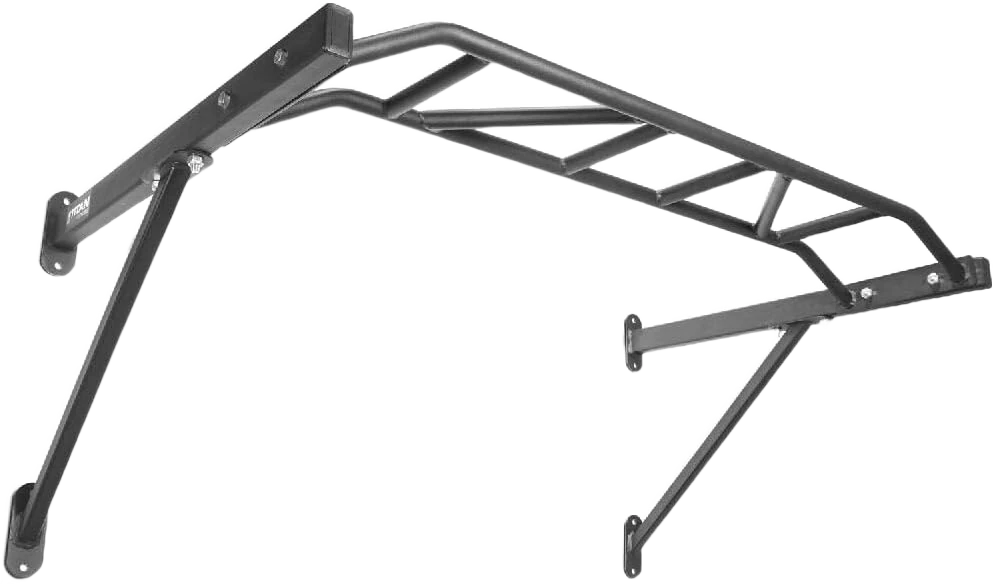
Best overall: Titan Fitness HD Multi-Grip Wall-Mounted Pull-Up Bar (48", 600 lb)
The stability-first default for building a back at home — welded 12-gauge steel rated to 600 lb, bolts into studs for dead-solid weighted pull-ups, with wide, narrow, and neutral grips.
~$75
Why it wins: all five scores, pros & cons, full label
- Bolts into wall studs for dead-solid, no-wobble pull-ups you can load with a dip belt or vest
- Welded 12-gauge steel rated to 600 lb — genuine heavy-duty home/garage-gym capacity
- True multi-grip (wide, narrow, neutral) trains more of your back and arms from one bar
- Sold on Amazon via Titan's official store, at a fair price for the build
- Requires drilling and 16"-spaced wall studs you can hit — not an option for renters
- Needs ~30" of clearance in front of the wall for a full rep
- Type / mount
- Wall-mount, bolts into 16" wall studs
- Capacity
- 600 lb (welded 12-gauge steel)
- Grips
- Multi-grip: wide, narrow, neutral/parallel
- Clearance
- ~30" deep, 48" wide grip span

Our take — This is the pull-up bar to buy if you can put a bolt in a wall and want one that will never hold you back. Its welded 12-gauge steel is rated to 600 lb, so it's dead solid for bodyweight sets and, crucially, for weighted pull-ups with a dip belt — the way you keep progressing once bodyweight reps are easy. The multi-grip handles (wide, narrow, neutral) let one bar hit the lats, upper back, and biceps from several angles, and it mounts into standard 16" studs. It wins on our two heaviest criteria — stability/capacity and, for a mounted bar, safe fit — while offering the grip versatility a fixed bar can't. For a permanent home gym, it's the highest-value bar here.
 02
02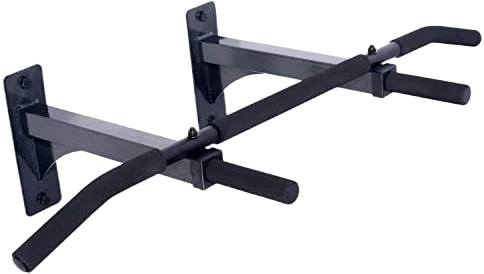 03
03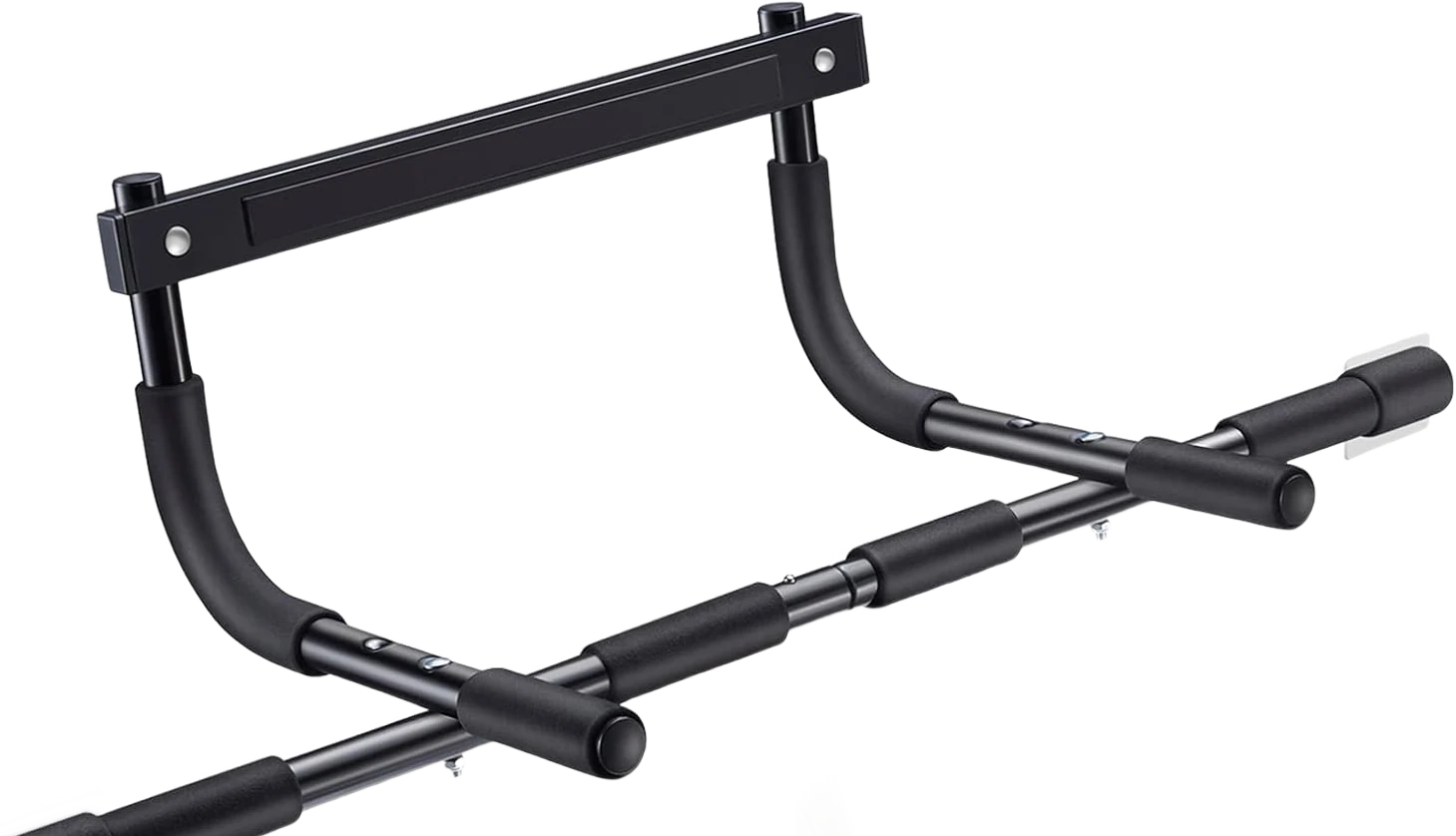 04
04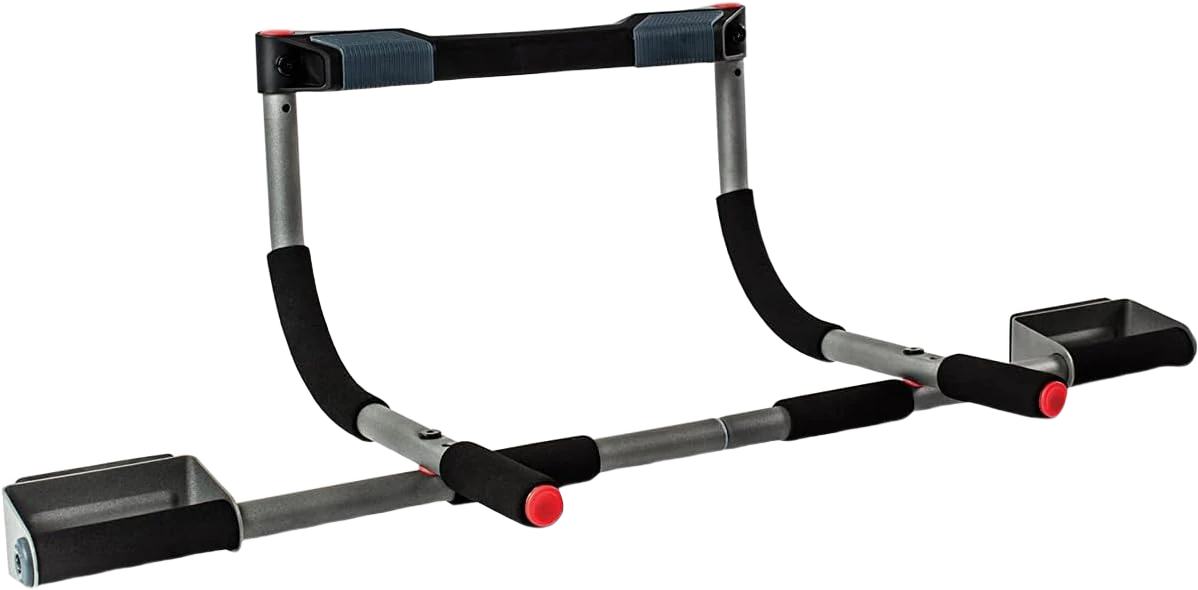 05
05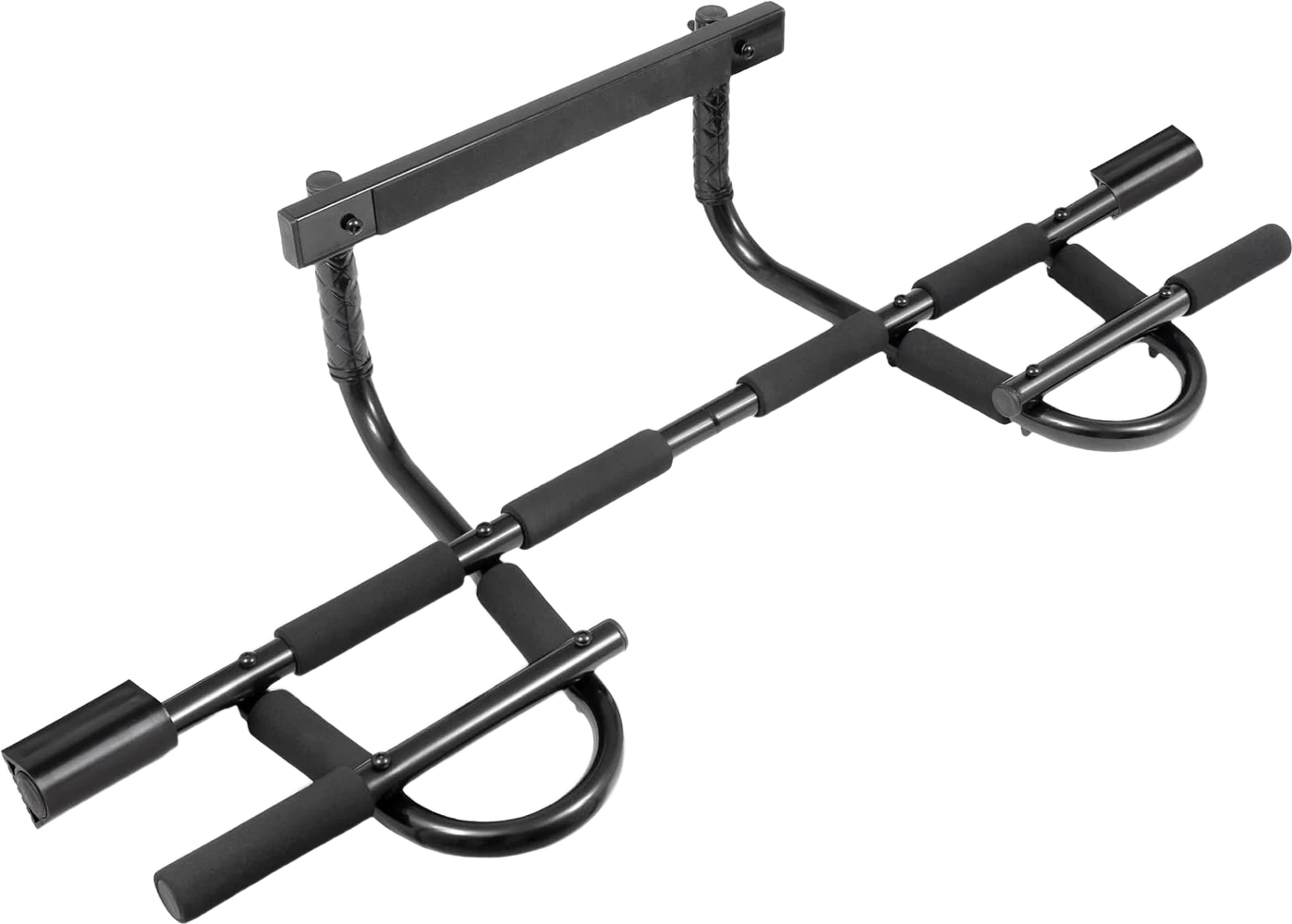 06
06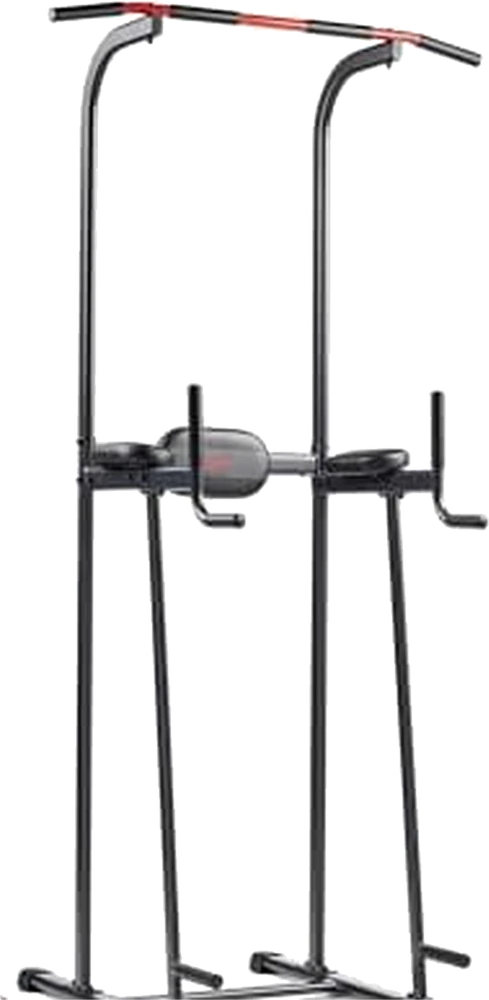 07
07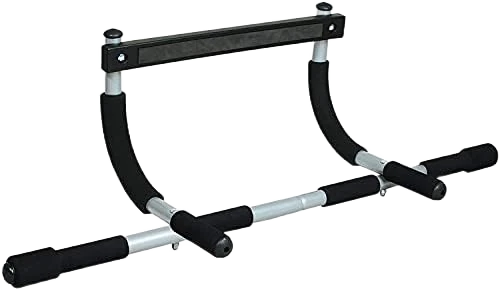 08
08Who Wins Which Aspect
Sorted by overall SAC Product Score™ — the official ranking.
| # | Pick | Score | Stability & weight capacity30% | Doorframe safety & fit25% | Grip options20% | Build quality15% | Value10% | Buy |
|---|---|---|---|---|---|---|---|---|
| 01 | | 9.4 | 9.72 | 9.21 | 9.22 | 9.32 | 8.83 | Check price |
| Bolts into wall studs for dead-solid, no-wobble pull-ups you can load with a dip belt or vestRequires drilling and 16"-spaced wall studs you can hit — not an option for renters | ||||||||
| 02 | | 9.1 | 9.81 | 9.02 | 7.0 | 9.71 | 7.6 | Check price |
| Welded 14-gauge USA-made steel rated to 600 lb — the most rigid, most durable bar on the listSingle fixed bar — no multi-grip angles like the Titan or ProsourceFit | ||||||||
| 03 | | 8.7 | 8.83 | 8.63 | 8.83 | 8.43 | 8.83 | Check price |
| Big ~18" of wall clearance means your head and body clear the wall through a full range300 lb capacity — plenty for bodyweight, but below the 600 lb heavy-duty bars for weighted work | ||||||||
| 04 | | 8.6 | 8.4 | 9.02 | 8.4 | 8.2 | 8.83 | Check price |
| Thickened 1.7 mm steel rated to 440 lb — the highest-capacity doorway bar hereLike all leverage bars, it pulls against the door frame — inspect weak or ornate trim first | ||||||||
| 05 | | 8.2 | 8.0 | 8.63 | 8.2 | 8.0 | 8.4 | Check price |
| Curved ergonomic handles give three comfortable grips (wide, close, hammer) for pull-ups300 lb leverage-mount — convenient but lower capacity and less rigid than a bolt-in bar | ||||||||
| 06 | | 8.2 | 7.8 | 8.4 | 9.41 | 7.8 | 9.02 | Check price |
| 12 cushioned grip positions — the most grip variety here, for training the back and arms from every angle300 lb leverage-mount build is lower-capacity and less rigid than the bolt-in bars | ||||||||
| 07 | | 8.0 | 7.8 | 8.63 | 8.0 | 7.6 | 8.0 | Check price |
| Needs no wall and no door frame — a complete station wherever you have floor space300 lb frame is lighter-duty — great for bodyweight, not for heavy weighted pull-ups | ||||||||
| 08 | | 7.6 | 7.2 | 8.0 | 7.8 | 7.4 | 9.21 | Check price |
| The cheapest honest way to get a real pull-up bar and start training at home300 lb capacity and a leverage design — the lowest stability and headroom on the list | ||||||||
The Other 7, Ranked
- 02
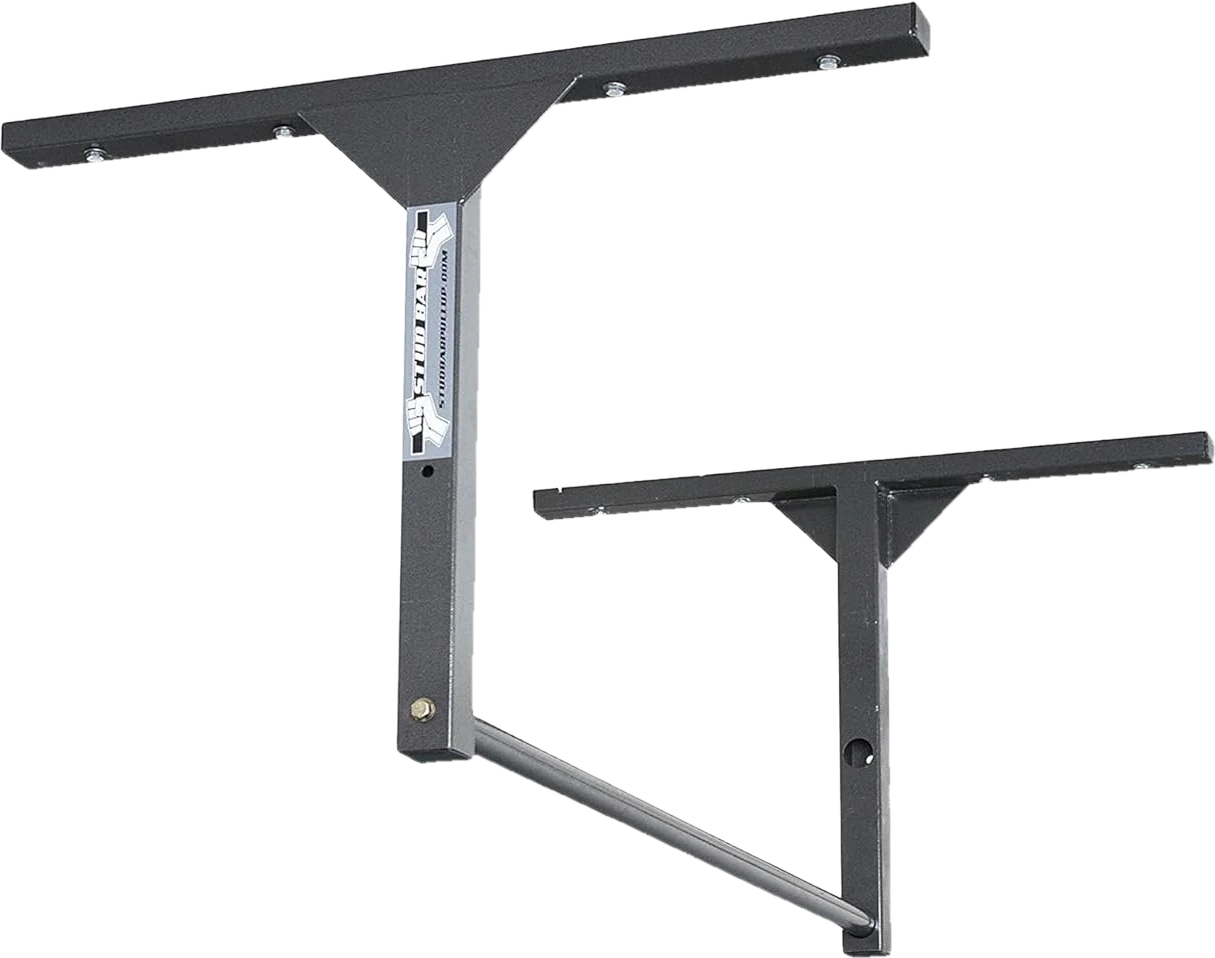
Best heavy-duty / buy-it-for-life: Stud Bar Ceiling or Wall Mounted Pull-Up Bar (600 lb, USA-Made)
9.1SAC Score™The most bombproof, buy-it-for-life mounted bar — welded 14-gauge USA-made steel rated to 600 lb, mounts to a ceiling or wall, with a lifetime warranty.
StrongestStability & weight capacity9.81WeakestGrip options7.0- Type / mount
- Ceiling OR wall, bolts into studs/joists
- Capacity
- 600 lb (welded 14-gauge steel, USA-made)
- Grips
- Single fixed straight bar (1.25", one angle)
All five scores, pros & cons, full label
What We Like- Welded 14-gauge USA-made steel rated to 600 lb — the most rigid, most durable bar on the list
- Mounts to a ceiling OR a wall (into studs/joists), so it fits garages and rooms a wall bar can't
- 1.25" hammertone crossbar and a lifetime warranty — a genuine buy-once, set-and-forget bar
- Ceiling mount frees your walls and gives a clean, unobstructed swing
What You Live With- Single fixed bar — no multi-grip angles like the Titan or ProsourceFit
- The priciest pick and needs drilling into solid studs or joists
- Fit
- Fits standard 9 ft ceilings; lifetime warranty
Our take — If you want a pull-up bar you'll still be using in ten years and never think about again, the Stud Bar is it. Its welded 14-gauge, made-in-USA steel is rated to 600 lb and simply does not flex — the most rigid bar here, ceiling- or wall-mountable, and backed by a lifetime warranty. That bolt-in solidity makes it ideal for heavy weighted pull-ups. It sits at #2 rather than #1 only because it's a single fixed bar (no multi-grip angles) and carries a premium price, which our grip-options and value criteria reflect. But on pure stability, capacity, and build — the things that matter most — it's the class of the field. Bolt it in once and forget it.
- 03
Best value wall-mount: Ultimate Body Press Wall-Mount Pull-Up Bar (Multi-Grip, Extra Clearance)
8.7SAC Score™The value bolt-in bar — a multi-grip wall-mount with a big ~18" of clearance for a full range of motion, fits 16" studs, at well under the Titan's price.
StrongestStability & weight capacity8.83WeakestBuild quality8.4- Type / mount
- Wall-mount, bolts into 16" studs
- Capacity
- 300 lb (all-steel, powder-coat)
- Grips
- Multi-grip: wide, parallel/neutral, angled
All five scores, pros & cons, full label
What We Like- Big ~18" of wall clearance means your head and body clear the wall through a full range
- Multi-grip: wide, parallel/neutral, and angled positions from one bolt-in bar
- All-steel, powder-coated build that mounts firmly into 16" studs
- Strong value — a genuine bolt-in multi-grip bar at well under the heavy-duty picks' price
What You Live With- 300 lb capacity — plenty for bodyweight, but below the 600 lb heavy-duty bars for weighted work
- Requires drilling and studs; some riser variants are needed to fit 24" spacing
- Clearance
- ~18" off the wall for a full swing
Our take — The Ultimate Body Press is the smart-value wall-mount: a proper bolt-in bar with multi-grip handles and a generous ~18" of clearance — so, unlike a flush doorway bar, you get a full, unobstructed range of motion — at well below the price of the heavy-duty picks. It's solid, well-reviewed, and mounts firmly into 16" studs. It ranks #4 rather than higher because its 300 lb capacity, while ample for bodyweight training, trails the 600 lb Titan and Stud Bar for serious weighted pull-ups, and its build is a step below theirs. But if you want a permanent, comfortable multi-grip bar and don't need 600 lb, it's the best bang-for-buck mounted option here.
- 04
Best doorway (no-drill): Ally Peaks Doorway Pull-Up Bar (Thickened Steel, 440 lb)
8.6SAC Score™The sturdiest no-drill doorway bar for renters — thickened 1.7 mm steel rated to 440 lb, double door-frame protection pads, three grips, no tools required.
StrongestDoorframe safety & fit9.02WeakestBuild quality8.2- Type / mount
- Doorway leverage-mount (no screws)
- Capacity
- 440 lb (1.7 mm thickened steel)
- Grips
- 3: wide, narrow, neutral
All five scores, pros & cons, full label
What We Like- Thickened 1.7 mm steel rated to 440 lb — the highest-capacity doorway bar here
- Double door-frame protection pads help guard your trim while it braces securely
- Three grips (wide, narrow, neutral) train the lats, back, and biceps from one bar
- No tools, comes down between sets — ideal for renters and small spaces
What You Live With- Like all leverage bars, it pulls against the door frame — inspect weak or ornate trim first
- Less rigid and lower capacity than a bolt-in wall/ceiling bar; not for heavy weighted work
- Fit
- 24-32" wide, 4.7-8.3" deep frames
Our take — The Ally Peaks is the doorway bar to buy if you can't drill but still want something solid. Its thickened 1.7 mm steel is rated to 440 lb — the highest of any doorway bar here — and its double frame-protection pads and secure bracing make it the most reassuring leverage bar to hang from. Three grips let it train more than a single-angle bar. It ranks #3, behind the bolt-in bars, for an honest reason: any leverage bar pulls against the door trim (so you must check your molding) and can't match a bolted bar's rigidity or capacity for weighted pull-ups. But for renters and no-drill setups doing bodyweight training, it's the best of its type by a clear margin.
- 05
Best doorway all-rounder: Perfect Fitness Multi-Gym Pro Doorway Pull-Up Bar
8.2SAC Score™The versatile doorway pick — three ergonomic grips for pull-ups, then it flips onto the floor for push-ups, dips, and sit-ups, with a patented door-frame guard.
StrongestDoorframe safety & fit8.63WeakestStability & weight capacity8.0- Type / mount
- Doorway leverage-mount; flips to a floor unit
- Capacity
- 300 lb
- Grips
- 3: wide, close, hammer (curved padded handles)
All five scores, pros & cons, full label
What We Like- Curved ergonomic handles give three comfortable grips (wide, close, hammer) for pull-ups
- Flips over onto the floor to become a stand for push-ups, dips, and sit-ups — more than one movement
- Patented door-frame guard helps protect the trim and seat the bar securely
- Fits wide frames (up to 33") and stores easily; a proven, popular design
What You Live With- 300 lb leverage-mount — convenient but lower capacity and less rigid than a bolt-in bar
- Like all doorway bars, it braces against the frame; check your molding first
- Fit
- Up to 33" wide, up to 6" deep frames
Our take — The Perfect Fitness Multi-Gym Pro is the doorway bar for people who want more than pull-ups from one piece of gear. Its curved, padded handles give three genuinely comfortable grips, and the whole unit flips onto the floor to become a stand for push-ups, dips, and sit-ups — a lot of upper-body training from a no-drill bar, which is ideal for beginners building the strength for their first pull-up. A patented frame guard helps protect the trim. It lands at #5 because, as a 300 lb leverage bar, it's lower-capacity and less rigid than the bolt-in picks, and it still leans on your door frame. But for a versatile, renter-friendly all-rounder at a fair price, it's an easy recommendation.
- 06
Most grip options: ProsourceFit Multi-Grip Chin-Up / Pull-Up Bar (12 Positions)
8.2SAC Score™The grip-versatility champion — 12 cushioned grip positions (wide, close, hammer, and more) for hitting the back and arms from every angle, with optional screw-in brackets, at a budget price.
StrongestGrip options9.41WeakestStability & weight capacity7.8- Type / mount
- Doorway leverage-mount; optional J-bracket screw-in
- Capacity
- 300 lb
- Grips
- 12 cushioned positions (wide, close, hammer + more)
All five scores, pros & cons, full label
What We Like- 12 cushioned grip positions — the most grip variety here, for training the back and arms from every angle
- Includes J-brackets to optionally screw it into the frame for a more secure, semi-permanent install
- Fits a wide range of frames (24-36"), and its foam handles are comfortable for high-rep work
- Excellent value — the most grips of any bar on the list at a rock-bottom price
What You Live With- 300 lb leverage-mount build is lower-capacity and less rigid than the bolt-in bars
- As a leverage bar it braces against the trim; the screw-in option needs drilling to be truly secure
- Fit
- 24-36" wide, up to 6" deep frames
Our take — The ProsourceFit Multi-Grip is the pick for someone who wants to attack their back and arms from every angle without buying multiple bars. Its 12 cushioned grip positions — wide, close, hammer, and various neutral spacings — give the most grip variety on the list, and it even includes J-brackets so you can screw it into the frame for a more secure, semi-permanent mount. It's remarkable value. It ranks #6 because, in its standard leverage configuration, it's a 300 lb bar that's less rigid than the bolt-in picks and still relies on the door frame. But if grip versatility is what you care about most and you want it cheap, nothing here matches it — and the screw-in option nudges it toward a sturdier setup.
- 07
Best free-standing (no drilling): Sunny Health & Fitness Multi-Function Power Tower
8.0SAC Score™The no-drill station — a free-standing floor frame with a pull-up bar, dip handles, push-up bars, and a captain's chair, so you need no wall and no doorframe at all.
StrongestDoorframe safety & fit8.63WeakestBuild quality7.6- Type / mount
- Free-standing (no drilling, no doorframe)
- Capacity
- 300 lb
- Grips
- Multi-grip pull-up bar (wide + neutral) + dip handles
All five scores, pros & cons, full label
What We Like- Needs no wall and no door frame — a complete station wherever you have floor space
- Does far more than pull-ups: dips, push-ups, and captain's-chair leg raises for core
- Multi-grip pull-up bar (wide and neutral) plus padded dip and back supports
- The right answer for renters who can't drill and want a dip/push-up station too
What You Live With- 300 lb frame is lighter-duty — great for bodyweight, not for heavy weighted pull-ups
- Takes up permanent floor space and is less rigid than a bolt-in bar on hard kipping reps
- Extras
- Dip station, push-up bars, captain's chair for core
Our take — The Sunny power tower is the pick when mounting to a wall or door frame is off the table. It's a free-standing steel station that needs no drilling at all, and it does much more than pull-ups — dip handles, push-up bars, and a captain's chair for leg raises make it a genuine upper-body-and-core station in one frame, with a multi-grip pull-up bar up top. It ranks #7 because, as a 300 lb free-standing unit, it's lighter-duty than the bolt-in bars — fine for bodyweight training but not for heavy weighted pull-ups — and it claims permanent floor space. But for anyone who can't drill and wants dips and push-ups included, no other pick on this list solves that problem as completely.
- 08
Best budget: Iron Gym Total Upper Body Workout Bar (Doorway, Leverage-Mount)
7.6SAC Score™The honest budget buy — the original no-screw doorway leverage bar, three grips, 300 lb, the cheapest real way to start doing pull-ups at home.
StrongestValue9.21WeakestStability & weight capacity7.2- Type / mount
- Doorway leverage-mount (no screws, removable)
- Capacity
- 300 lb
- Grips
- 3: narrow, wide, neutral (foam)
All five scores, pros & cons, full label
What We Like- The cheapest honest way to get a real pull-up bar and start training at home
- No screws and removable — hooks over the door trim and comes down between sets
- Three grips (narrow, wide, neutral) plus you can rest it on the floor for push-ups and dips
- The original, hugely popular doorway bar with a long track record and easy availability
What You Live With- 300 lb capacity and a leverage design — the lowest stability and headroom on the list
- Pulls against the door frame (crack risk on weak trim) and can feel less planted under hard reps
- Fit
- 24-32" wide door frames
Our take — The Iron Gym rounds out the list as the honest budget pick — and an honest budget pick is exactly what it is, not a bar we're punishing. It's the original no-screw doorway leverage bar: three grips, 300 lb capacity, and the cheapest real way to start doing pull-ups and chin-ups at home, with the bonus that it rests on the floor for push-ups and dips. It ranks #8 squarely on our top criteria — as a leverage bar it has the least stability and capacity here, and it pulls against your door trim, so weak molding is a genuine concern. We deliberately did not crown it #1 for being cheap. But if budget is the deciding factor, buy it without worry: it gets you doing the movement that builds your back, and you can always upgrade to a bolt-in bar later.
The Guide In Four Short Lessons
The case in four numbers
- 600 lb
- Capacity of the top bolt-in bars here
- 3 types
- Doorway leverage, bolt-mount, free-standing tower
- 3 grips
- Neutral, wide and close — your whole back
- +Load
- Dip belt or vest — it progresses like a barbell lift
Sources: Figures are manufacturer specifications for the products reviewed (Titan Fitness, Stud Bar, Ally Peaks, Ultimate Body Press, Perfect Fitness, ProsourceFit, Sunny Health & Fitness, Iron Gym), drawn from their current Amazon listings. This is a gear comparison of published specs, not a citation of clinical research.
Pick the mount type first.
Doorway leverage bars suit renters, wall or ceiling bolt-mounts a permanent gym, and free-standing towers a space you cannot drill. The type matters more than the brand.
Check stability and weight capacity.
Those lead our score at 30%. Once reps get easy you will add a belt or vest, so buy capacity for that.
With a doorway bar, re-check the fit every session.
Our founder's doorway bar came loose mid-set. Prefer a bolt-mounted bar, or put something soft underneath.
Manufacturer specs · full scoring logic in “How we ranked these” below.
Each pick was scored 0–10 across the five criteria below, then weighted to a final composite — stability and capacity lead because a bar you don't trust quietly caps how hard you train, and price is a subordinate tie-breaker. Every figure is the manufacturer's published spec; comparative judgments cite named equipment reviewers.
Stability & weight capacity · 30%
The most important factor — the bar has to stay solid and hold you (plus any added weight) safely. Bolt-in wall/ceiling bars and wide-footprint towers that don't wobble and carry 300-600 lb rank ahead; leverage doorway bars that flex or top out low are marked down. A wobbly bar caps how hard you'll train.
Doorframe safety & fit · 25%
For doorway bars, a leverage design pulls against the trim — a real crack risk on weak molding — so frame-protection pads, honest capacity, and stated door width/depth ranges matter. For mounted bars, whether it bolts into studs or joists. A bar that damages your frame or doesn't fit is no bargain.
Grip options · 20%
Neutral (palms-facing, easiest on elbows and shoulders), wide (lat emphasis), and close/chin (biceps) grips each train the back and arms differently. A true multi-grip bar lets one piece of gear hit more musculature and spare the joints; a single fixed bar is rigid but one-angle.
Build quality · 15%
Steel gauge, weld quality, knurl or foam comfort, powder coat, and overall finish. Heavier-gauge welded steel (Titan's 12-gauge, Stud Bar's 14-gauge, Ally Peaks' 1.7 mm) simply feels safer under load and lasts — the difference between a bar that survives years and one that loosens or rusts.
Value (price) · 10%
Price for the stability, capacity, and grips delivered. Tie-breaker — the first four criteria do most of the ranking. PRICE IS SUBORDINATE: a sturdier, higher-capacity bar can rank higher even if it costs more, while affordability is recognized with a 'Best budget' badge rather than by crowning the cheapest leverage bar.

How a pull-up bar drives back and arm growth
- 1
The bar lets you load a big pulling movement
Muscle adapts to mechanical tension and progressive overload. A pull-up or chin-up loads the lats, upper back, rear delts, and biceps through a large range of motion using your full bodyweight — one of the highest-tension upper-body pulling movements you can do, and a stable bar is what makes it possible at home.
- 2
You scale the load by adding reps, then weight
Progress comes from doing more over time. Start with the reps you can manage (or band-assisted reps), add reps week to week, and once bodyweight sets are easy, add external load with a dip belt or a weighted vest. That's where capacity matters — a bolt-in bar rated to 600 lb lets you keep adding weight the way you'd add plates.
- 3
Consistency plus food turns stimulus into muscle
The bar provides the stimulus; recovery and nutrition build the result. Train pulling a few times a week with full range and progressive overload, eat enough protein (and a small surplus if growth is the goal), and the tension you applied becomes a wider, stronger back and bigger arms. The bar doesn't build muscle on its own — it makes real, scalable pulling possible.
What to expect in your first weeks with a pull-up bar
Dialling in grip and reps
You find which grips feel best (neutral is usually friendliest on the joints), learn a full dead-hang-to-chin range, and, if you're a beginner, set an assistance band so you can do clean reps. A stable bar makes those first hard sets feel safe rather than sketchy.
Reps and control climb
Reps that were hard get easier, so you add reps and start rotating wide and close grips to hit more of the back and arms. Grip strength and the mind-muscle connection improve fast, and your first unassisted pull-up often lands in this window.
Visible back and arm growth
With consistent progressive overload and enough protein, the lats and upper back start to widen and the biceps fill out. Once bodyweight sets are easy you add weight with a dip belt — the point where a bolt-in, high-capacity bar earns its place — and keep progressing like adding plates.
The bottom line
Just want the answer: buy the Titan HD Multi-Grip wall-mount (#1).
Welded 12-gauge steel rated to 600 lb, bolted into studs for dead-solid weighted pull-ups, with wide, narrow and neutral grips.
Buy-it-for-life? Stud Bar (#2). Renting? Ally Peaks doorway (#4). No drilling at all? Sunny tower (#7).
The USA-made 600 lb Stud Bar mounts to ceiling or wall; the thickened-steel 440 lb Ally Peaks is the sturdiest no-drill option; the free-standing tower adds dips and push-ups. Founder's warning on ANY doorway leverage bar: Felix's once came loose mid-set (hard fall) — pad the floor beneath and re-check the fit every time.
Whatever you buy: stability first, grips second, price last.
A bar you fully trust under a hard set is the whole point — then grip variety for your back, and price only as tie-breaker.
Quick Answers
Can a pull-up bar really build muscle, or do I need a lat machine?
It genuinely builds muscle — the pull-up is one of the best upper-body pulling movements there is, and a bar is all you need to do it. Pull-ups and chin-ups load the lats, upper back, rear delts, and biceps through a large range of motion using your full bodyweight, which drives real hypertrophy the same way any heavy compound lift does. The key, as with weights, is progressive overload: start with as many clean reps as you can, add reps over time, and once bodyweight sets get easy, add load with a dip belt or a weighted vest. A lat pulldown machine is fine, but a pull-up bar is cheaper, takes almost no space, trains the same muscles with a bigger stabilizer demand, and progresses just as far once you start adding weight. For most people building a back at home, the bar is the higher-value tool.
What are the three types of pull-up bar, and which should I buy?
There are three, and they suit different situations. DOORWAY LEVERAGE-MOUNT bars (Iron Gym, Perfect Fitness, Ally Peaks) hook over the door trim and brace against the frame with no screws, so they come down between sets — best for renters, small spaces, and beginners, with the trade-off of lower capacity and leaning on your molding. WALL or CEILING BOLT-MOUNT bars (Titan, Ultimate Body Press, Stud Bar) bolt into wall studs or ceiling joists — dead solid, the highest capacity (up to 600 lb), and the right choice for a permanent home or garage gym or if you want to add weight, at the cost of drilling and needing studs you can hit. FREE-STANDING POWER TOWERS (Sunny) are a floor frame with a pull-up bar plus a dip and push-up station — no drilling, no doorframe, and they move anywhere you have floor space, ideal if you can't or won't mount to a wall. Renter doing bodyweight reps? Doorway. Building a permanent gym or going weighted? Bolt-mount. Can't drill and want dips too? Tower.
Will a doorway pull-up bar damage my door frame?
It can, and it's the honest catch with leverage bars, so it's worth understanding. A leverage doorway bar works by pulling AGAINST the top of the door frame — your weight levers the bar so its far end presses on the wall above the trim. On solid, well-attached wood molding this is usually fine and the bar's foam pads spread the load. But on weak, hollow, thin, or ornate trim, that pressure can crack, dent, or scuff the molding, and a poorly fitted bar can slip. To stay safe: inspect your frame first, make sure the bar's brackets and pads seat flush, confirm the door width and molding depth are within the bar's range, and don't exceed the rated capacity. If your trim is fragile or you want zero risk, choose a bolt-in wall bar (into studs) or a free-standing tower instead — neither touches the door frame. The Ally Peaks adds double door-frame protection pads, which is part of why it's our top doorway pick.
Is there a screw-in doorway pull-up bar, or are they all leverage-mount?
Honestly, the doorway bars people actually buy are leverage-mount, and none of the ones here is a pure screw-in-only doorway bar. A couple of leverage bars (like the ProsourceFit Multi-Grip) include optional J-brackets you can screw into the frame for a semi-permanent, more secure install — that's the closest thing to 'screw-in' in this category, and it's a bracket option layered on a leverage bar, not a separate product type. If you specifically want a bar that's permanently fastened and doesn't rely on levering against the trim, the right answer isn't a screw-in doorway bar at all — it's a WALL-MOUNT bar that bolts into your studs (Titan, Ultimate Body Press) or a CEILING bar bolted into joists (Stud Bar). Those are genuinely fastened, far more stable, and carry much more weight. So: leverage for no-drill convenience (optionally bracketed), bolt-in wall/ceiling for a true permanent mount.
How much weight can a pull-up bar hold, and does it matter for me?
It ranges a lot, and it matters more the stronger you get. The doorway leverage bars here are rated around 300 lb (Iron Gym, Perfect Fitness, ProsourceFit) up to a thicker-steel 440 lb (Ally Peaks); the free-standing Sunny tower and the Ultimate Body Press wall bar are 300 lb; and the bolt-in Titan and Stud Bar are rated 600 lb. For plain bodyweight reps, any of these covers most people with margin. But capacity matters the moment you add weight: if you're going to do weighted pull-ups with a dip belt or a weighted vest — the main way to keep progressing once bodyweight sets are easy — you want a bolt-in bar rated well above your bodyweight-plus-load, which is exactly what the 600 lb Titan and Stud Bar are built for. Always treat the rating as a manufacturer spec and stay comfortably under it, especially on doorway bars where fit and frame strength matter as much as the number.
Which grip should I use — neutral, wide, or close?
Use all of them, because each trains your back and arms slightly differently, which is why a multi-grip bar is worth it. NEUTRAL grip (palms facing each other) is the easiest on your elbows and shoulders and hits the lats and biceps well — a great default and the friendliest for anyone with cranky joints. WIDE grip (palms forward, hands wider than shoulders) shifts emphasis onto the lats and upper back and is the classic 'pull-up.' CLOSE or CHIN grip (palms toward you) loads the biceps the hardest and is usually the easiest grip to get your first rep on. A bar with several grip positions (the Titan, the ProsourceFit with 12 positions, the Perfect Fitness with three) lets you rotate through all of them from one piece of gear, hitting more of the musculature and sparing your joints. A single fixed bar like the Stud Bar is bombproof but gives you one angle — fine if you mainly want a rigid overhead bar.
I can't do a single pull-up yet — is a bar still worth it?
Absolutely, and it's the fastest way to earn that first rep. Buy the bar plus a resistance assistance band: loop the band over the bar, put a knee or foot in it, and it takes some of your bodyweight so you can perform full-range reps with good form, then move to thinner bands as you get stronger until you're doing unassisted pull-ups. You can also train the pieces — dead hangs to build grip, slow negatives (jump up, lower yourself under control), and inverted rows — all from or around the same bar. Progress is usually quick for beginners because the movement is so trainable. Pick a stable bar you trust (a wobbly one makes assisted reps feel sketchy), pair it with a band, and treat it as a skill you build week by week. Within a few weeks most people go from zero to their first clean rep.
Why isn't the cheapest doorway bar your number one pick?
Because we rank on stability, capacity, and build first, with price as a 10% tie-breaker — and a bar you don't fully trust under a hard set isn't a bargain. The biggest differences between a cheap leverage bar and a top pick are how solid it is, how much it holds, and how it treats your door frame: a bolt-in bar (Titan, Stud Bar) is dead rigid, carries 600 lb, and lets you add weight, while the least expensive leverage bars top out lower, can wobble, and lean on your trim. So a sturdier, higher-capacity bar can rank above a cheaper one even at a higher price. That said, we recognize affordability with a 'Best budget' badge — the Iron Gym is a genuinely useful, inexpensive way to start doing pull-ups at home — we just don't crown a wobbly or lower-capacity bar #1 on price alone. Quality over price, honestly applied.
Every Claim Ranked Above Traces Back To One Of These
1 source — studies link to PubMed, product specs to the manufacturer
- [1] Manufacturer specifications — Product specifications and feature claims from current Amazon listings. Every per-pick figure in this guide — mount type (doorway leverage vs wall/ceiling bolt-in vs free-standing tower), weight capacity (300-600 lb), steel gauge and build, grip positions (neutral/wide/close), and doorframe width/depth fit — is taken from the manufacturer's own current Amazon listing, and the product link IS the source. This is a gear comparison of published specifications, not a clinical study; we deliberately cite no PubMed research here because no such claim is being made.
Affiliate disclosure: every Amazon link uses our Associates tag (superachieverclub-20). We earn a small commission at no cost to you; it funds independent reviews. We never accept payment to change a ranking.