
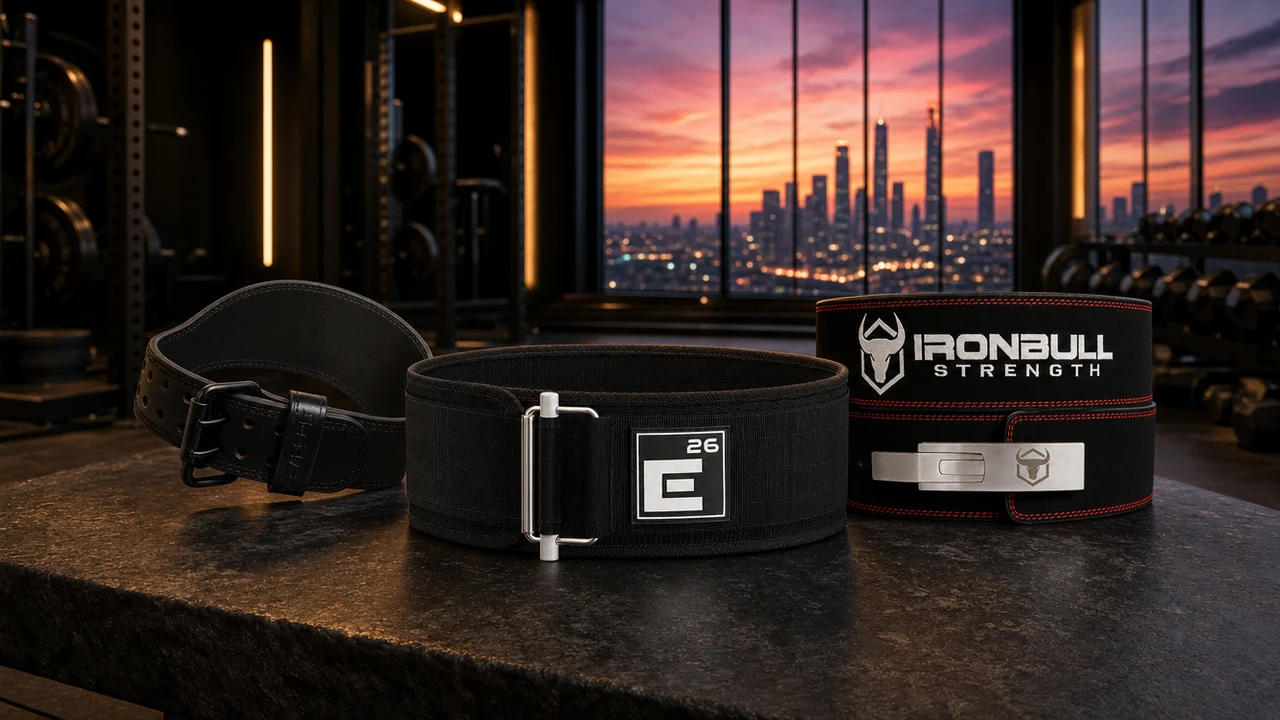
Top 8 Best Lifting Belts for Muscle Gain (2026)
A bracing tool for heavy squats and deadlifts - not injury insurance, and not needed for light work. Ranked on material and build, buckle security, stiffness for intended use, comfort and value. Leather vs nylon, prong vs lever, honestly.
8 picks — ranked by our 50/50 methodology
Compare all 8 picks side by sidefull score breakdown · strength & weakness · price
| Product | Score | Material & build durability30% | Buckle security & ease25% | Support & stiffness (intended use)20% | Comfort & break-in15% | Value10% | Price & buy |
|---|---|---|---|---|---|---|---|
 #1 Element 26 Self-Locking Weightlifting Belt (Nylon)Best overall #1 Element 26 Self-Locking Weightlifting Belt (Nylon)Best overall | 9.1 | 9.03 | 9.41 | 8.8 | 9.61 | 9.22 | ~$35On Amazon |
+Self-locking steel buckle engages under load and pops off fast between sets — no fiddling−Not as rigid as a 10-13mm leather belt, so it's not the pick for maximal powerlifting | |||||||
 #2 Iron Bull Strength 10mm Powerlifting Lever BeltBest for powerlifting #2 Iron Bull Strength 10mm Powerlifting Lever BeltBest for powerlifting | 9.0 | 9.22 | 9.41 | 9.61 | 7.6 | 8.8 | ~$45On Amazon |
+10mm rigid leather gives the hardest brace here for maximal squats and deadlifts−Locks to one waist setting — resizing means unscrewing and repositioning the lever | |||||||
 #3 Gymreapers 7mm Pro Leather Weightlifting BeltBest leather prong #3 Gymreapers 7mm Pro Leather Weightlifting BeltBest leather prong | 8.9 | 9.41 | 8.63 | 9.03 | 8.4 | 8.0 | ~$60On Amazon |
+Premium 7mm full-grain leather with a grippy suede lining — built to last for years−Double-prong is slower on and off than a lever or self-locking buckle | |||||||
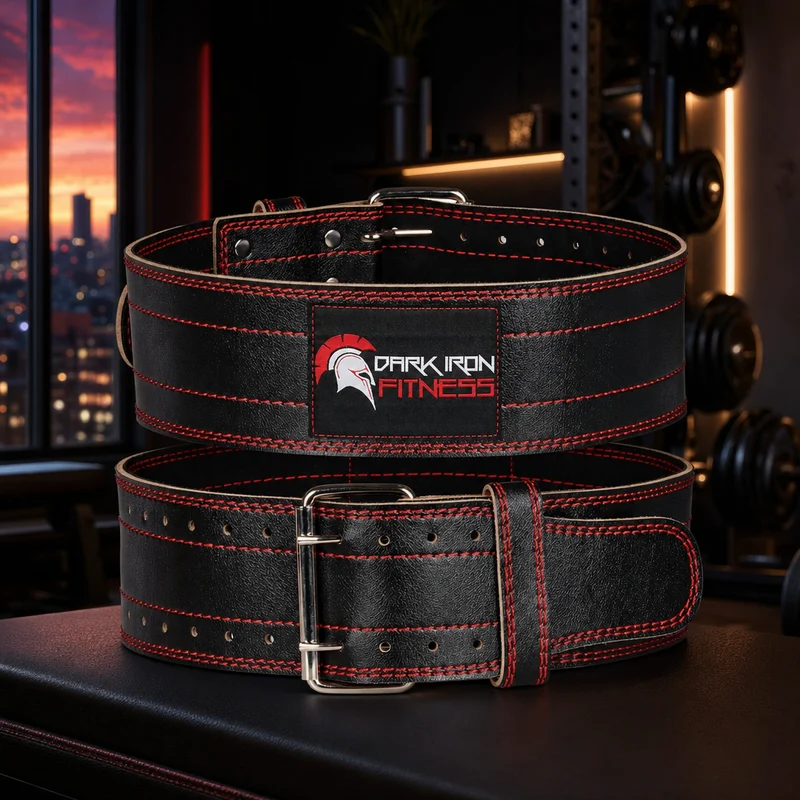 #4 Dark Iron Fitness Genuine Leather Weightlifting BeltBest value leather #4 Dark Iron Fitness Genuine Leather Weightlifting BeltBest value leather | 8.6 | 8.6 | 8.4 | 8.6 | 8.2 | 9.41 | ~$55On Amazon |
+Genuine buffalo-hide leather with reinforced double stitching — solid, durable build for the money−Slightly softer and less rigid than a dedicated 10-13mm powerlifting belt | |||||||
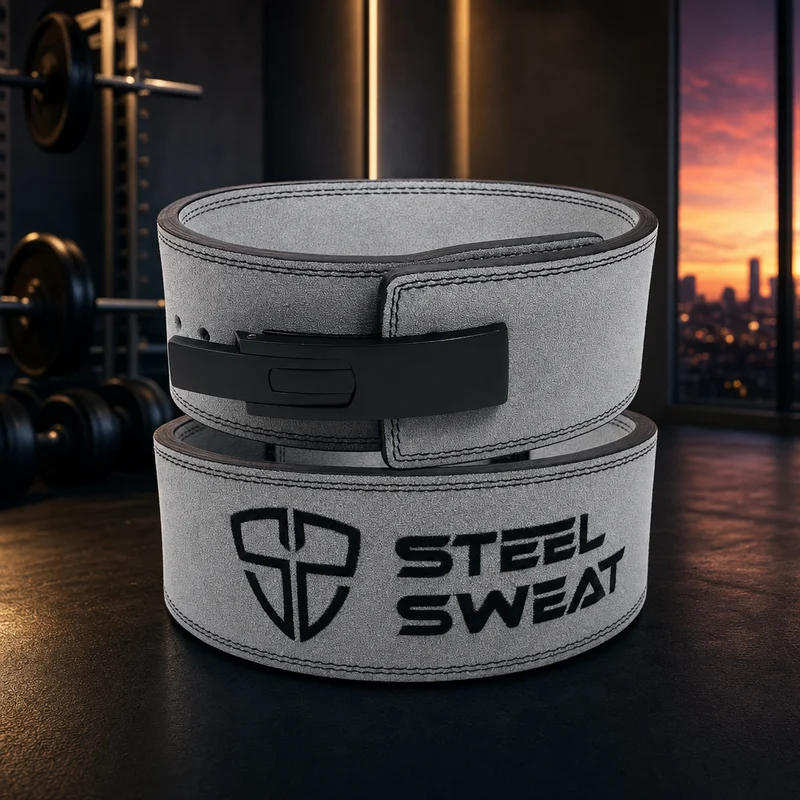 #5 Steel Sweat 10mm Leather Lever BeltBest value lever #5 Steel Sweat 10mm Leather Lever BeltBest value lever | 8.6 | 8.6 | 9.02 | 9.22 | 7.4 | 9.03 | ~$40On Amazon |
+10mm rigid leather delivers a hard powerlifting brace close to the pricier lever belts−Locks to one setting like all lever belts; resizing means repositioning the lever | |||||||
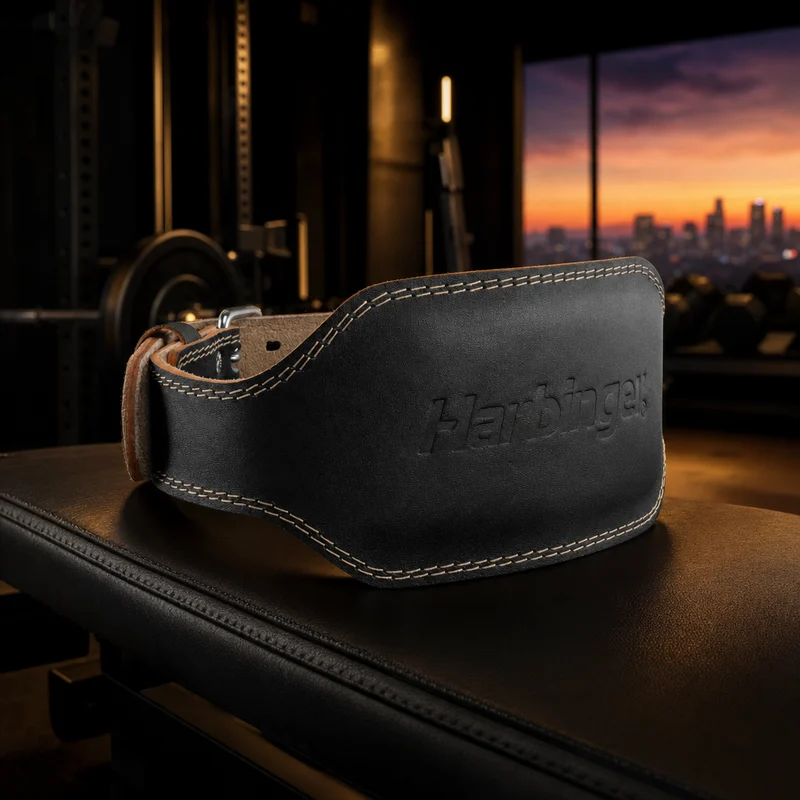 #6 Harbinger Padded Leather Contoured Weightlifting BeltBest padded / comfort #6 Harbinger Padded Leather Contoured Weightlifting BeltBest padded / comfort | 8.3 | 8.2 | 8.2 | 8.0 | 9.22 | 8.4 | ~$35On Amazon |
+Foam cushioning and a suede lining make it the most comfortable leather belt here−Padded, contoured leather is less rigid than a flat comp belt — not for maximal powerlifting | |||||||
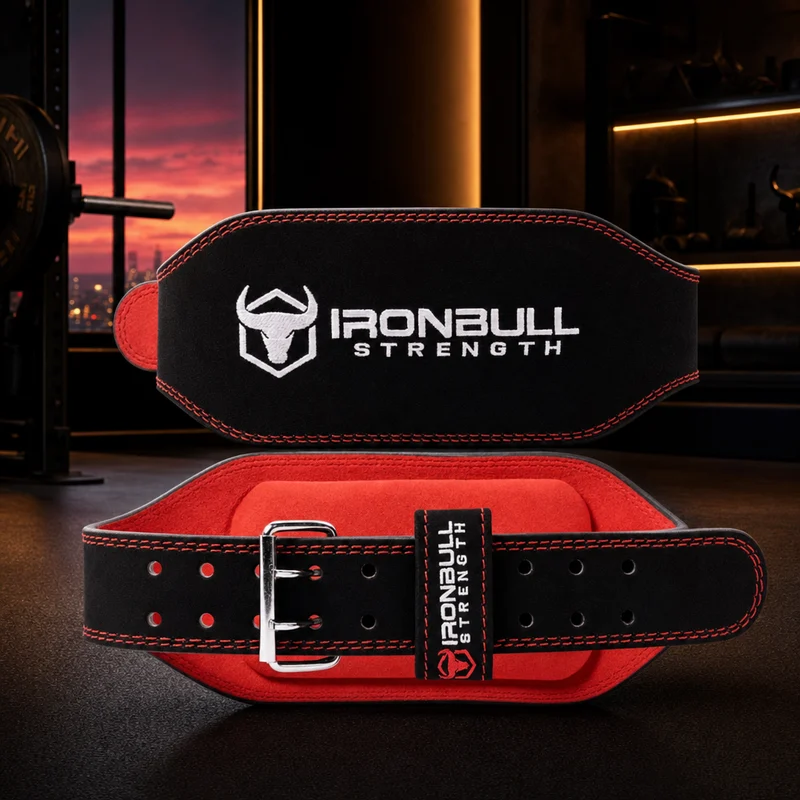 #7 Iron Bull Strength 6-inch Padded Suede Leather BeltBest 6-inch back coverage #7 Iron Bull Strength 6-inch Padded Suede Leather BeltBest 6-inch back coverage | 8.2 | 8.0 | 8.0 | 8.2 | 8.6 | 8.4 | ~$35On Amazon |
+6-inch contoured back spreads support over a wider area — some lifters prefer the coverage−A 6-inch belt can still jam the ribs or hips on deep squats for shorter torsos | |||||||
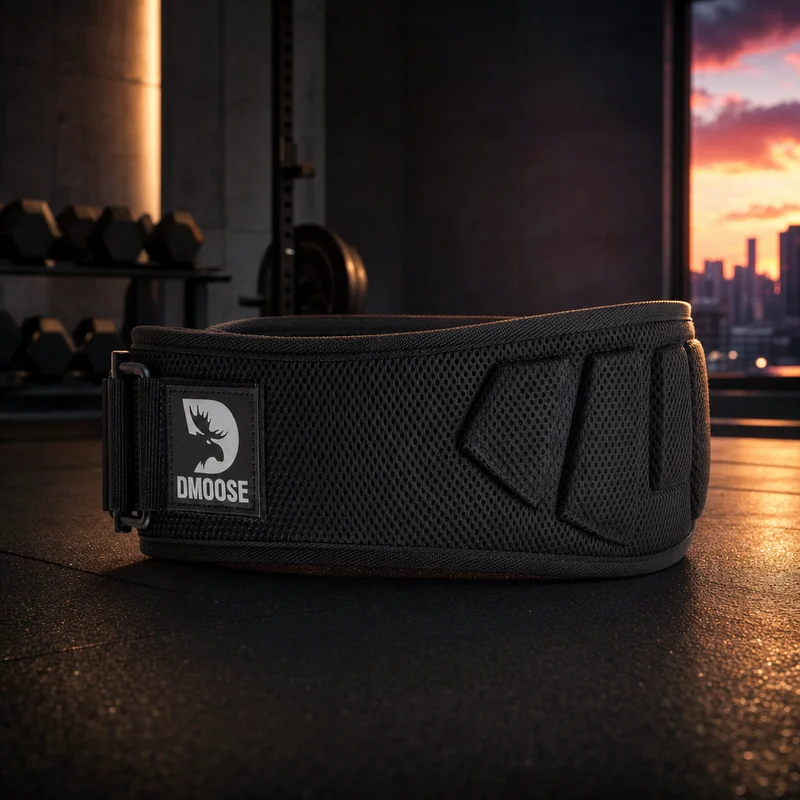 #8 DMoose 6-inch Weightlifting BeltBest budget #8 DMoose 6-inch Weightlifting BeltBest budget | 7.4 | 6.6 | 7.8 | 6.8 | 9.03 | 9.03 | ~$20On Amazon |
+Soft, flexible, and breathable — the most comfortable belt here for light work and long sessions−Neoprene is far less supportive and durable than leather or heavy nylon — not for max lifts | |||||||
- #1Best overall
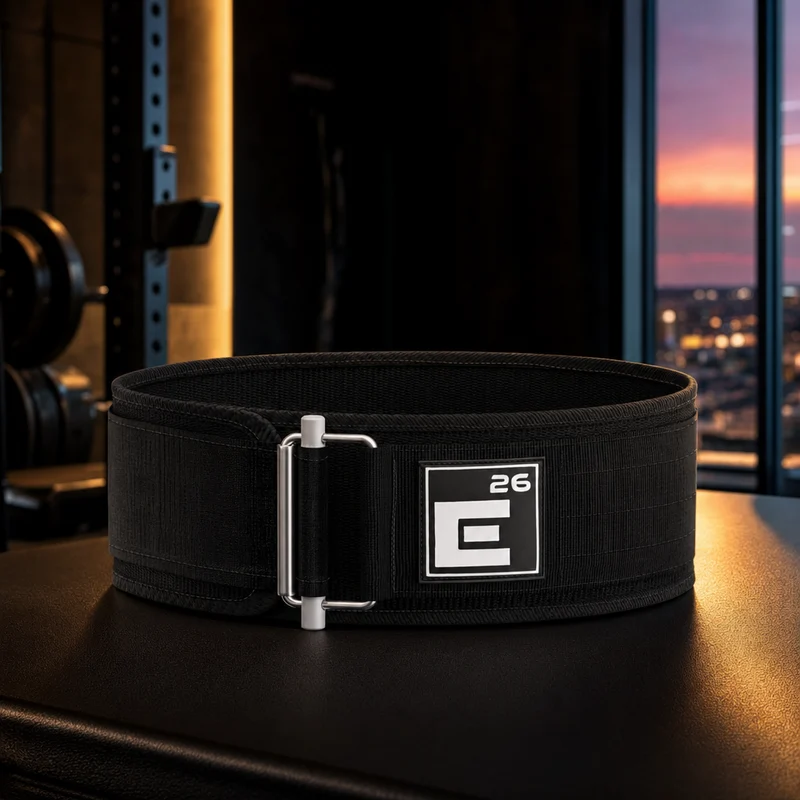
Element 26 Self-Locking Weightlifting Belt (Nylon)
Element 26 · heavy-duty nylon, 4-inch even width, self-locking steel buckle + velcro9.1/10SAC Product Score™SAC Product Score™ — how it breaks down- Material & build durability30%9.0
- Buckle security & ease25%9.4
- Support & stiffness (intended use)20%8.8
- Comfort & break-in15%9.6
- Value10%9.2
The do-everything default for most lifters — a heavy 4-inch nylon belt with a self-locking buckle that braces firmly, needs no break-in, and comes on and off in a second.
- Material
- Heavy-duty nylon, 4-inch even width
- Buckle
- Self-locking steel buckle + velcro (quick-release)
- Thickness
- ~5mm; firm but flexible
- Competition
- USAW / functional-fitness legal (not IPF); lifetime warranty
Pros- Self-locking steel buckle engages under load and pops off fast between sets — no fiddling
- 4-inch nylon braces firmly yet stays mobile for CrossFit, Olympic, and general lifting
- Zero break-in — comfortable and ready to brace straight out of the box
- Lifetime warranty and competition-legal for functional fitness, at a fair mid price
Cons- Not as rigid as a 10-13mm leather belt, so it's not the pick for maximal powerlifting
- Not IPF-approved (it's a functional-fitness comp belt), so serious powerlifters need a leather belt
Our take — This is the lifting belt to buy if you want one belt that does almost everything well. The Element 26's heavy 4-inch nylon braces firmly on your top sets while staying mobile enough for fast-paced training, its self-locking buckle is the quickest and most secure of the quick-release designs, and it needs no break-in — you strap it on and it works. On our criteria it leads on buckle ease and comfort, holds strong on build, and only trails the leather belts on peak stiffness, which is exactly the trade you want unless you're a dedicated powerlifter. For the largest number of lifters — general strength, bodybuilding, CrossFit, Olympic — it's the easy, honest default.
- #2Best for powerlifting
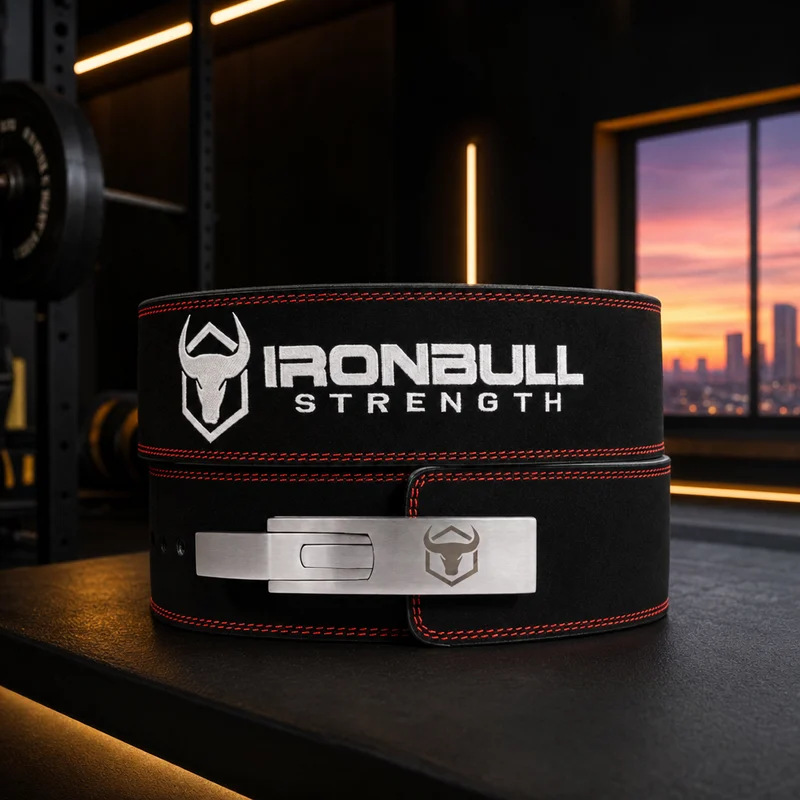
Iron Bull Strength 10mm Powerlifting Lever Belt
Iron Bull Strength · 10mm vegetable-tanned leather, 4-inch, lever buckle, USPA & IPL approvedSAC Product Score™ — how it breaks down- Material & build durability30%9.2
- Buckle security & ease25%9.4
- Support & stiffness (intended use)20%9.6
- Comfort & break-in15%7.6
- Value10%8.8
The hardest, most secure brace for maximal lifts — rigid 10mm leather and a rock-solid lever buckle, USPA & IPL approved, with a 13mm option if you want it stiffer.
- Material
- 10mm vegetable-tanned leather (13mm option)
- Buckle
- Lever (single setting, one-pull release)
- Width
- 4-inch even width
- Competition
- USPA & IPL approved
Pros- 10mm rigid leather gives the hardest brace here for maximal squats and deadlifts
- Lever buckle locks rock-solid under a max effort and releases with one pull between singles
- USPA & IPL approved, so it's competition-legal for powerlifting
- Offered in 13mm too if you want the stiffest possible brace — strong value for a lever belt
Cons- Locks to one waist setting — resizing means unscrewing and repositioning the lever
- Stiff leather needs a break-in and is less comfortable for light or fast-paced work
Our take — If your priority is moving maximal weight on the big lifts, this is the belt. The Iron Bull's rigid 10mm vegetable-tanned leather delivers the firmest brace on the list, and its lever buckle is both the most secure under a heavy pull and the fastest to pop open between singles — the combination powerlifters want. It's USPA & IPL approved and even comes in a stiffer 13mm. It ranks #2 rather than #1 only because a lever belt is a specialist: it locks to one setting, needs a leather break-in, and is overkill for general or fast-paced training. But for the job it's built for — a maximal, secure, competition-legal brace — it's the standout, and keenly priced for a lever belt.
- #3Best leather prong
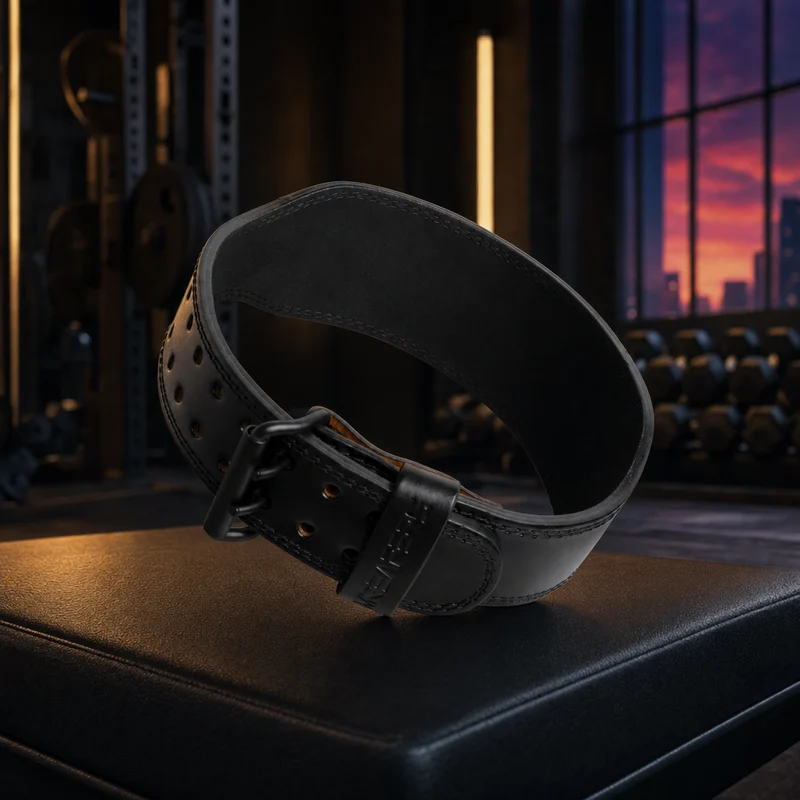
Gymreapers 7mm Pro Leather Weightlifting Belt
Gymreapers · 7mm full-grain leather, 4-inch tapered, suede-lined, double-prong buckle8.9/10SAC Product Score™SAC Product Score™ — how it breaks down- Material & build durability30%9.4
- Buckle security & ease25%8.6
- Support & stiffness (intended use)20%9.0
- Comfort & break-in15%8.4
- Value10%8.0
A premium adjustable leather belt for life — 7mm suede-lined full-grain leather with a double-prong buckle, stiff and dialed-in without jamming the ribs.
- Material
- 7mm full-grain leather, suede lining
- Buckle
- Double-prong steel (fully adjustable)
- Width
- 4-inch front, tapered back
- Build
- Reinforced stitching; lifetime warranty
Pros- Premium 7mm full-grain leather with a grippy suede lining — built to last for years
- Double-prong buckle is fully adjustable hole-to-hole for a precise, dialed-in fit
- Tapered back with an even 4-inch front supports hard without digging into the ribs
- Reinforced stitching and a lifetime warranty — a genuine buy-it-for-life belt
Cons- Double-prong is slower on and off than a lever or self-locking buckle
- 7mm is a touch less rigid than a 10-13mm comp belt, and it needs a leather break-in
Our take — The Gymreapers Pro is the pick if you want a premium, fully adjustable leather belt you'll keep for years. Its 7mm full-grain leather and suede lining feel a class above budget belts, the double-prong buckle dials in a precise fit hole-to-hole, and the tapered back supports strongly while the even 4-inch front keeps it comfortable on deep squats. It scores top marks on material and build. It lands at #3 because a prong buckle is slower than a lever or self-locking design and 7mm is slightly less rigid than a dedicated 10-13mm comp belt — but for serious general strength work and lifters who prefer an adjustable leather belt over a lever, it's the best-made option here.
- #4Best value leather
Dark Iron Fitness Genuine Leather Weightlifting Belt
Dark Iron Fitness · genuine buffalo-hide leather, 4-inch, double-prong buckle, reinforced stitching8.6/10SAC Product Score™SAC Product Score™ — how it breaks down- Material & build durability30%8.6
- Buckle security & ease25%8.4
- Support & stiffness (intended use)20%8.6
- Comfort & break-in15%8.2
- Value10%9.4
The value leather all-rounder — genuine buffalo-hide leather with a double-prong buckle and a huge, long-standing Amazon track record, at a fair price.
- Material
- Genuine buffalo-hide leather, suede finish
- Buckle
- Double-prong steel (fully adjustable)
- Width
- 4-inch; 12 adjustment holes
- Build
- Reinforced double stitching; lifetime warranty
Pros- Genuine buffalo-hide leather with reinforced double stitching — solid, durable build for the money
- Fully adjustable double-prong buckle with 12 holes for a precise fit across a bulk or cut
- One of Amazon's longest-running best-sellers in the category (12,000+ reviews, ~4.6 stars)
- Backed by a lifetime warranty at a very fair mid price — excellent value
Cons- Slightly softer and less rigid than a dedicated 10-13mm powerlifting belt
- Double-prong buckle is slower on and off than a lever or self-locking design
Our take — The Dark Iron Fitness belt is the value leather pick — a genuine buffalo-hide, double-prong belt with a track record almost nothing else here can match (over 12,000 reviews at ~4.6 stars, a category best-seller for years). It's well-built with reinforced stitching, dials in precisely across 12 holes, and carries a lifetime warranty, all at a fair price — which is why it tops the value criterion. It sits at #4 because it's a touch softer than a rigid comp belt and its prong buckle is slower than a lever, so the more specialist and more premium belts edge ahead on build and buckle. But if you want a proven, adjustable leather belt without overspending, it's the smart-money choice.
- #5Best value lever
Steel Sweat 10mm Leather Lever Belt
Steel Sweat · 10mm genuine leather, 4-inch, lever buckle, powerlifting8.6/10SAC Product Score™SAC Product Score™ — how it breaks down- Material & build durability30%8.6
- Buckle security & ease25%9.0
- Support & stiffness (intended use)20%9.2
- Comfort & break-in15%7.4
- Value10%9.0
A rigid lever brace for less money — 10mm genuine leather and a quick-release lever buckle for lifters who want powerlifting stiffness on a budget.
- Material
- 10mm genuine leather
- Buckle
- Lever (single setting, quick-release)
- Width
- 4-inch even width
- Use
- Powerlifting: squat, deadlift, heavy work
Pros- 10mm rigid leather delivers a hard powerlifting brace close to the pricier lever belts
- Quick-release lever buckle locks securely and pops open fast between heavy sets
- 4-inch even width braces consistently front-to-back — a proper strength belt
- One of the more affordable genuine-leather lever belts on Amazon — strong value
Cons- Locks to one setting like all lever belts; resizing means repositioning the lever
- Stiff leather needs breaking in and isn't ideal for light or fast-paced training
Our take — The Steel Sweat lever belt is the value route to a rigid, secure powerlifting brace. Its 10mm genuine leather and quick-release lever deliver most of what the pricier lever belts do — a hard brace that locks solid and opens fast — for noticeably less money, which is why it scores so well on support and value. It ranks #5 rather than higher because its finish and comfort trail the premium leather belts, and, like every lever belt, it's a single-setting specialist that needs a break-in. But if you want lever-belt stiffness for maximal lifts and don't want to spend big, it's the honest budget pick in that category.
- #6Best padded / comfort
Harbinger Padded Leather Contoured Weightlifting Belt
Harbinger · contoured leather with suede lining + foam, 4-inch, dual-prong steel roller buckle8.3/10SAC Product Score™SAC Product Score™ — how it breaks down- Material & build durability30%8.2
- Buckle security & ease25%8.2
- Support & stiffness (intended use)20%8.0
- Comfort & break-in15%9.2
- Value10%8.4
The comfort pick for general gym work — padded, suede-lined contoured leather with a steel roller dual-prong buckle that supports without digging in.
- Material
- Contoured leather, suede lining + foam cushioning
- Buckle
- Dual-prong steel roller (fully adjustable)
- Width
- 4-inch (6-inch option available)
- Feel
- Padded and contoured for comfort
Pros- Foam cushioning and a suede lining make it the most comfortable leather belt here
- Contoured shape and steel roller dual-prong buckle support well for general lifting
- Trusted, long-standing Harbinger build at an accessible price
- Offered in 4-inch and 6-inch widths to suit torso length and preference
Cons- Padded, contoured leather is less rigid than a flat comp belt — not for maximal powerlifting
- Contoured/padded design braces a little less firmly than an even-width stiff belt
Our take — The Harbinger is the comfort-first pick for general gym training. Its foam cushioning and suede lining make it noticeably kinder to wear than a stiff flat belt, the contoured shape and steel roller dual-prong buckle give solid support for heavy compound work, and Harbinger's long-standing build quality comes at an accessible price — so it tops the comfort criterion. It ranks #6 because that same padding and contour make it less rigid than a flat powerlifting belt, so it braces a touch less hard and isn't the choice for maximal lifts. But for a bodybuilder or general lifter who wants dependable, comfortable support rather than a competition brace, it's an easy belt to live with.
- #7Best 6-inch back coverage
Iron Bull Strength 6-inch Padded Suede Leather Belt
Iron Bull Strength · 6-inch suede leather, padded, prong buckle, contoured back support8.2/10SAC Product Score™SAC Product Score™ — how it breaks down- Material & build durability30%8.0
- Buckle security & ease25%8.0
- Support & stiffness (intended use)20%8.2
- Comfort & break-in15%8.6
- Value10%8.4
For lifters who want extra back coverage — a padded, contoured 6-inch suede belt that spreads support across a wider area for bodybuilding and heavy general work.
- Material
- Suede leather, padded, contoured
- Buckle
- Prong (adjustable)
- Width
- 6-inch back, tapered front
- Use
- Bodybuilding, CrossFit, heavy general lifting
Pros- 6-inch contoured back spreads support over a wider area — some lifters prefer the coverage
- Padded suede is comfortable and needs little break-in
- Tapered front reduces rib jamming versus a straight 6-inch belt
- Good value from an established brand for a wide support belt
Cons- A 6-inch belt can still jam the ribs or hips on deep squats for shorter torsos
- Padded suede is less rigid than a flat leather belt, so it's not a maximal-brace tool
Our take — The Iron Bull 6-inch is the pick for lifters who specifically want more back coverage than a 4-inch belt gives. Its contoured 6-inch back spreads support over a wider area, the padded suede is comfortable with little break-in, and the tapered front helps it clear the ribs better than a straight-cut wide belt — a combination some bodybuilders and general lifters genuinely prefer. It ranks #7 because a 6-inch belt is a preference, not an upgrade: it can still dig in on deep squats (especially for shorter torsos), and padded suede braces less firmly than flat leather. But if you know you want the wider coverage, it's a comfortable, well-priced way to get it.
- #8Best budget
DMoose 6-inch Weightlifting Belt
DMoose Fitness · neoprene + nylon, 6-inch, adjustable-fit auto-lock closure, foam core7.4/10SAC Product Score™SAC Product Score™ — how it breaks down- Material & build durability30%6.6
- Buckle security & ease25%7.8
- Support & stiffness (intended use)20%6.8
- Comfort & break-in15%9.0
- Value10%9.0
The honest budget/comfort buy — a soft, flexible neoprene belt that's easy to wear and adjust for light work and learning, not a maximal-lift tool.
- Material
- Neoprene + nylon with foam core
- Buckle
- Adjustable-fit auto-lock closure (per the listing title)
- Width
- 6-inch (flexible, contoured)
- Feel
- Soft, breathable, no break-in
Pros- Soft, flexible, and breathable — the most comfortable belt here for light work and long sessions
- Adjustable-fit auto-lock closure sets quickly and fits a range of waists
- Cheapest belt on the list — an easy, low-commitment way to try a belt
- Fine for learning to brace, warm-ups, and lighter general training
Cons- Neoprene is far less supportive and durable than leather or heavy nylon — not for max lifts
- The closure can give under a very hard brace, and the soft 6-inch build braces the least firmly here
Our take — The DMoose neoprene belt rounds out the list as the honest budget and comfort pick — and honest is the word, because we're placing it fairly, not punishing it. It's soft, breathable, adjusts quickly with its auto-lock closure, costs the least, and is a comfortable, low-commitment way to try a belt or to support lighter general training and learning to brace. It ranks #8 squarely on our build and support principles: neoprene is far less rigid and durable than leather or heavy nylon, the soft 6-inch design braces the least firmly, and the closure can give under a maximal effort — so it is genuinely not a max-lift tool. We deliberately did not crown it for being cheap. But if budget is the deciding factor or you want comfort while you're still learning, buy it with clear eyes: it does the light-work job, and you can upgrade to leather or the Element 26 nylon when your lifts get heavy.
▸ Affiliate disclosure: every Amazon link uses our Associates tag (superachieverclub-20). We earn a small commission at no cost to you; it funds independent reviews. We never accept payment to change a ranking.
Before You Buy a Lifting Belt: 3 Rules
- 01
Rule 1: Learn to brace first.
A belt raises intra-abdominal pressure when you push your abs out against it. It does not protect a spine loaded with poor technique or too much weight.
- 02
Rule 2: Check the material and the buckle.
Material and build durability carry 30% of our score and buckle security 25%. Those two decide whether the belt holds under a heavy set.
- 03
Rule 3: Buy for your heavy top sets.
The belt belongs near the top of your range, not on warm-ups or accessories. Choose the stiffness that fits the lifts you load heaviest.
Manufacturer specs · full scoring logic in “How we ranked these” below.
How we ranked these eight
Each pick was scored 0–10 across the five criteria below, then weighted to a final composite — brace quality and buckle security lead because pressure to push against is the belt's entire job, and price is a subordinate tie-breaker. Every figure is the manufacturer's published spec; comparative judgments cite named equipment reviewers.
- Material & build durability30%
The most important factor — a belt must survive years of max-effort tension. Thick full-grain leather (10-13mm) and heavy nylon, with solid stitching and quality rivets, score highest; thin suede and soft foam that wear or flex out score lower. Build and edge finish live here.
- Buckle security & ease25%
How well the buckle holds under a heavy brace and how it fits your training. A lever is the most secure and fastest to release (one setting); a prong is fully adjustable but slower; a self-locking/velcro buckle is quickest and most mobile. We reward the right buckle for the belt's purpose, not one type universally.
- Support & stiffness (intended use)20%
Each belt scored for the job it's built to do: a rigid 10-13mm leather belt braces hardest for maximal powerlifting; a 4-inch even-width belt suits Olympic, CrossFit, and general lifting; a flexible nylon belt trades peak stiffness for mobility. We don't penalise a mobile belt for not being a comp slab, or vice versa.
- Comfort & break-in15%
Even versus contoured width, any padding, and how long the leather takes to soften. A 4-inch even width braces consistently; a 6-inch or contoured belt can jam the ribs on deep squats. Nylon and neoprene are comfortable from day one; thick leather needs a break-in but rewards it with a firmer brace.
- Value (price)10%
Price for the build and support delivered. Tie-breaker — the first four criteria do most of the ranking. PRICE IS SUBORDINATE: a better-built, better-supporting belt can rank higher even if it costs more, while affordability is recognized with a 'Best budget' badge rather than by crowning the cheapest, softest belt.

The bottom line
- 01
For most lifters: Element 26 Self-Locking (#1).
A heavy 4-inch nylon belt that braces firmly, needs no break-in, comes on and off in a second — general, functional and Olympic lifting covered.
- 02
Maximal powerlifting? Iron Bull 10mm Lever (#2). Leather for life? Gymreapers 7mm (#3). Value leather? Dark Iron (#4).
The Iron Bull is USPA & IPL approved with the hardest brace here; the Gymreapers prong belt is the premium adjustable leather pick.
- 03
Whatever you buy: brace first, belt second.
The soft DMoose (#8) is honestly placed as a learning belt, not a max-lift tool — and no belt replaces technique and sensible loading.
Every claim ranked above traces back to one of these
Peer-reviewed studies, meta-analyses and clinical trials behind the picks. Click any citation to read the abstract on PubMed.
- [1]Harman 1989
Effects of a belt on intra-abdominal pressure during weight lifting
Wearing a lifting belt significantly increased intra-abdominal pressure during near-maximal lifts. This is the core mechanism behind every belt on this page: higher IAP gives the braced trunk a stiffer, more stable column to push against — the belt amplifies your brace, it doesn't replace it.
- [2]Lander 1990
The effectiveness of weight-belts during the squat exercise
In heavy squats, wearing a belt increased intra-abdominal pressure versus beltless conditions, supporting the belt's role as a bracing aid for near-maximal compound lifts — the use case this ranking scores 'support' on.
- [3]Lander 1992
The effectiveness of weight-belts during multiple repetitions of the squat exercise
Across repeated heavy squat sets, belt use raised intra-abdominal pressure and allowed slightly faster bar speed, suggesting a small acute performance benefit on hard working sets — consistent with our framing: a tool for heavy top sets, not for warm-ups or light work.
- [4]Zink 2001
The effects of a weight belt on trunk and leg muscle activity and joint kinematics during the squat exercise
A belt altered squat kinematics (slightly faster lift velocity) without meaningfully reducing trunk muscle activity — evidence against the myth that belts 'switch off' the core. Your trunk still works; the belt gives it a wall to brace into. It is a performance tool, not injury insurance.