
YUVIKA Akarkara Spl. - Anacyclus Pyrethrum - Pellitory Root (200 Grams) Review
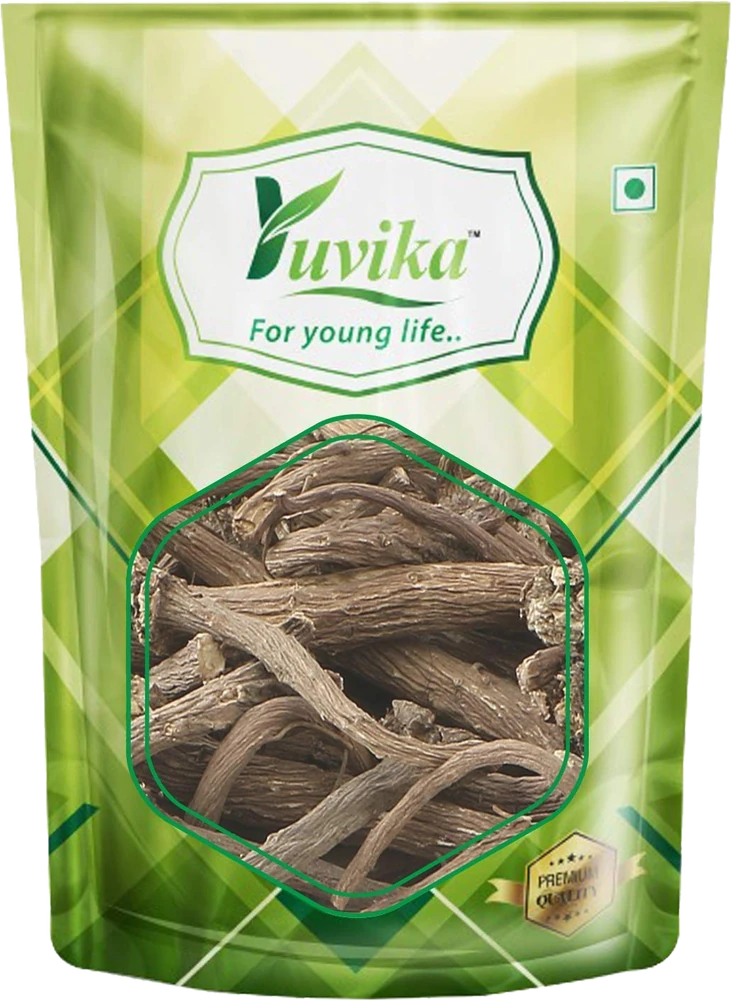 #2 of 8 · Best cost per gram✓ Product photos checked Sep 7, 2026
Real retailer photo, cut out. Label unedited.
Consider it. The restock economics winner. Cheapest genuine Akarkara per gram, 200 g at $17.39.
$17.39$0.087 per gram
Why It Scores 6.6 — And The Label Line Behind Each Number
Label identity & botanical naming
30% of scoreIngredient line reads simply akarkara with the botanical name in the title - adequate but minimal identity.
Processing transparency
25% of scoreNo processing or purity claims at all - the label is silent where bixa BOTANICAL speaks.
Dose reproducibility
20% of scoreWhole roots, no standardisation - the category-wide 4.0 on dose control.
Cost per gram
15% of score$0.087 per gram is the field's floor for genuine Akarkara - the criterion this product wins outright.
- Size
- 200 g
- Cost per gram
- $0.087
- Price
- $17.39
Availability
10% of scoreIn stock in both 100 g and 200 g sizes; Yuvika lists the widest Akarkara range on Amazon.
- More Specs
- Form
- Whole dried root, not powdered (listing photos)
- Standardisation
- None stated
Photos checked.This product has no Supplement Facts panel; the retailer's listing photos were reviewed Sep 7, 2026.
Marketing Claims Vs. Reality
Akarkara Spl. (special) grade
No definition of what Spl. means is given anywhere on the listing. Treat it as branding, not a quality tier.
Single-ingredient akarkara
The ingredient list is one line. Nothing else is claimed - which is honest, if uninformative.
What Our Test Actually Found
The price anchor of the field
Every other listing must justify its premium against this pouch. Only bixa BOTANICAL (fuller label) manages to.
Silence is the trade-off
The label makes no claims to check - good in that nothing is overstated, bad in that nothing is verifiable beyond the ingredient line.
Full analysis: all pros & cons (6), buy if / skip if
- $0.087 per gram — the cheapest genuine Akarkara we found
- 200 g at $17.39; the same brand's 100 g pouch costs $10.56, so the big pouch is the better deal
- Ingredient list is a single line: akarkara; country of origin stated as India
- No processing or purity claims at all
- Whole roots: you grind or chew them yourself, so there is no dose control
- The pouch is the brand's generic one — no botanical name printed on it
- You already tolerate Akarkara and are restocking
- Price per gram is your deciding criterion
- You want the 200 g size at the lowest total cost
- This is your first purchase - start with a smaller pouch
- You want powder, or any processing information on the label
Cheapest genuine Akarkara per gram, 200 g at $17.39. No processing claims at all, and whole roots you grind yourself - you trade information and convenience for price. Buy it the second time, not the first.
Yuvika's 200 g pouch is the rational restock: at $0.087 per gram it is the cheapest genuine Anacyclus pyrethrum we found on US Amazon - sold as whole dried roots, not powder - roughly a third of the priciest listing for the same raw material. The ingredient list is a single honest line. What you give up is information: no processing claims, no purity statements, and a generic brand pouch with no botanical name on it. As a first purchase we point you to a smaller pouch instead; as a repeat purchase for a known-tolerated root, nothing beats this price.
The restock economics winner

The rational restock if you already know you tolerate it. As a first purchase, take the brand's 100 g pouch instead.
If This Doesn’t Fit — Try These
 01
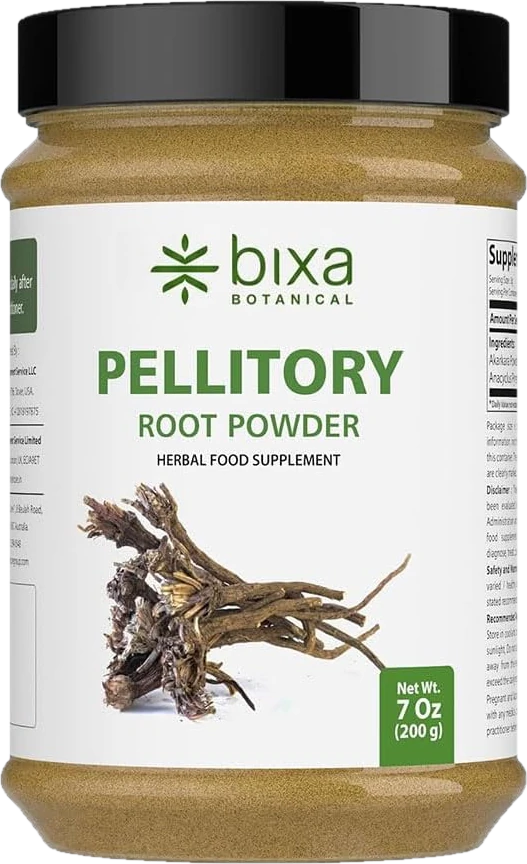
01bixa BOTANICAL Akarkara Powder
If you already use Akarkara and want the fewest open questions, this is the buy.
 04
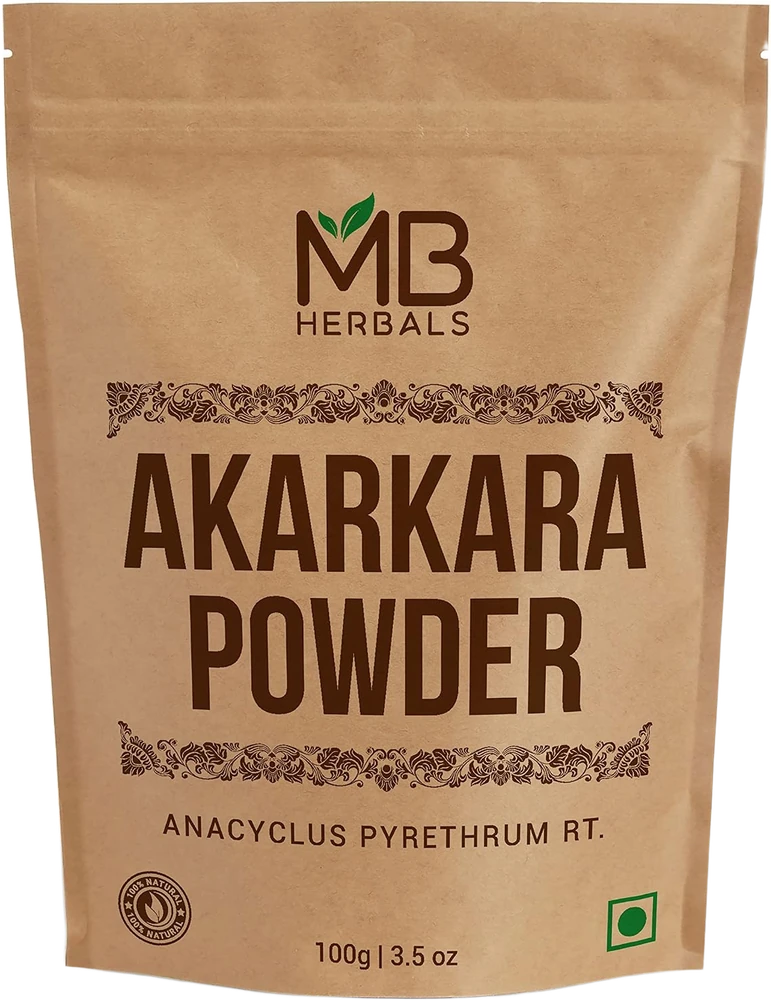
04MB Herbals Akarkara Powder
Nothing wrong with it: a clear back panel with a serving size, but per gram it costs twice the cheapest pouch.
Quick Answers
Why not buy the 200 g pouch first?
Tolerance varies and 200 g is a commitment. The same brand sells a 100 g pouch ($10.56).
Is cheaper Akarkara lower quality?
Unknowable either way - no product here publishes testing. Price differences in this field reflect labelling and brand, not any measurable potency difference.
Sources & Further Reading
3 peer-reviewed sources, each linked to PubMed
- [1] Sharma V, Thakur M, Chauhan NS, Dixit VK. Androgenic and spermatogenic activity of alkylamide-rich ethanol solution extract of Anacyclus pyrethrum DC. Phytother Res. 2013;27(1):99-106. PMID 22473789 — Androgenic and spermatogenic activity of alkylamide-rich ethanol solution extract of Anacyclus pyrethrum DC.. An alkylamide-rich ethanol extract showed androgenic and spermatogenic activity in rats. Animal model - not tested in humans.
- [2] Sharma V, Thakur M, Chauhan NS, Dixit VK. Effects of petroleum ether extract of Anacyclus pyrethrum DC. on sexual behavior in male rats. Zhong Xi Yi Jie He Xue Bao. 2010;8(8):767-73. PMID 20727332 — Effects of petroleum ether extract of Anacyclus pyrethrum DC. on sexual behavior in male rats. Changes in sexual behaviour in male rats. Animal model.
- [3] Elazzouzi H, Soro A, Elhilali F, Bentayeb A, El Belghiti MA, Zair T. Phytochemistry, Biological and Pharmacological Activities of the Anacyclus pyrethrum (L.) Lag: A Systematic Review. Plants (Basel). 2022;11(19):2578. PMID 36235444 — Phytochemistry, Biological and Pharmacological Activities of the Anacyclus pyrethrum (L.) Lag: A Systematic Review. Systematic review of the phytochemistry; summarises animal and in vitro work and names the absence of clinical data.
Affiliate disclosure: every Amazon link uses our Associates tag (superachieverclub-20). We earn a small commission at no cost to you; it funds independent reviews. We never accept payment to change a ranking.