
Soylent Complete Nutrition Powder Review
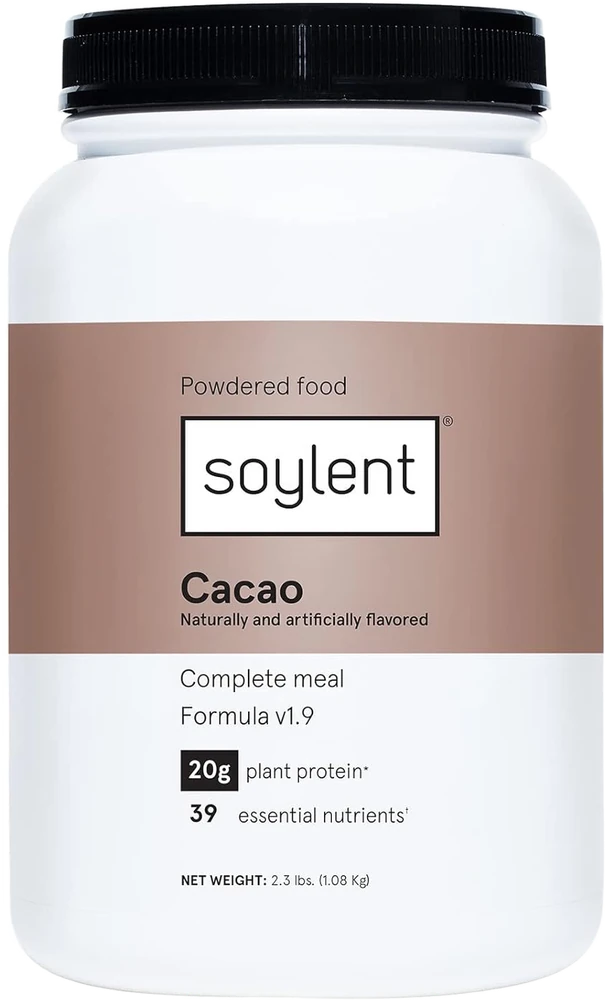 #5 of 8 · Best balanced budget✓ Label verified · Supplement Facts read Sep 7, 2026
Real retailer photo, cut out. Label unedited.
Consider it. The balanced budget workhorse — a complete, drinkable ~400 kcal meal at a low price, minus the whole-food pedigree. Soylent delivers 20 g plant protein, 39 essential nutrients, low sugar and smooth mixability in a complete ~400 kcal meal at one of the lowest per-serving prices here.
Low cost per servingLow per serving (36.8 oz tub)
Why It Scores 8.1 — And The Label Line Behind Each Number
Nutrition (protein & whole-food quality, low junk)
35% of scoreA genuinely complete formula: 20 g of plant protein, 39 essential nutrients at ~20% DV per serving, low sugar, low-GI carbs and added omega-3s — it clears our protein bar and dodges the sugar-bomb trap entirely. The deduction is pedigree, not performance: soy isolate and formulated oils carry none of the organic/whole-food credentials that lift the picks above it.
- Protein
- 20 g plant protein (soy isolate) per serving
Satiety / fullness per calorie
25% of scoreA full ~400 kcal serving with 20 g of protein, fiber and slow-release low-GI carbs holds a meal slot respectably — the deliberate carb profile avoids the spike-and-crash hunger rebound sugary shakes cause. It trails the leaders because 20 g of protein at 400 kcal is a thinner protein-per-calorie ratio than Huel's 40 g or Garden of Life's 20 g at 150 kcal.
Value (cost per serving)
20% of scoreOne of the lowest costs per serving on the list, and notably the cheapest way in our lineup to buy a COMPLETE ~400 kcal meal rather than a light shake. Orgain edges it on absolute price per serving, but per calorie of complete nutrition delivered, Soylent is arguably the best deal here.
- Price
- One of the lowest costs per serving in our ranking
Taste & mixability (rep)
20% of scoreMixes smoothly with no grit — a frequent, consistent praise point — and the neutral, mildly sweet cacao flavor is engineered for repetition rather than excitement. Nobody rates it a dessert, but very few abandon it for taste reasons, which for a daily-use tool is the metric that counts.
- More Specs
- Sugar / carbs
- Low sugar; low-GI, slow-release carbs
- Micronutrients
- 39 essential nutrients (~20% DV per serving)
- Extras
- Omega-3s and BCAAs; balanced macro split
- Calories
- ~400 kcal per 2-scoop full-meal serving
- Format
- Powder, 36.8 oz tub (Cacao verified on Amazon)
- Diet
- Vegan; contains soy
Label verified. Every figure read from the Supplement Facts photo, Sep 7, 2026.
Marketing Claims Vs. Reality
Complete nutrition meal replacement with plant-based protein and 39 essential nutrients.
The live Amazon listing states exactly this positioning — Soylent Complete Nutrition meal replacement protein powder, plant-based vegan protein, 39 essential nutrients, 36.8 oz. The nutritionally-complete engineering is the product's core identity and the label numbers match what our ranking used.
20 g of protein with low sugar and slow-burning, low-GI carbohydrates.
The stated macro profile — 20 g plant protein, low sugar, deliberately low-glycemic carbs — clears our category bar (≥20 g protein, low added sugar) and avoids the sugar-bomb failure mode that disqualifies much of this category. These are the figures behind its balanced-budget badge.
'Complete nutrition' as a path to better health or weight management.
The completeness is real; the weight-loss implication needs the honest frame. Vitamins don't cause fat loss — a calorie deficit does, and a known-calorie complete meal simply makes that deficit easier to hold (Astbury 2019; Min 2021, both meta-analyses of RCTs). Soylent helps exactly when a ~400 kcal serving replaces a larger meal, and not at all when it's added on top.
What Our Test Actually Found
The cheapest complete meal in the lineup — value framed correctly
Orgain wins raw price per serving, but Orgain's serving is a ~150-160 kcal light shake; Soylent's is a full ~400 kcal meal with a 39-nutrient panel. Priced per complete meal delivered, Soylent is the best deal in our ranking — a real lunch's worth of calories, protein and micronutrients for a couple of dollars. For someone replacing a daily fast-food lunch on a budget, that's the most economically defensible swap on this page.
Engineered consistency is an underrated adherence asset
Whole-food shakes vary — texture, settling, grit — and taste fatigue kills more meal-replacement habits than macros ever will. Soylent's formulation is the same smooth, neutral, mildly sweet drink every single time, and its reviews reflect that: high marks for mixability, very few taste-based abandonments. Boring is a strategy. If your last meal-replacement attempt died in the cupboard after a week of choking down something earthy, the least romantic product on this list may be the one you actually finish.
Know what you're not getting: organic pedigree and protein ceiling
Both reasons Soylent sits at #5 are visible on the label. The protein is soy isolate at 20 g per 400 kcal — a thinner protein-per-calorie ratio than Huel Black (40 g/400 kcal), and soy is itself a dealbreaker for some buyers. And there's no organic, sprouted, raw or whole-food story here: this is formulated food from a company that's philosophically fine with that. Neither issue affects the deficit math, but if either is on your personal must-have list, the top three picks exist for you.
Portion discipline matters more with a 400 kcal serving
The full-meal sizing that makes Soylent great value also makes it the pick where sloppy use costs most. A 'quick shake' between meals is 400 added calories — do that daily and you've erased a week's deficit by Friday. Treat every serving as a meal with a name: this is lunch, or this is breakfast, never 'a shake.' The powder format helps here — scoop math lets you mix a half-size 200 kcal mini-meal deliberately when that's what the plan calls for.
Full analysis: all pros & cons (8), buy if / skip if
- One of the lowest costs per serving here — and the cheapest complete ~400 kcal meal in the lineup
- Nutritionally complete: 39 essential nutrients, balanced macros, low sugar, low-GI carbs
- Mixes smoothly with a neutral taste built for months of daily use
- 20 g plant protein with omega-3s and BCAAs
- Consistent, precise formulation — the same meal every time
- Engineered/processed formula — no organic or whole-food credentials
- 20 g protein at ~400 kcal is a thinner protein-per-calorie ratio than the leaders
- Soy-based protein is a dealbreaker for soy-avoidant buyers
- You want a complete ~400 kcal meal (not a light shake) at budget-powder prices
- You value smooth mixing and a neutral taste you won't tire of over months of daily use
- You're fine with an openly engineered formula — precision and consistency over whole-food romance
- You want low sugar and low-GI carbs in a balanced macro split
- Organic / whole-food sourcing is a requirement — Garden of Life (#2) or Orgain (#3) are your picks
- You want maximum protein per meal — Huel Black (#1) doubles Soylent's 20 g
- You avoid soy — the protein base is soy isolate
Soylent delivers 20 g plant protein, 39 essential nutrients, low sugar and smooth mixability in a complete ~400 kcal meal at one of the lowest per-serving prices here. It's an engineered formula rather than organic whole-food, and 20 g protein is mid-table — which is exactly why it sits at #5. For a cheap, consistent, no-drama daily meal swap inside a deficit, it's a smart buy; for pedigree or maximum protein, look up the list.
Soylent Complete Nutrition Powder is the meal replacement for people who want the job done without a story attached: a deliberately engineered, nutritionally complete ~400 kcal meal with 20 g of plant protein, 39 essential nutrients, low sugar and low-GI carbs, at one of the lowest costs per serving in our eight-pick ranking. It mixes smoothly — a consistent praise point — and its neutral cacao flavor is the kind you can drink every day for months without flavor fatigue, which quietly matters in a category whose entire benefit is adherence. It ranks #5 for honest, structural reasons rather than any flaw in execution. It's openly 'engineered food' — soy protein and formulated oils rather than the organic, sprouted, whole-food pedigrees of Garden of Life or Orgain — and 20 g of protein is solid but mid-table next to Huel Black's 40 g. If those trade-offs don't bother you, the price-to-completeness ratio here is arguably the best on the list: a full, balanced, known-calorie meal for budget-powder money. The category rule applies as always: Soylent is food, not a fat-burner — a ~400 kcal serving helps weight loss only when it replaces a meal inside a calorie deficit. Full breakdown below.
A smart budget buy for a complete daily meal swap — as long as pedigree isn't your criterion.

Soylent Complete Nutrition earns its 'balanced budget' badge by being exactly what it claims: a complete, consistent, drinkable ~400 kcal meal — 20 g protein, 39 nutrients, low sugar, low-GI carbs — at a price that makes daily use genuinely sustainable. Its smooth mixability and neutral flavor are engineered for repetition, and repetition is what the meal-replacement evidence (Astbury 2019) actually rewards: the structured meal you keep using is the one that shows up on the scale. It's a 'consider' rather than an unqualified 'buy' for clearly stated reasons: the formula is openly engineered rather than organic or whole-food, the 20 g of protein is mid-table for a 400-calorie meal, and the soy base excludes some buyers outright. If none of that is on your must-have list, Soylent is the most economical complete meal swap on this page — replace a lunch with it, keep your day inside a calorie budget, and let the deficit do the work. If pedigree or protein ceiling matters, spend up on the picks above it.
If This Doesn’t Fit — Try These
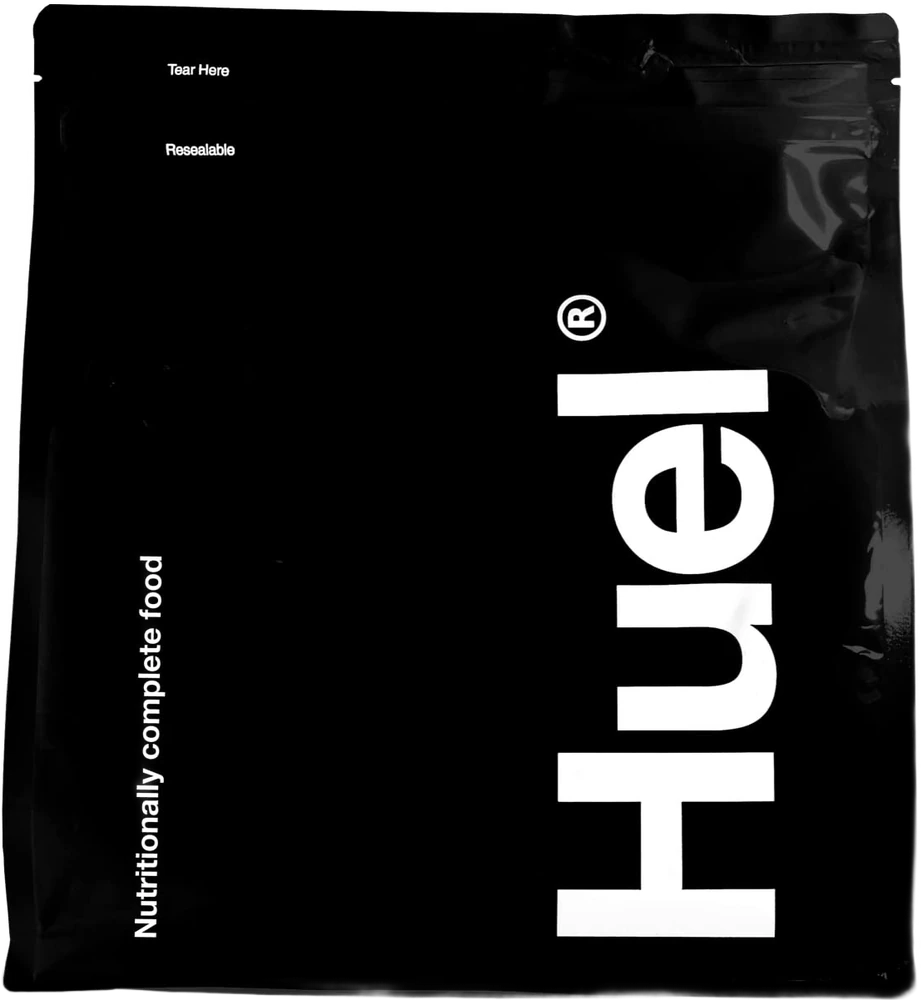 01
01Huel Black Edition
If you want one meal replacement and you want it to do the actual job — stand in for a full meal and make a calorie deficit easy — Huel Black Edition is the best-made option here, and that's why it's #1.
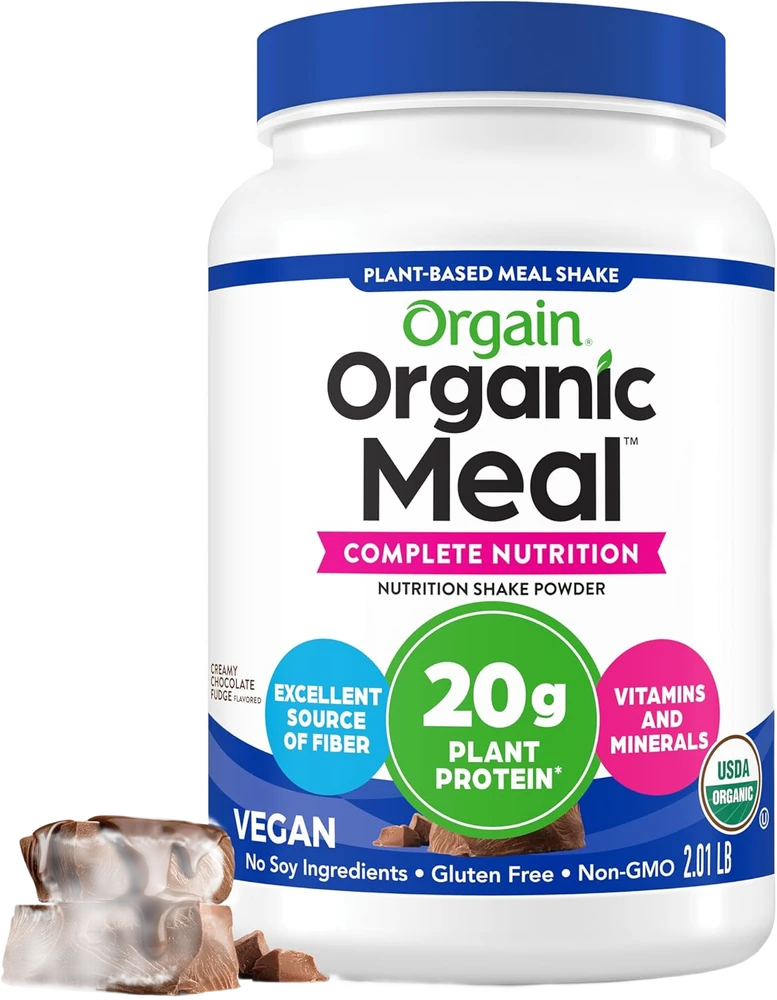 03
03Orgain Organic Vegan Meal
Orgain Organic Meal is the value champion and a genuinely smart default.
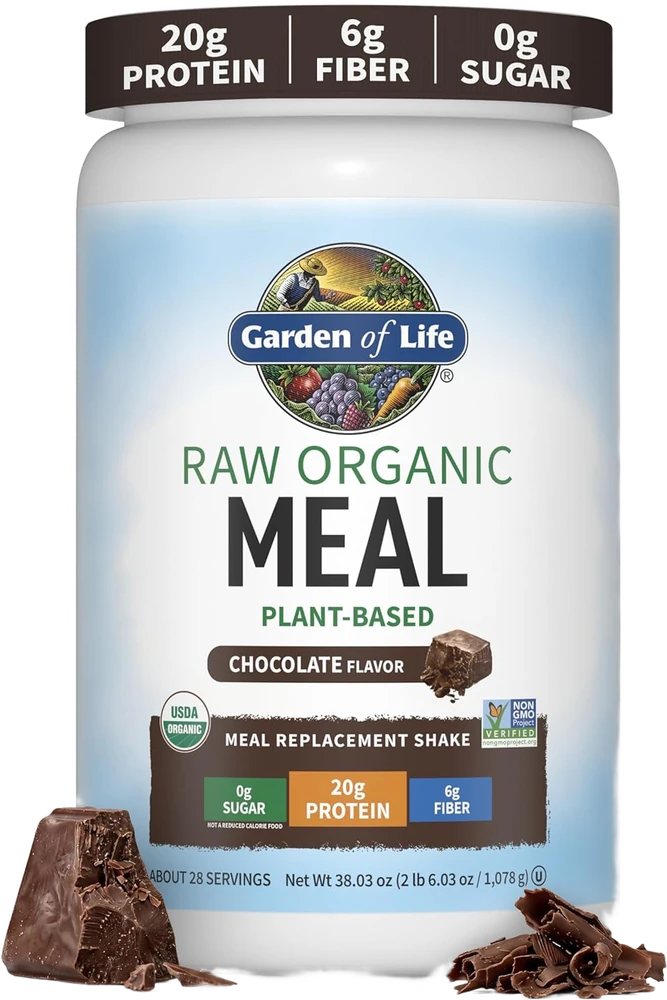 02
02Garden of Life Raw Organic Meal
Garden of Life Raw Organic Meal is the pick for anyone who wants the cleanest possible label, and it ranks #2 on nutrition alone.
Quick Answers
Is Soylent good for weight loss?
Used correctly, yes — the same honest way any complete meal replacement is. A full ~400 kcal Soylent serving is a fixed, known-calorie meal with 20 g of protein, low sugar and low-GI carbs, which removes the guesswork that makes calorie deficits fail. Meal-replacement structure has real randomized evidence behind it: ~1.44 kg more weight loss at one year versus food-based diets across 23 RCTs (Astbury 2019). Soylent's specific advantage is that it's cheap and easy enough to do this every single day. The rule is unchanged: it must REPLACE a meal inside a calorie deficit. Portion it honestly — a full serving is a meal's worth of calories, not a snack.
Is 'engineered food' bad? It sounds processed.
It's a trade-off, not a scandal — and we rank it honestly rather than moralizing. Soylent is openly a formulated food: soy protein, algal and canola oils, slow-release carbs, and a designed micronutrient panel of 39 essential nutrients. What you give up versus Garden of Life or Orgain is organic certification and a whole-food ingredient story. What you get is precision, consistency, a balanced macro split, low sugar, and a price the organic picks can't match. For the specific job of a known-calorie meal inside a deficit, the formula does exactly what it says. If a whole-food label matters to you emotionally or philosophically, buy #2 or #3; the deficit math doesn't care either way.
How many calories is a Soylent meal, and how should I portion it?
A full two-scoop serving mixes to roughly 400 kcal — deliberately sized as a complete meal, with about 20% of your daily value for the 39 essential nutrients to match. For weight loss that cuts both ways: replacing a 700-900 kcal lunch with a 400 kcal shake banks hundreds of calories, but casually drinking a full serving as a 'snack' adds a meal's worth of calories to your day. Portion it as a meal, count it as a meal, and if you want a lighter swap, use a smaller scoop count and do the math — the powder format makes the calories exactly as adjustable as you need them to be.
What does Soylent taste like compared to the others here?
Deliberately neutral — and for daily use that's a feature. The Cacao flavor is a mild, lightly sweet chocolate; the texture mixes smooth without grit, which is a frequent praise point in reviews and better than several 'greens'-forward organic shakes manage. Nobody calls it a milkshake experience (that's Ka'Chava's lane), but very few people get tired of it, and shakes you don't get tired of are shakes you keep drinking — which is the entire benefit of this category. If you want excitement, pay Ka'Chava's premium; if you want a reliable, drinkable daily meal at a low price, Soylent's blandness is doing its job.
Sources & Further Reading
2 peer-reviewed sources, each linked to PubMed
- [1] Astbury 2019 PMID 30675990 — A systematic review and meta-analysis of the effectiveness of meal replacements for weight loss. 23 RCTs / 7,884 adults: meal-replacement programs delivered ~1.44 kg more weight loss at one year than food-based diets. The mechanism is structure and adherence — exactly the two things Soylent's cheap, consistent, known-calorie meal is engineered to provide, inside a calorie deficit.
- [2] Min 2021 PMID 34144920 — The effect of meal replacement on weight loss according to calorie-restriction type and proportion of energy intake: a systematic review and meta-analysis of randomized controlled trials. Meta-analysis of RCTs: meal-replacement calorie-restricted diets beat food-based calorie restriction, with the biggest edge when replacements supplied more of the day's energy. Relevant to Soylent's full-meal ~400 kcal sizing — a complete-meal replacement fits the higher-energy-share pattern the data favors, provided the deficit holds.
Affiliate disclosure: every Amazon link uses our Associates tag (superachieverclub-20). We earn a small commission at no cost to you; it funds independent reviews. We never accept payment to change a ranking.