
Philips SmartSleep Sleep & Wake-Up Light HF3650 Review
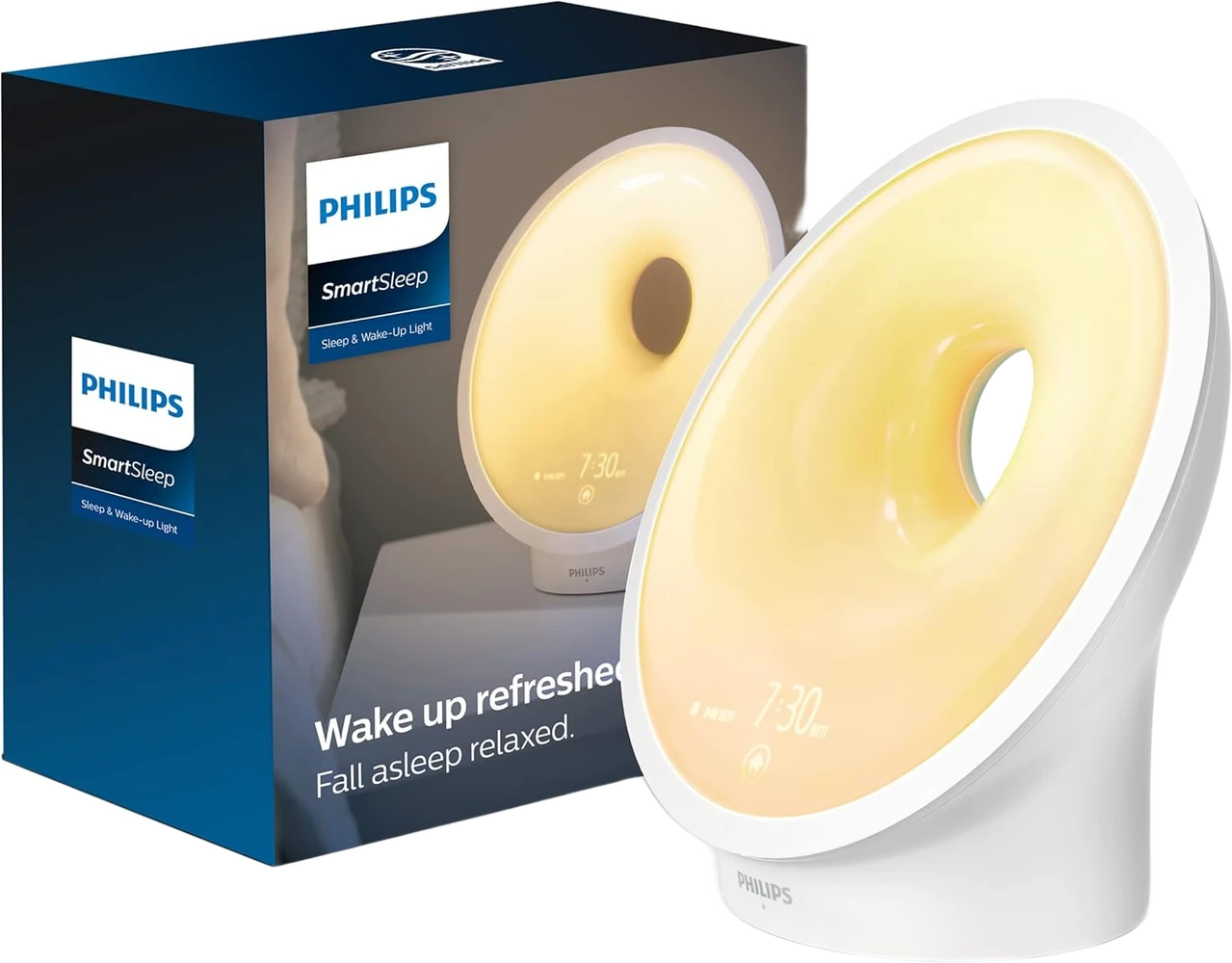 #3 of 8 · Best for heavy sleepers✓ Product photos checked Sep 7, 2026
Real retailer photo, cut out. Label unedited.
Buy it. The clinical Philips sunrise plus the strongest anti-oversleep failsafe on the list — the heavy-sleeper specialist. The HF3650 pairs the validated ~300-lux Philips sunrise with a loud escalating backup beeper, so you get the gentlest wake that still can't fail.
$180
Why It Scores 8.5 — And The Label Line Behind Each Number
Light quality
30% of scoreThe same clinical tier as the benchmark HF3520: a sunrise validated to roughly 300 lux at the pillow with the natural red→amber→white progression, plus a sunset simulation running the ramp in reverse. Marginally below its sibling's 9.6 only because the larger, feature-denser unit offers no light advantage for the extra money — the light is equal, not better.
- Light
- Sunrise + sunset simulation, ~300 lux peak, red→amber→white ramp
Wake reliability
20% of scoreThe best score on our list, and the reason this product exists: a loud, escalating backup-beeper failsafe sounds on top of the sunrise, so oversleeping is designed out rather than hoped away. For the heavy sleepers our badge targets — people light and gentle sounds have failed before — this is the strongest anti-oversleep architecture in the category.
Features
20% of scoreSunset simulation, the RelaxBreathe paced-breathing wind-down light, multiple light and sound options, FM radio, an auto-dimming display and a wave-activated red night light — a genuinely useful set, all subscription-free. What's missing keeps it at 8.0: no true noise-color sound machine (Dreamegg) and no guided content ecosystem (Hatch).
Controls & usability
20% of scoreFully button-operated with tap-to-snooze and zero app dependency — the right fundamentals. The deduction is real, though: with more features than the HF3520 comes a deeper, more menu-driven setup that takes patience to program initially. Daily use is simple once configured; the first evening is not.
Value
10% of scoreAt ~$180 it's the most expensive pick on our list — you're paying a premium over the HF3520 for the failsafe, sunset extras and night light, not for better light. For its target buyer the insurance is worth every dollar (one avoided missed morning can pay for the gap); for everyone else it's more clock than needed, which is exactly why value scores lowest on this card.
- Price
- ~$180 — the most expensive pick on our list
- More Specs
- Failsafe
- Loud escalating backup beeper on top of the sunrise
- Wind-down
- Sunset simulation + RelaxBreathe paced-breathing light
- Extras
- FM radio, auto-dimming display, wave-activated red night light
- App / sub
- None — fully button-operated, no account, no subscription
Photos checked.This product has no Supplement Facts panel; the retailer's listing photos were reviewed Sep 7, 2026.
Marketing Claims Vs. Reality
Simulated sunrise wakes you gradually and naturally.
The HF3650 carries the clinical Philips sunrise — validated to roughly 300 lux at the pillow with a natural red→amber→white ramp — and the dawn-simulation category has controlled-trial support for gentler waking (Gabel 2013; Giménez 2010). As a description of what the light does, this holds.
Backup beeper ensures you wake even if the light doesn't do it.
The escalating audible backup alarm is the unit's defining design feature and the basis of our heavy-sleeper badge — the sunrise leads, and a loud beeper failsafe follows so the wake is guaranteed. This is exactly the anti-oversleep architecture our Wake reliability axis rewards with its highest score.
RelaxBreathe light-guided breathing helps you fall asleep.
The feature exists as described — a slowing light pulse you pace your breathing to at bedtime — and paced breathing is a reasonable low-risk relaxation practice. But we cite no outcome trials for this specific feature and treat it as a bonus, not an evidence-backed sleep treatment. PARTIAL: real feature, modest claim discipline required.
Works completely without an app or subscription.
All functions — alarms, sunrise/sunset, sounds, RelaxBreathe, FM — are set from on-device physical controls. No companion app, no account, no paid tier. Verified against the live listing; identical ownership story to the HF3520.
What Our Test Actually Found
The failsafe is the product — everything else is shared with cheaper units
Strip away the backup beeper and the HF3650 is roughly an HF3520 with a sunset upgrade at a $60 premium. That's the honest way to frame the buying decision: the clinical ~300-lux light is the same tier, the no-app ownership story is the same, and the wind-down extras are nice-to-haves. What you're really paying for is the escalating audible failsafe — the one feature on our entire list that makes oversleeping a solved problem rather than a residual risk. If that sentence describes a problem you have, this is your clock; if not, it isn't.
Light leads, beeper guarantees — the right division of labor
The research case for dawn simulation is about wake quality: Gabel 2013 found a 250-lux dawn improved morning cognition, mood and wake-time cortisol, and Giménez 2010 found artificial dawn significantly reduced sleep inertia. Neither claims light reliably wakes everyone — and field experience says it doesn't. The HF3650's architecture respects both facts: the sunrise delivers the gentler, less groggy wake the trials describe, while the beeper handles the reliability job the light was never guaranteed to do. That's why it can be simultaneously the gentlest and the most reliable wake on our list.
The extras are genuinely useful, but don't buy for them
The sunset simulation gives you a wind-down dawn-in-reverse, RelaxBreathe adds a paced-breathing light, the display auto-dims so it doesn't light the room at night, and a wave of the hand summons a red night light for 3 a.m. trips — melatonin-friendlier than blasting a white lamp. All real, all pleasant, all subscription-free. But none of them is the reason to choose this over the HF3520 or the Hatch; they're the finish, not the case. The case is the failsafe plus the clinical light.
Priciest on the list — and rationally so for exactly one buyer
At ~$180 the HF3650 costs more than the category winner. Our Value score (6.2, the lowest on this card) prices that honestly: most sleepers get equivalent light for $60 less in the HF3520, and a more complete system for $10 less in the Hatch. The economics flip for the chronic oversleeper — a missed flight, shift or meeting costs more than the entire price gap, and this is the only unit on the list engineered to make that failure mode effectively impossible. Specialist tools are allowed to cost specialist money; just be sure you're the specialist case.
Full analysis: all pros & cons (8), buy if / skip if
- Loud escalating backup-beeper failsafe — the strongest anti-oversleep design on the list
- Same clinical ~300-lux Philips sunrise tier as the benchmark HF3520, plus sunset simulation
- No app, no account, no subscription — fully button-operated for life
- Auto-dimming display and wave-activated red night light are genuinely useful nightly touches
- RelaxBreathe paced-breathing wind-down adds a pleasant bedtime routine
- The most expensive pick on our list at ~$180 — you pay a real premium for the failsafe
- Deeper, more menu-driven setup than the simpler HF3520
- No true noise-color sound machine or guided content ecosystem
- You sleep through alarms — the escalating backup beeper is the best anti-oversleep design here
- You want the clinical ~300-lux Philips light AND a guaranteed audible wake
- You want a sunset wind-down, night light and FM with no app and no subscription
- Being late is expensive for you — the failsafe is cheap insurance at the price gap
- A normal alarm has always woken you — the HF3520 (#2) has the same clinical light for ~$60 less
- You want a full sound-machine/wind-down ecosystem — the Hatch Restore 3 (#1) is the more complete system
- Budget rules — the JALL Full-Screen (#7) is the affordable option marketed at deep sleepers
The HF3650 pairs the validated ~300-lux Philips sunrise with a loud escalating backup beeper, so you get the gentlest wake that still can't fail. Sunset wind-down, RelaxBreathe, FM and a smart night light round it out, all button-operated with no app or subscription. It's the priciest pick (~$180) and more menu-driven than the HF3520 — buy it for the failsafe, not as a default.
Every sunrise alarm clock has the same quiet failure mode: some mornings, for some sleepers, the light just doesn't do it — and you oversleep. The Philips HF3650 is the one product on our list engineered around that exact problem. It keeps the clinical Philips sunrise — validated to roughly 300 lux at the pillow, with the natural red→amber→white ramp that makes these units the category benchmark — and pairs it with a loud, escalating backup-beeper failsafe, so the light is the gentle lead-in and the beeper is the guarantee. That combination earns it the highest Wake reliability score on our list (9.4) and our heavy-sleeper badge. The rest of the package is strong but secondary: a sunset simulation for wind-down, the RelaxBreathe paced-breathing light, FM radio, an auto-dimming display and a wave-activated red night light — all with no app and no subscription, ever. The honest limits: at ~$180 it's the most expensive pick on the list, and its deeper menus make initial setup more fiddly than the simpler HF3520. Most people don't need to spend up to this unit. But if alarms have historically failed you, this is precisely the tool to buy. Here's the full breakdown.
If you sleep through alarms, buy this one — the failsafe plus clinical light is worth the premium.

The HF3650 is the specialist answer to the sunrise category's one honest weakness. Light wakes most people gently — the dawn-simulation trials back that — but it doesn't wake everyone, every morning, and a clock you can oversleep against is a clock a heavy sleeper can't trust. By pairing the clinical ~300-lux Philips sunrise with a loud escalating backup beeper, the HF3650 delivers the gentlest wake on the list with a guarantee attached, which is why it takes our highest Wake reliability score and the heavy-sleeper badge at 8.5 overall. The buying discipline: don't default to it. If a normal alarm has always gotten you up, the HF3520 gives you the identical clinical light for about $60 less; if you want a complete sound-machine-and-wind-down system, the Hatch Restore 3 is the better all-rounder. But if being late has real costs in your life and light-only clocks scare you, this is the most reliable wake-up you can put on a nightstand — with no app, no subscription, and nothing that can fail online. Buy it for the failsafe.
If This Doesn’t Fit — Try These
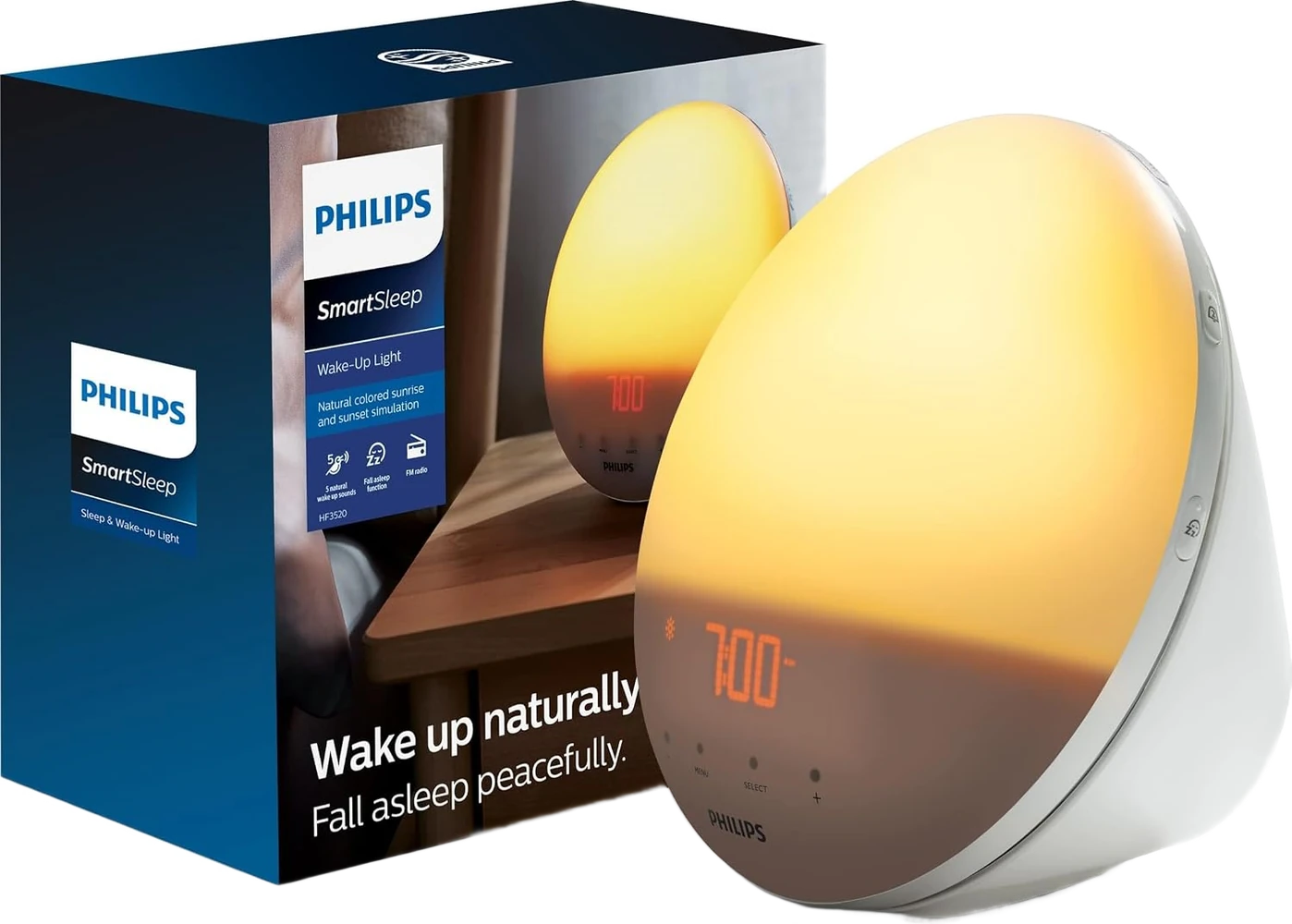 02
02Philips SmartSleep HF3520
If light quality and a clean ownership experience are what you care about, this is the pick — and it's the one we point app-averse buyers to first.
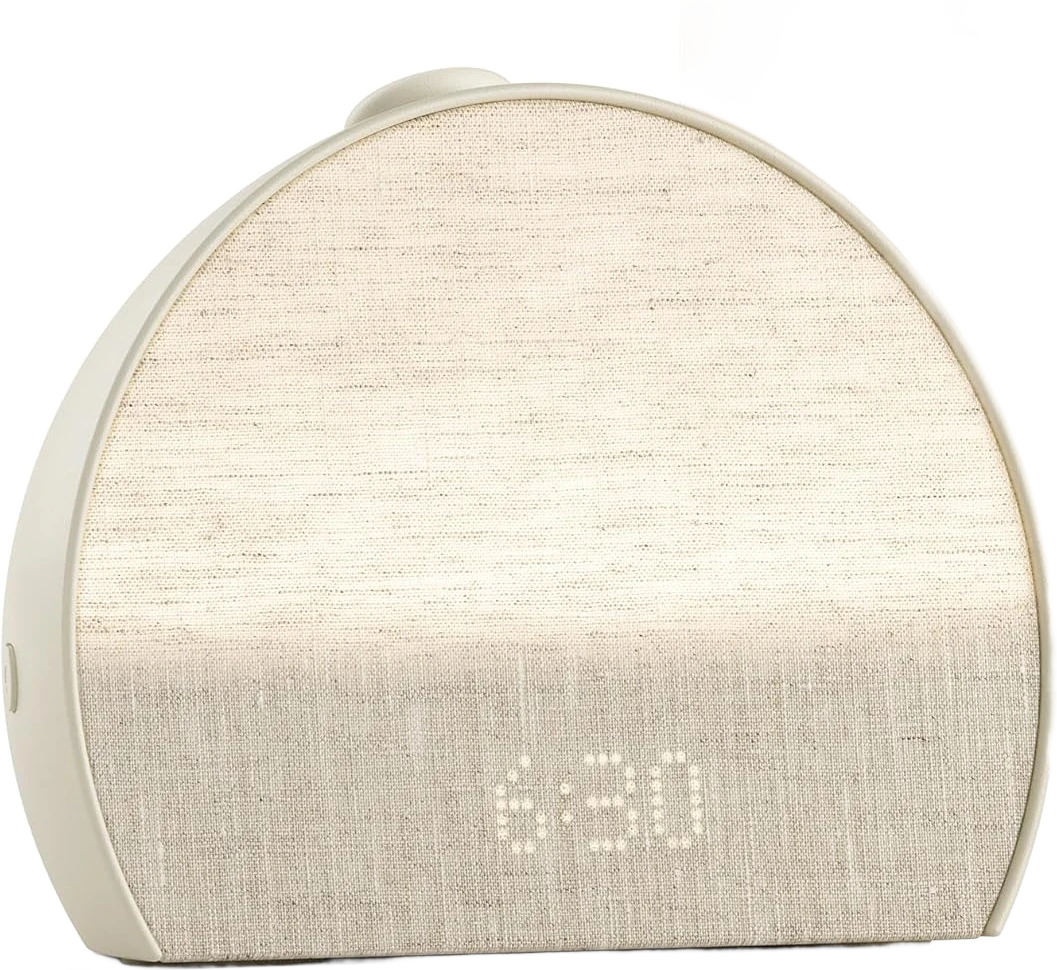 01
01Hatch Restore 3
This is the best-rounded sunrise clock you can buy: a gradual sunrise, a real sound machine, a sunset wind-down and a smart reading light, all controlled day-to-day from three physical buttons so you're not fishing for your phone at 6 a.m.
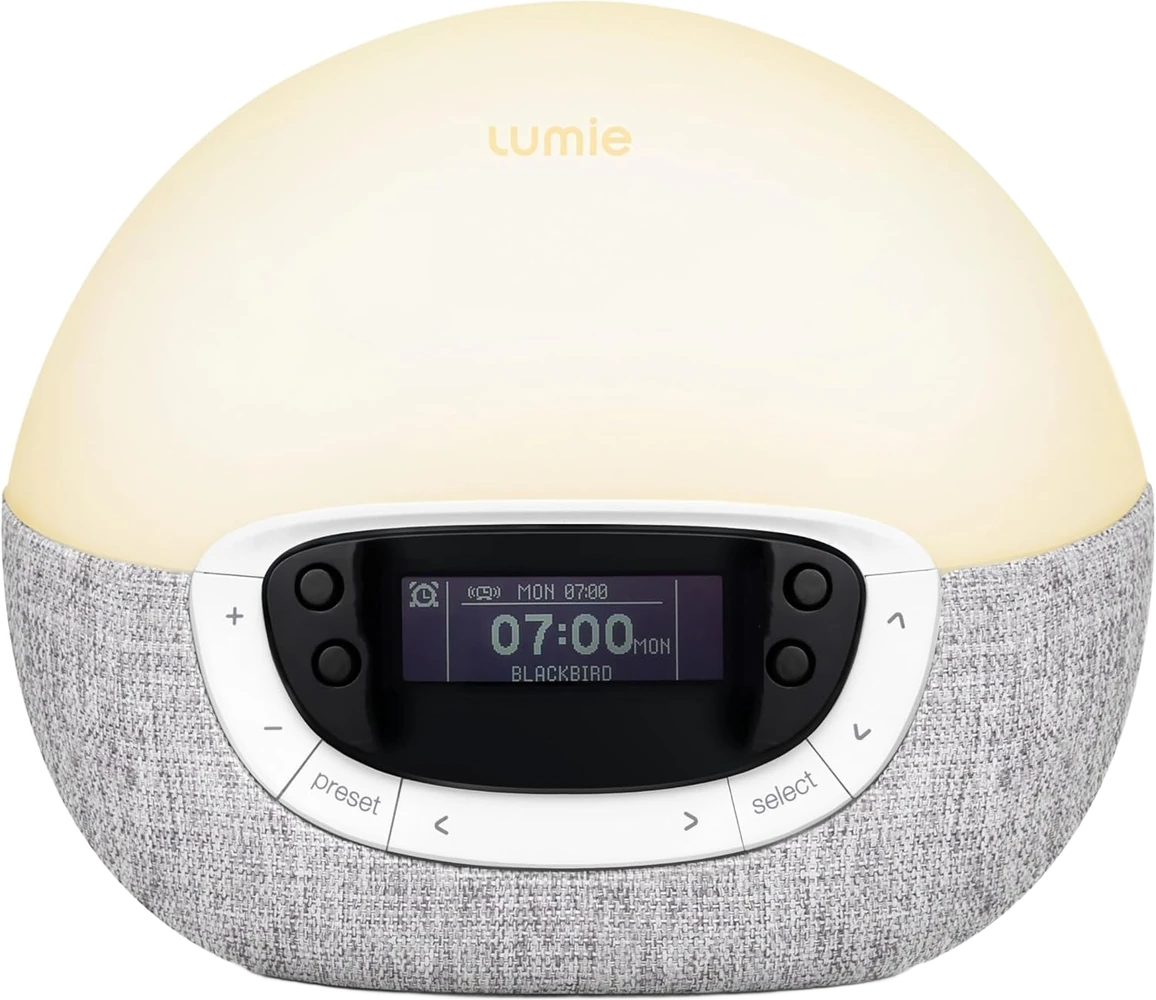 06
06Lumie Bodyclock Shine 300
For buyers who want a serious wake-up light and refuse anything that needs an app, Wi-Fi or a login, the Lumie Bodyclock Shine 300 is the cleanest answer.
Quick Answers
What exactly is the 'backup beeper failsafe' and why does it matter?
It's a loud, escalating audible alarm that sounds in addition to the sunrise — the HF3650's design assumption is that light alone may not wake you, so the light is the gentle lead-in and the beeper is the guarantee. That architecture matters because it addresses the sunrise category's honest weak spot: dawn simulation reliably makes waking feel gentler (Giménez 2010 found it significantly reduced sleep inertia), but heavy sleepers can sleep straight through a light ramp. On our Wake reliability axis the HF3650 scores 9.4 — the highest on the list — precisely because it never asks the light to do the failsafe's job.
Is the HF3650 worth $60 more than the HF3520?
Only if you're buying insurance. Both share the same clinical light tier — the validated ~300-lux Philips sunrise with the natural red→amber→white ramp — and both run entirely from physical buttons with no app or subscription. Your extra ~$60 buys the loud backup-beeper failsafe, the RelaxBreathe wind-down guide, an auto-dimming display and a wave-activated red night light. If you have ever slept through an alarm and been late, the failsafe alone justifies it. If a normal alarm has always woken you, save the money and buy the HF3520 — the light is the same.
Does the HF3650 need an app or a subscription?
No. Like its HF3520 sibling, the HF3650 is fully button-operated: alarms, the sunrise and sunset simulations, sounds, RelaxBreathe and FM radio are all set from on-device controls, with no companion app, no account and no paid content tier. The trade-off worth knowing: because it packs more features than the HF3520, its menus are deeper and initial programming takes a bit more patience — that's reflected in its 7.8 Controls score. Once configured, daily use is simple: tap to snooze, and the sunrise plus failsafe run automatically.
What is RelaxBreathe, honestly?
RelaxBreathe is a wind-down feature: a slowly pulsing light you synchronize your breathing to at bedtime, gradually slowing the rhythm to help you relax toward sleep. Treat it as a pleasant bonus, not a clinical intervention — paced breathing is a reasonable, low-risk relaxation practice, but we don't cite outcome trials for this specific feature and you shouldn't buy the unit for it. The reasons to buy the HF3650 are the clinical sunrise and the backup-beeper failsafe; RelaxBreathe, the sunset simulation and the night light are supporting acts.
Sources & Further Reading
3 sources — studies link to PubMed, product specs to the manufacturer
- [1] Gabel 2013 PMID 23841684 — Effects of artificial dawn and morning blue light on daytime cognitive performance, well-being, cortisol and melatonin levels. Lab study, 17 sleep-restricted participants: a dawn simulation rising to 250 lux improved cognitive performance, mood and well-being and raised wake-time cortisol versus dim and blue light. The wake-quality case for the HF3650's sunrise — the failsafe beeper covers what light can't guarantee.
- [2] Giménez 2010 PMID 20653451 — Effects of artificial dawn on subjective ratings of sleep inertia and dim light melatonin onset. Field study with a wake-up light: artificial dawn significantly reduced self-reported sleep inertia — but did NOT shift dim-light melatonin onset, and light alone is not guaranteed to wake every sleeper. Exactly the gap the HF3650's backup-beeper failsafe is engineered to close.
- [3] Philips specs / Amazon listing 2026 — Philips SmartSleep Sleep and Wake-Up Light HF3650/60 — published specifications and Amazon product listing. Product facts on this page — the ~300-lux sunrise and sunset simulation, escalating backup-beeper alarm, RelaxBreathe wind-down, FM radio, auto-dimming display, wave-activated night light and fully button-based no-app/no-subscription operation — verified against the manufacturer specification and the live Amazon listing (ASIN B075S53HD9, checked 2026-07-20).
Affiliate disclosure: every Amazon link uses our Associates tag (superachieverclub-20). We earn a small commission at no cost to you; it funds independent reviews. We never accept payment to change a ranking.