
Orgain Organic Vegan Meal Replacement Powder Review
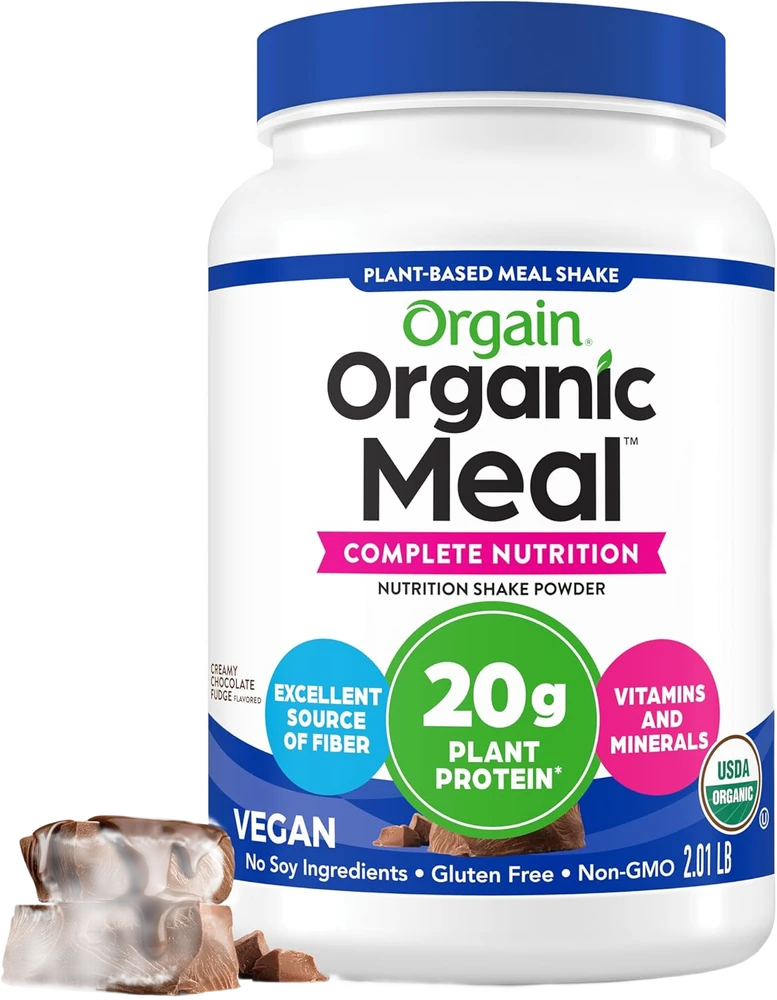 #3 of 8 · Best value✓ Label verified · Supplement Facts read Sep 7, 2026
Real retailer photo, cut out. Label unedited.
Buy it. The value champion — organic, 20 g protein, 9 g fiber, no sugar added, at the lowest cost per serving of the powders. Orgain delivers a USDA Organic shake with 20 g plant protein, the lineup's highest fiber (9 g prebiotic) and no added sugar at the best price per serving here — and it mixes smoothly enough to drink every day.
Lowest cost per serving of the powders hereLowest per serving among the powders
Why It Scores 8.6 — And The Label Line Behind Each Number
Nutrition (protein & whole-food quality, low junk)
35% of scoreUSDA Organic, plant-based (pea, brown rice, chia) with a fruits-vegetables-and-greens food blend, 20 g of protein and no sugar added — a genuinely clean profile that clears our category bar with room to spare. It scores below Huel (protein load) and Garden of Life (certification depth) but above everything else: organic sourcing, real fiber and zero added sugar is exactly what a weight-loss shake should look like.
- Protein
- 20 g organic plant protein (pea, brown rice, chia)
- Certifications
- USDA Organic; vegan, gluten-free, dairy-free, lactose-free, soy-free
Satiety / fullness per calorie
25% of scoreThe 9 g of prebiotic fiber — the highest in our lineup — plus 20 g of protein at roughly 150-160 kcal makes this one of the most filling light meals we ranked. Fiber is the underrated satiety lever, and Orgain leans on it harder than any competitor. Bigger appetites replacing a large meal may still want to add fruit, as with any ~150 kcal serving.
Value (cost per serving)
20% of scoreThe best value on the list: the lowest cost per serving of the powders we ranked, from a widely stocked mainstream brand, without surrendering organic certification. Per gram of protein and fiber delivered, nothing here comes close at the price. This axis is why it wears the Best Value badge.
- Price
- Lowest cost per serving of the powders in our ranking
Taste & mixability (rep)
20% of scoreMixes more smoothly than most organic plant shakes — a real adherence advantage over grittier whole-food competitors — and the Creamy Chocolate Fudge flavor is well-liked overall. The deduction is the erythritol/stevia sweetening: a minority of users report a cooling aftertaste, and sugar alcohols can cause mild GI upset in sensitive stomachs.
- More Specs
- Sugar
- No sugar added (sweetened with erythritol + stevia)
- Fiber
- 9 g prebiotic fiber — highest in our lineup
- Food blend
- Organic fruits, vegetables and greens
- Calories
- ~150-160 kcal per serving (mixed in water)
- Format
- Powder, 2.03 lb tub (Creamy Chocolate Fudge verified on Amazon)
Label verified. Every figure read from the Supplement Facts photo, Sep 7, 2026.
Marketing Claims Vs. Reality
20 g plant-based protein, gluten-free, dairy-free, lactose-free, soy-free, no sugar added.
The live Amazon listing states exactly these values in its title — 20 g plant-based protein, gluten-free, dairy-free, lactose-free, soy-free, no sugar added, 2.03 lb. These are the numbers our ranking used, and they clear the category bar (≥20 g protein, low/no added sugar).
USDA Organic meal replacement with 9 g of prebiotic fiber and a fruits/veggies/greens blend.
Consistent with the product's organic certification and stated formula. The 9 g prebiotic fiber figure is the highest fiber count among our eight verified picks and the quantitative backbone of its satiety score.
A nutritious meal replacement that supports weight management goals.
True through the category's only honest mechanism: a known-calorie, high-protein, high-fiber shake makes a calorie deficit easier to hold, and meal-replacement programs modestly outperform food-based diets in meta-analysis (Astbury 2019; Min 2021). The shake itself burns nothing — it must replace a meal inside a deficit, and we apply that framing to every pick equally.
What Our Test Actually Found
9 g of fiber is the quiet star of this formula
Everyone compares protein numbers; almost nobody compares fiber — and that's where Orgain wins. Its 9 g of prebiotic fiber per serving is the highest in our lineup, half again more than Huel's 8 g at a fraction of the calories, and triple OWYN's 3 g. Fiber slows gastric emptying and extends fullness, which is precisely what makes a 150-160 kcal light meal hold you like something bigger. For a deficit, protein plus fiber per calorie is the real scoreboard, and Orgain's ratio is elite.
The value case is genuine, not a race to the bottom
Cheap shakes usually get cheap by cutting the things that matter — protein, organic sourcing, or sugar discipline. Orgain is the exception: the lowest cost per serving among our powders while keeping USDA Organic certification, 20 g of protein, 9 g of fiber and zero added sugar. That's why 'best value' here means best value, not 'best budget compromise.' If a meal replacement has to survive your grocery budget for months — and sustainable weight loss takes months — this is the pick engineered for that reality.
Know the erythritol trade before you buy
No sugar added is the right call for weight loss, but the sweetness has to come from somewhere, and Orgain uses erythritol plus stevia. Most drinkers don't notice or don't mind; a consistent minority report a cooling, slightly artificial aftertaste, and sugar alcohols can produce bloating or gas in sensitive stomachs — more likely at two-plus servings a day. If you know you react to sugar alcohols, Garden of Life (#2) sweetens with stevia alone at ~1 g sugar. If you don't, this is a non-issue and the flavor is one of the smoother organic options.
It's a light meal — budget the calories honestly
At roughly 150-160 kcal mixed in water, an Orgain serving replaces a meal's decision, not necessarily a big meal's entire calorie load. That's a feature for weight loss — swapping a 700 kcal lunch for a 160 kcal shake banks over 500 calories — but be honest about hunger: if you routinely need to add a 200-calorie snack an hour later, count it. Blending with a banana or making it with milk raises calories and satiety together. The tracking habit matters more than the brand: confirm the shake is replacing calories, not quietly adding to them.
Full analysis: all pros & cons (8), buy if / skip if
- Lowest cost per serving of the powders in our ranking — genuine value, not a compromise
- Highest fiber in the lineup: 9 g prebiotic fiber plus 20 g organic plant protein
- No sugar added, in a category full of 15-30 g sugar-bombs
- USDA Organic; vegan, gluten-free, dairy-free, soy-free
- Mixes more smoothly than most organic plant shakes — an everyday-adherence advantage
- 20 g protein is solid but well below Huel Black's 40 g for maximum satiety
- Erythritol/stevia sweetening: cooling aftertaste for some, mild GI upset in sugar-alcohol-sensitive users
- ~150-160 kcal is a light meal — pair with fruit if replacing a large meal
- You want the lowest cost per serving without giving up organic certification
- You want high fiber — 9 g of prebiotic fiber is the most in our lineup and it genuinely holds you
- You want no added sugar in a category full of sugar-bombs
- You'll drink it daily — it mixes more smoothly than most organic plant shakes
- You want maximum protein per meal — Huel Black (#1) doubles it at 40 g
- Sugar alcohols (erythritol) upset your stomach or you dislike stevia's aftertaste
- You need a full ~400 kcal complete meal in one serving rather than a ~150-160 kcal light meal
Orgain delivers a USDA Organic shake with 20 g plant protein, the lineup's highest fiber (9 g prebiotic) and no added sugar at the best price per serving here — and it mixes smoothly enough to drink every day. It loses points only on protein ceiling (20 g vs Huel's 40 g) and the erythritol/stevia sweetening some users taste. As an affordable everyday meal swap inside a deficit, it's the smart buy.
Orgain Organic Vegan Meal Replacement Powder is the pick we point budget-conscious readers to first, because it refuses the usual trade: it's the cheapest powder per serving in our eight-pick ranking AND it's USDA Organic, with 20 g of plant protein, the lineup's highest fiber count (9 g of prebiotic fiber), a fruits-vegetables-and-greens food blend, and no sugar added. That last point deserves emphasis in a category full of disguised milkshakes — Orgain's sweetness comes from erythritol and stevia, not the 15-30 g of sugar many 'weight-loss' shakes hide. The math for a deficit is straightforward: roughly 150-160 kcal per serving delivering 20 g of protein and 9 g of fiber is genuine meal-grade satiety for very few calories, and it mixes more smoothly than most organic plant shakes, which quietly matters — adherence is the entire benefit of this category. Why it sits at #3: 20 g of protein is solid but not standout next to Huel Black's 40 g, and the erythritol/stevia sweetening produces a cooling aftertaste some users notice (and mild GI upset in sugar-alcohol-sensitive stomachs). Neither dent changes the verdict: for the most sustainable, affordable organic meal swap on Amazon, this is the one. Full breakdown below.
Buy it as the sustainable everyday meal swap — the best shake per dollar on the list.

Orgain Organic Vegan Meal Replacement earns the Best Value badge the honest way: it's the cheapest powder per serving in our ranking while staying USDA Organic, delivering 20 g of plant protein, the lineup's highest fiber count (9 g prebiotic), and no added sugar — with a smooth-mixing, well-liked chocolate flavor that survives daily use. Because sustainable weight loss is a months-long project, the shake you can afford to keep buying and enjoy keep drinking is often the shake that actually works, and that's Orgain's core argument. Its limits are real but modest: 20 g of protein is good rather than great (Huel Black doubles it for a premium), a ~150-160 kcal serving is a light meal you may want to pair with fruit, and the erythritol/stevia sweetening isn't for every palate or stomach. And the rule that governs this whole category applies unchanged: it's food, not a fat-burner. Swap it in for breakfast or lunch inside a calorie budget — the meta-analytic evidence for meal replacements (Astbury 2019; Min 2021) is entirely about structured replacement within a deficit — and let the 9 g of fiber make that deficit feel easy.
If This Doesn’t Fit — Try These
 01
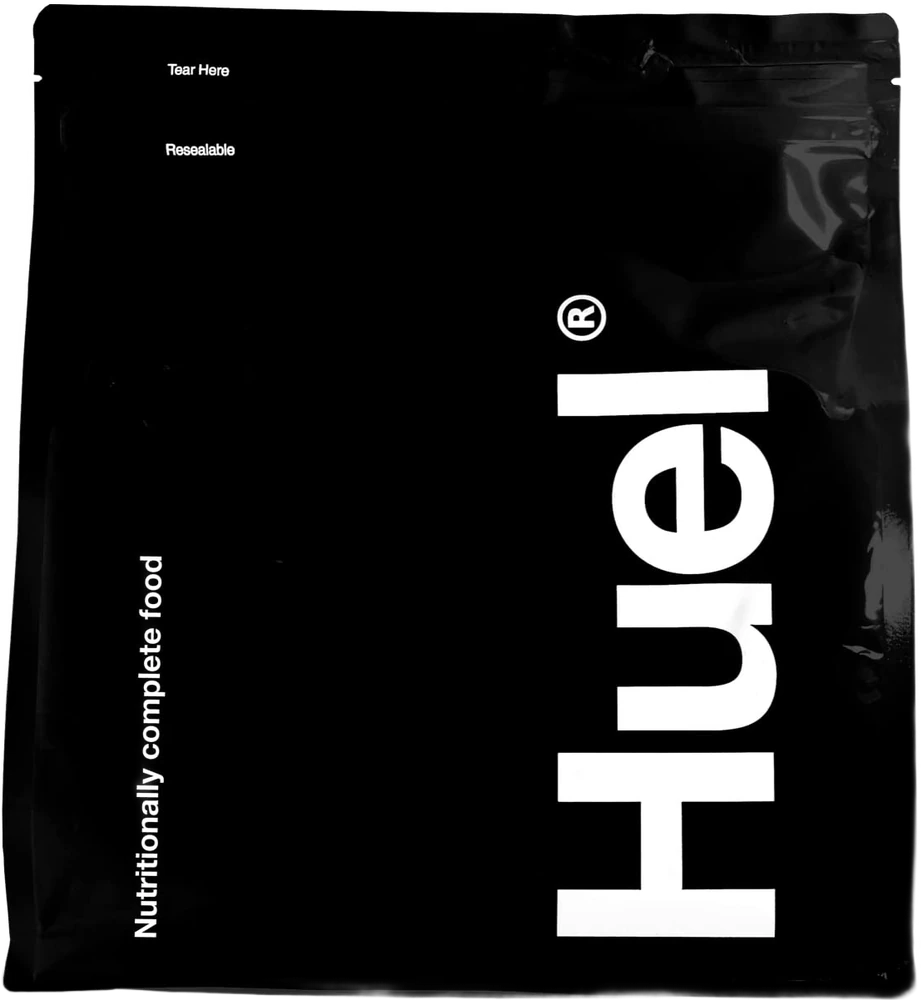
01Huel Black Edition
If you want one meal replacement and you want it to do the actual job — stand in for a full meal and make a calorie deficit easy — Huel Black Edition is the best-made option here, and that's why it's #1.
 02
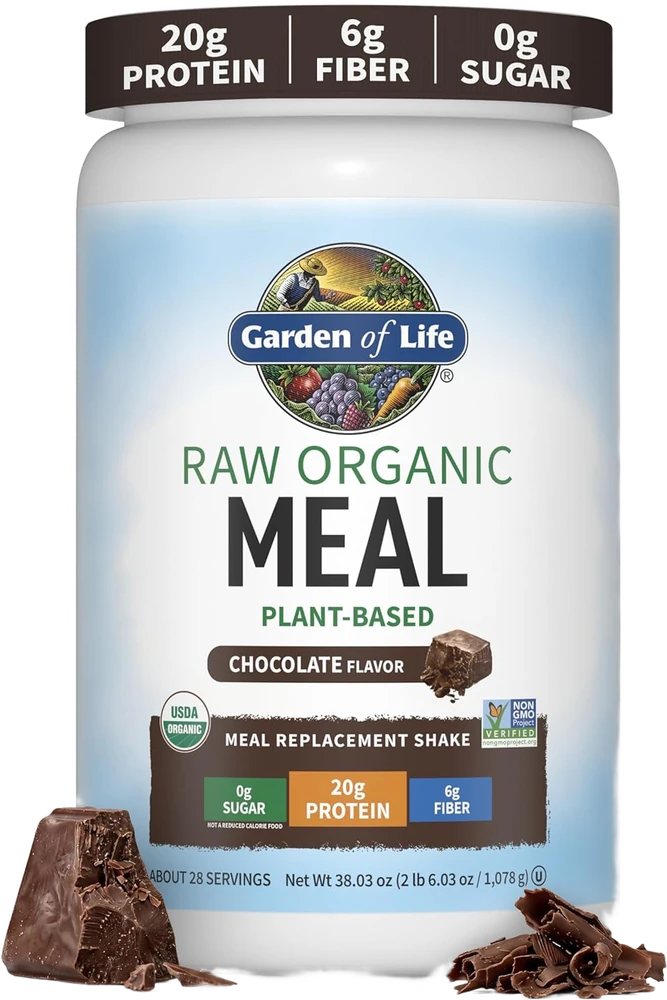
02Garden of Life Raw Organic Meal
Garden of Life Raw Organic Meal is the pick for anyone who wants the cleanest possible label, and it ranks #2 on nutrition alone.
 05
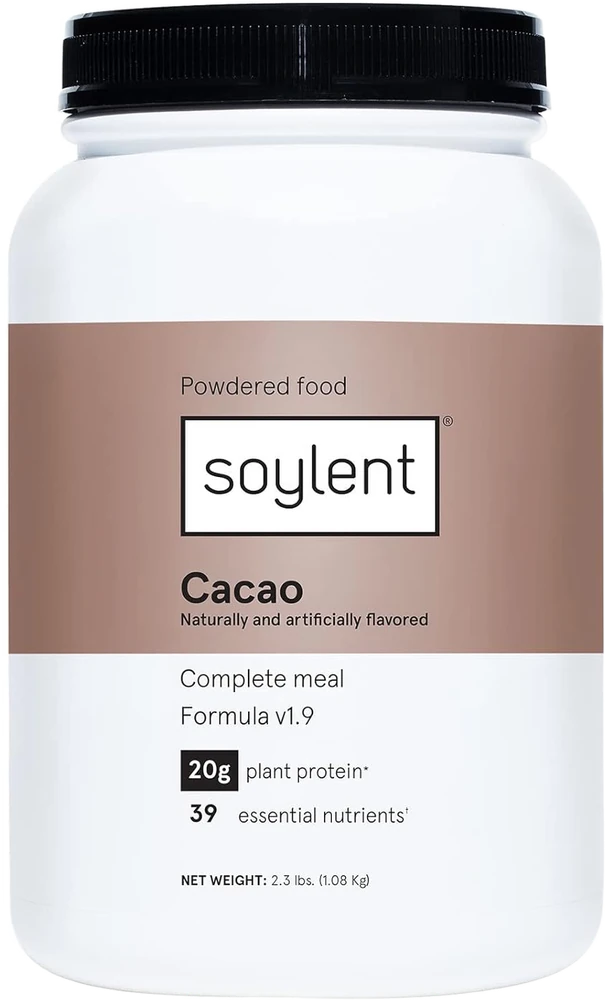
05Soylent Complete Nutrition Powder
Soylent Complete is the balanced, budget-friendly workhorse — the meal replacement for someone who just wants a cheap, complete, drinkable meal without fuss.
Quick Answers
Is Orgain's meal replacement good for weight loss?
Yes, used the honest way: as a known-calorie, high-protein, high-fiber stand-in for a meal, inside a calorie deficit. Its specific strengths for a deficit are the 9 g of prebiotic fiber — the highest fiber count in our lineup, which adds real staying power — the 20 g of plant protein, and the fact that no sugar is added, so it works with your calorie budget rather than against it. The category evidence (Astbury 2019, a 23-RCT meta-analysis) shows meal-replacement programs beat food-based diets by a modest ~1.44 kg at one year. No shake burns fat: replace a meal with it; never drink it on top of your normal meals.
What's the difference between this and Orgain's regular protein powder?
Orgain sells both a plain organic protein powder and this Organic Vegan MEAL replacement line, and the difference matters for weight loss. The meal replacement is built to stand in for a meal: alongside the 20 g of organic plant protein (pea, brown rice, chia) it carries 9 g of prebiotic fiber plus a food blend of fruits, vegetables and greens — a fuller, more satiating profile than a bare protein shake at roughly 150-160 kcal per serving. A plain protein powder supplements a meal; this replaces one. If your goal is holding a deficit by swapping out a breakfast or lunch, the meal-replacement version is the right Orgain.
Does the erythritol/stevia sweetening cause problems?
For most people, no — it's how Orgain achieves a sweet chocolate-fudge flavor with no added sugar, which is exactly the trade you want for weight loss. Two honest caveats from the review base: a minority of users notice a cooling or slightly artificial aftertaste from erythritol and stevia, and sugar alcohols can cause mild GI upset (bloating, gas) in sensitive stomachs, particularly at multiple servings a day. If you know sugar alcohols disagree with you, Garden of Life (#2, stevia only, ~1 g sugar) or Huel Black (#1) are safer picks. For everyone else, no-sugar-added sweetness at this price is a net win.
How does the value actually compare per serving?
Orgain is the cheapest per serving of the powders in our ranking — that's why it holds the Best Value badge. You're getting a USDA Organic product with 20 g of protein and 9 g of fiber at a price the premium picks can't touch: Ka'Chava and Ample cost several times more per serving, and even Huel's fair-per-meal pricing is clearly higher. The honest caveat on 'value': you're buying a ~150-160 kcal light meal, not a 400 kcal complete meal — so if you'd need to add food alongside it every time, price that in. As an affordable, organic, everyday one-meal swap, nothing here beats it per dollar.
Sources & Further Reading
2 peer-reviewed sources, each linked to PubMed
- [1] Astbury 2019 PMID 30675990 — A systematic review and meta-analysis of the effectiveness of meal replacements for weight loss. 23 RCTs / 7,884 adults: meal-replacement programs produced ~1.44 kg more weight loss at one year than food-based diets. The evidence behind using an affordable, known-calorie shake like Orgain as a structured meal swap — modest, real, and entirely dependent on a maintained calorie deficit.
- [2] Min 2021 PMID 34144920 — The effect of meal replacement on weight loss according to calorie-restriction type and proportion of energy intake: a systematic review and meta-analysis of randomized controlled trials. Meta-analysis of RCTs: meal-replacement calorie-restricted diets outperform food-based calorie restriction, with the largest edge when meal replacements supply more of the day's energy. Supports Orgain's affordability angle directly — a shake cheap enough to use consistently for one or two meals a day is the one the evidence pattern favors.
Affiliate disclosure: every Amazon link uses our Associates tag (superachieverclub-20). We earn a small commission at no cost to you; it funds independent reviews. We never accept payment to change a ranking.