
Nature's Wellness Green Tea Extract 98% Standardized (EGCG) Review
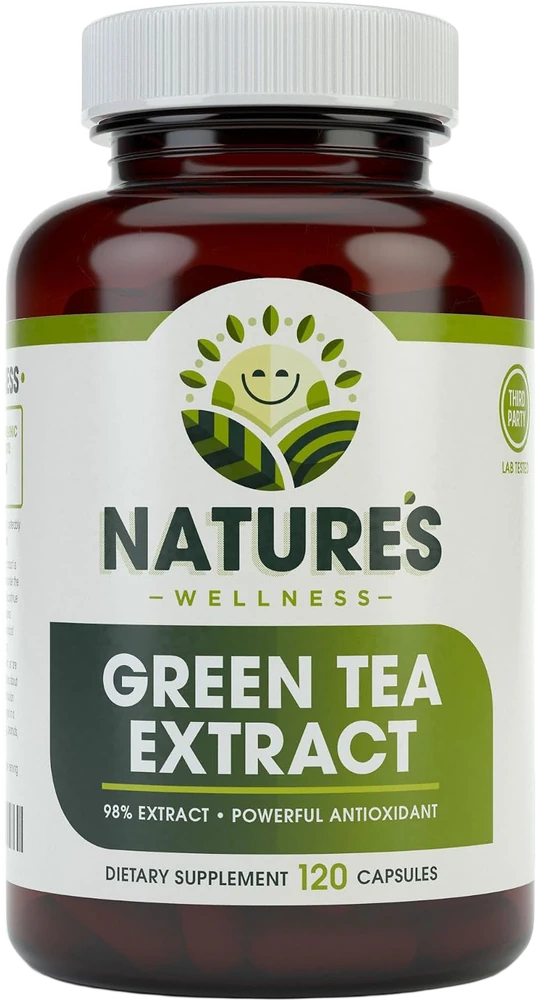 #6 of 8 · Highest standardization✓ Label verified · Supplement Facts read Aug 27, 2026
Real retailer photo, cut out. Label unedited.
Consider it. A moderate, clearly-labelled EGCG dose (~225 mg per capsule) with caffeine stated on the back panel. 500 mg of 98% extract per capsule, standardized to 45% minimum EGCG (~225 mg) and 75% minimum polyphenol catechins, third-party lab tested, with caffeine stated at 15 mg per capsule.
High EGCG per dollar (smaller brand)Good cost per active mg (high EGCG/cap)
Why It Scores 7.9 — And The Label Line Behind Each Number
EGCG standardization & dose
35% of score500 mg of 98% extract per capsule, standardized to 45% minimum EGCG (~225 mg) and 75% minimum polyphenol catechins — a moderate, clearly-disclosed dose, not the highest in the lineup. Life Extension (~285 mg) and Zhou (~250 mg) both provide more EGCG per capsule; this sits closer to NOW's ~200 mg. The minimum-percentage labeling is an honest, conservative disclosure, which keeps the score respectable even though it isn't the top dose here.
- EGCG per serving
- ~225 mg EGCG min (1 cap; 500 mg 98% extract @ 45% min EGCG, 75% min polyphenol catechins)
Purity & third-party testing
30% of scoreThird-party lab tested in a GMP-compliant facility — better disclosure than several rivals. It sits below the category leaders here because, as a smaller brand, its testing transparency and documentation don't reach the tier of NOW or Life Extension.
Safety & caffeine clarity
20% of scoreBoth pieces of this axis are better than an earlier version of this review credited: the EGCG dose is moderate (~225 mg per capsule, not a high single-cap bolus), and the caffeine is precisely stated on the back label — 15 mg per serving, capped at 5% of the extract — the same stated-low-caffeine disclosure this review credits Zhou for. The label's own suggested use is 1 to 2 capsules a day with meals, with no unusual dosing caution required.
- Caffeine
- 15 mg per capsule (label warning; ≤5% of extract, naturally occurring)
Value (cost per active mg)
15% of scoreModerate rather than standout: at ~225 mg of EGCG per capsule — half the amount an earlier version of this review assumed — the cost per active mg is roughly double what was previously stated. It's still a reasonably priced, 120-capsule bottle, but it no longer beats the premium extracts on EGCG per dollar.
- Size
- 120 capsules (120 servings; 2-4 months at 1-2/day)
- Price
- Moderate EGCG per dollar (smaller brand)
- More Specs
- Form
- Capsule (gelatin, bovine — not vegetarian)
- Quality
- Third-party lab tested, made in a GMP-compliant facility
- Dosing rule
- Take with meals; label allows 1 to 2 capsules a day
Label verified. Every figure read from the Supplement Facts photo, Aug 27, 2026.
Marketing Claims Vs. Reality
500 mg EGCG per capsule (brand's own gallery-tile marketing claim).
The Supplement Facts panel shows 500 mg of 98% green tea extract per capsule, standardized to 45% minimum EGCG — about 225 mg of EGCG, not 500 mg. The brand's own marketing tile overstates its panel by roughly 2x; we're flagging the manufacturer's claim as false rather than repeating it.
Third-party lab tested.
The listing states third-party lab testing in a GMP-compliant facility, which is more than several rivals offer, but it names no specific certifier and publishes no batch COA on the listing. We mark it partial — reassuring but not a document you can read.
Natural caffeine / antioxidant support.
The caffeine is naturally occurring and precisely disclosed on the back label — 15 mg per capsule, capped at 5% of the extract; the antioxidant framing is directionally accurate for catechins but not a proven product-specific outcome.
Healthy weight support, metabolism, energy, heart health.
Directionally supported by the modest catechin evidence (Hursel 2009) but overstated relative to the small, adjunctive effect. Reasonable as a category claim; not dramatic or product-specific.
What Our Test Actually Found
Correction: the label shows ~225 mg of EGCG per capsule, not ~450 mg
An earlier version of this review said Nature's Wellness delivers a 1000 mg extract with ~450 mg of EGCG in a single capsule and stated its caffeine was 'naturally occurring, read the label' with no number given. The Supplement Facts panel reads: Serving Size 1 Capsule; Green Tea 98% Extract (dried leaves) 500 mg; Epigallocatechin-3-gallate 45% Minimum (about 225 mg EGCG); Naturally-Occurring Caffeine 5% Maximum, and the back label states 15 mg of caffeine per serving. The 1000 mg / ~450 mg figure only applies at the label's 2-capsule daily maximum, not per capsule. We re-read the label on Sep 3, 2026 and revised the EGCG-per-capsule, caffeine, cost-per-mg, and badge language throughout, and rescored the EGCG standardization & dose (7.4, was 8.8), Safety & caffeine clarity (8.8, was 8.0), and Value (7.0, was 8.8) axes — overallScore moved from 8.5 to 7.9 and the verdict from buy to consider.
A moderate, honestly-disclosed EGCG dose
At 98% extract and 45% minimum EGCG, Nature's Wellness delivers about 225 mg of EGCG per capsule plus 75% minimum polyphenol catechins — a moderate dose, not the highest in the lineup. Life Extension (~285 mg) and Zhou (~250 mg) both provide more EGCG per capsule; this sits closer to NOW's ~200 mg. The minimum-percentage labeling is a conservative, honest way to disclose it.
Caffeine is stated, and the dose needs no special caution
The back label states 15 mg of caffeine per capsule, capped at 5% of the extract — the same stated-low-caffeine disclosure this review credits Zhou for. Because the EGCG dose is moderate rather than a high bolus, the label's own suggested use (1 to 2 capsules a day with meals) is all the dosing guidance you need.
Solid testing, smaller-brand ceiling
The listing's third-party lab testing in a GMP facility is genuinely better disclosure than many rivals offer. But Nature's Wellness is a smaller brand, so its testing transparency doesn't reach NOW or Life Extension's tier — no certifier is named and no batch COA is published. That's the honest reason it ranks below them on purity — the disclosure is good, not best-in-class.
Moderate cost per active mg, not a standout
At ~225 mg of EGCG per capsule — half of what an earlier version of this review assumed — the cost per active mg is roughly double what was previously stated. It's still a reasonably priced, 120-capsule bottle, but it no longer beats the premium extracts on EGCG per dollar; for a moderate dose with deeper QC documentation, NOW (#1) is the better fit.
Full analysis: all pros & cons (6), buy if / skip if
- 500 mg 98% extract, 45% minimum EGCG (~225 mg) and 75% minimum polyphenol catechins, honestly disclosed
- Third-party lab tested for purity and potency in a GMP-compliant facility
- Caffeine stated plainly on the back label — 15 mg per capsule
- Label's own suggested use (1-2 capsules/day with meals) needs no special dosing caution
- Not the highest EGCG per capsule on the list — Life Extension (~285 mg) and Zhou (~250 mg) provide more
- Gelatin (bovine) capsule — not vegetarian; no certifier named and no published COA
- You want a moderate, clearly-disclosed EGCG dose (~225 mg per capsule) rather than the highest number on the list
- You're fine following the label's own 1-2 capsule daily suggested use
- You want EGCG and caffeine both stated plainly on the label at a reasonable price
- You'll take it with meals as the label suggests
- You want the highest EGCG per capsule on the list — Life Extension (~285 mg, #2) or Zhou (~250 mg, #3) provide more
- You want top-tier, deeply-documented brand QC — NOW (#1) or Life Extension (#2)
- You need a vegetarian capsule — this one uses bovine gelatin
500 mg of 98% extract per capsule, standardized to 45% minimum EGCG (~225 mg) and 75% minimum polyphenol catechins, third-party lab tested, with caffeine stated at 15 mg per capsule. It's a moderate dose — below Life Extension (~285 mg) and Zhou (~250 mg) — so the cost per active mg is decent rather than exceptional. Smaller-brand testing is good but not at NOW/Life Extension's tier.
Nature's Wellness delivers a moderate, honestly-labelled EGCG dose: 500 mg of 98% green tea extract per capsule, standardized to 45% minimum EGCG (about 225 mg) and 75% minimum polyphenol catechins, third-party lab tested in a GMP-compliant facility. The back label also states its caffeine plainly — 15 mg per capsule — putting it on par with Zhou's stated-caffeine disclosure rather than leaving you guessing. The honest trade-offs are why it lands in 'consider' territory rather than 'buy'. At ~225 mg per capsule it isn't the highest-EGCG pick in the lineup — Life Extension (~285 mg) and Zhou (~250 mg) both provide more — so the cost per active mg is roughly double what an earlier version of this review assumed, since the actual EGCG per capsule is half of what was claimed. As a smaller brand, its testing transparency, while solid, also doesn't match the category leaders. It's a fine, clearly-labelled option at 1-2 capsules a day with meals; just don't expect it to out-dose the picks above it.
A moderate, honestly-labelled pick — consider it if you don't need the highest EGCG number.

Nature's Wellness is a fair fit for a buyer who wants a moderate, clearly-disclosed EGCG dose rather than the maximum number on the list. At 98% extract and 45% minimum EGCG, it delivers about 225 mg of EGCG per capsule, it's third-party lab tested, and both the EGCG and caffeine content are spelled out on the label. The honest trade-offs are why it lands in 'consider' territory rather than 'buy'. It isn't the highest-EGCG pick here — Life Extension (~285 mg) and Zhou (~250 mg) both provide more — so the cost per active mg is decent rather than exceptional, and as a smaller brand its testing transparency, while solid, doesn't match the category leaders. Take it with meals per the label's own 1-2 capsule daily guidance, and it's a fine, straightforwardly-labelled option — just not the max-potency one.
If This Doesn’t Fit — Try These
 01
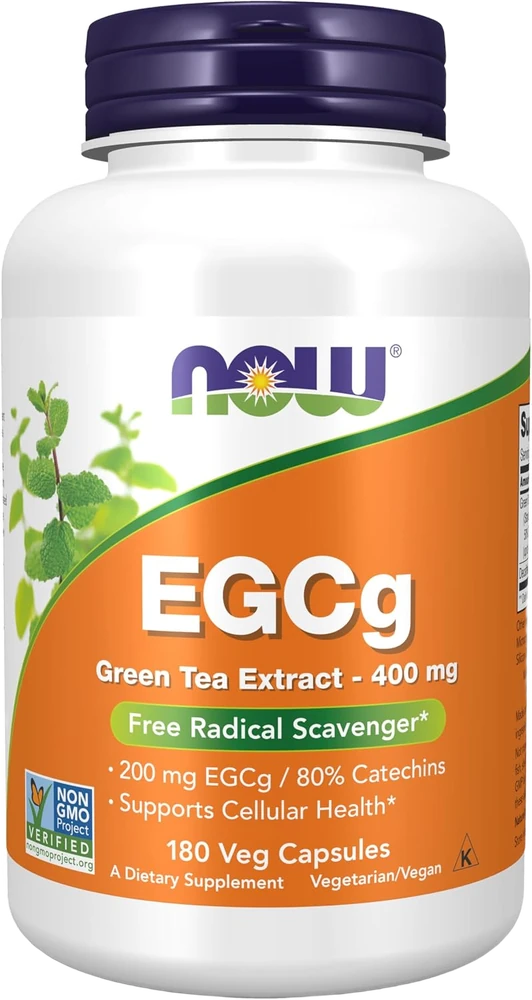
01NOW EGCg Green Tea Extract
If you want one green tea extract and you want it to be the safe, sensible choice, NOW's EGCg 400 mg is it.
 02
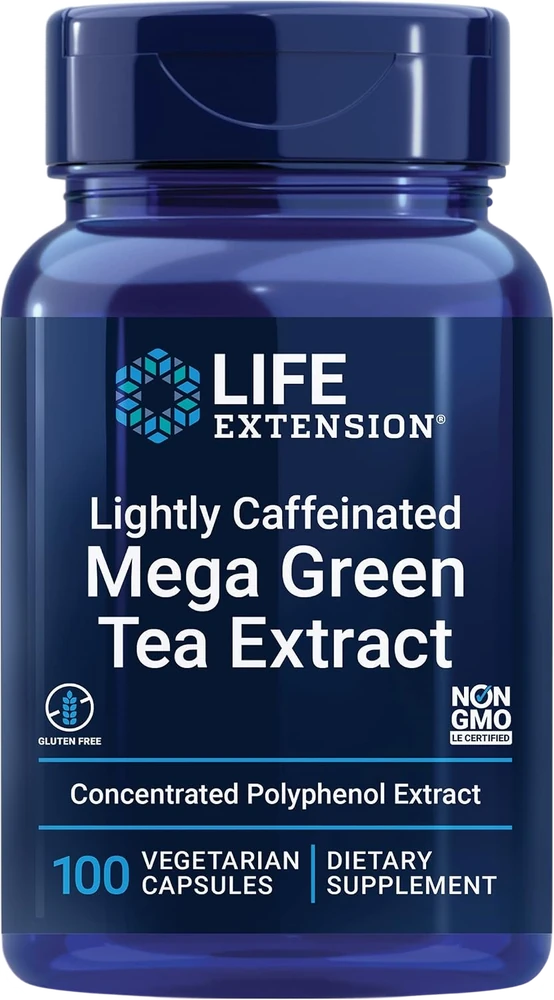
02Life Extension Mega Green Tea Extract
Life Extension's Mega Green Tea Extract is the pick for anyone who wants to control caffeine without giving up a well-standardized dose.
 03
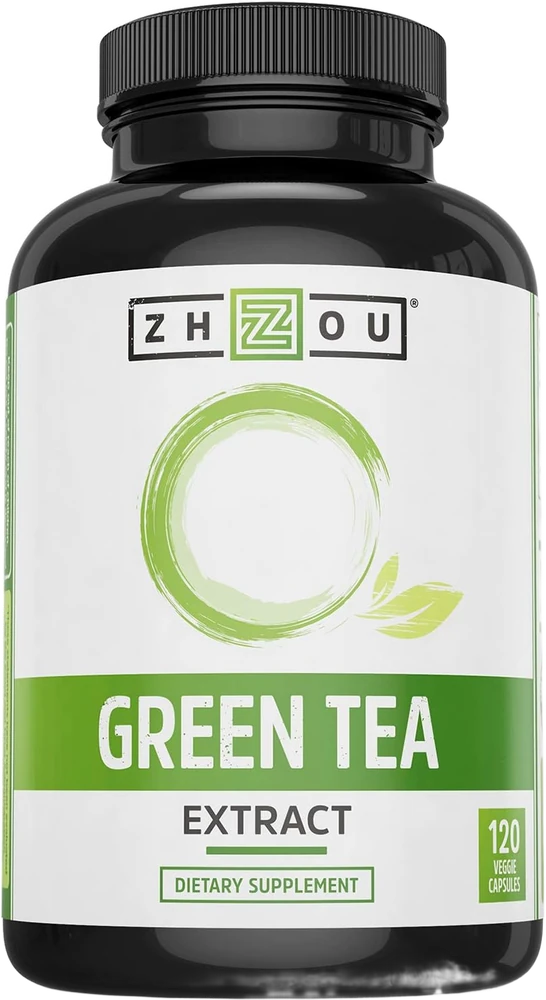
03Zhou Green Tea Extract
Zhou's Green Tea Extract is a clean, transparent, well-balanced mid-list pick.
Quick Answers
How much EGCG does one capsule actually provide?
One capsule provides 500 mg of 98% green tea extract, standardized to 45% minimum EGCG — about 225 mg of EGCG per capsule — plus 75% minimum polyphenol catechins. That's a moderate, honestly-labelled dose: roughly in line with NOW's ~200 mg pick, and below Life Extension (~285 mg) and Zhou (~250 mg). The label's own suggested use is 1 to 2 capsules a day with meals, so there's no unusual dosing caution beyond taking it with food.
Is it third-party tested?
The listing states third-party lab testing in a GMP-compliant facility, which is more than several rivals disclose. That's reassuring, but as a smaller brand its testing transparency doesn't reach the tier of NOW or Life Extension. If a published, batch-specific certificate of analysis is your bar, ask the brand for a current COA.
How much caffeine does it have?
The back label states it plainly: 15 mg of caffeine per capsule (about 1/6 cup of coffee), naturally occurring from the tea leaves and capped at 5% of the extract. That's the same stated-low-caffeine disclosure this review credits Zhou's pick for — worth factoring into your day if you're caffeine-sensitive, but it isn't an undisclosed number here.
Who is this the right pick for?
The buyer who wants a moderate, clearly-labelled EGCG dose with caffeine spelled out on the back panel, and doesn't need the deepest testing documentation on the market. At ~225 mg of EGCG per capsule with 15 mg of stated caffeine, it's a straightforward, mid-pack option rather than the maximum-potency pick. If you want more EGCG per capsule or top-tier brand QC, Life Extension (#2) or Zhou (#3) are the better call.
Sources & Further Reading
3 peer-reviewed sources, each linked to PubMed
- [1] Hursel 2009 PMID 19597519 — The effects of green tea on weight loss and weight maintenance: a meta-analysis. Meta-analysis of 11 studies: green tea catechins were associated with a modest ~1.3 kg mean weight change, clearest with caffeine. At ~225 mg of EGCG per capsule this is a moderate, category-typical dose rather than an outsized one, but the effect size itself stays modest regardless of dose.
- [2] Hu 2018 PMID 29580974 — The safety of green tea and green tea extract consumption in adults — Results of a systematic review. Systematic review: liver-related adverse effects were associated with high-dose extract taken fasted. At ~225 mg of EGCG per capsule this product sits well under the doses of concern, but the general rule still applies — take green tea extract with food.
- [3] Isomura 2016 PMID 27188915 — Liver-related safety assessment of green tea extracts in humans: a systematic review of randomized controlled trials. Systematic review of RCTs: liver-enzyme elevations clustered at higher EGCG doses. At ~225 mg per capsule, this pick sits in the moderate range rather than the higher end this dose-dependent signal warns about.
Affiliate disclosure: every Amazon link uses our Associates tag (superachieverclub-20). We earn a small commission at no cost to you; it funds independent reviews. We never accept payment to change a ranking.