
Life Extension Mega Green Tea Extract (Lightly Caffeinated) Review
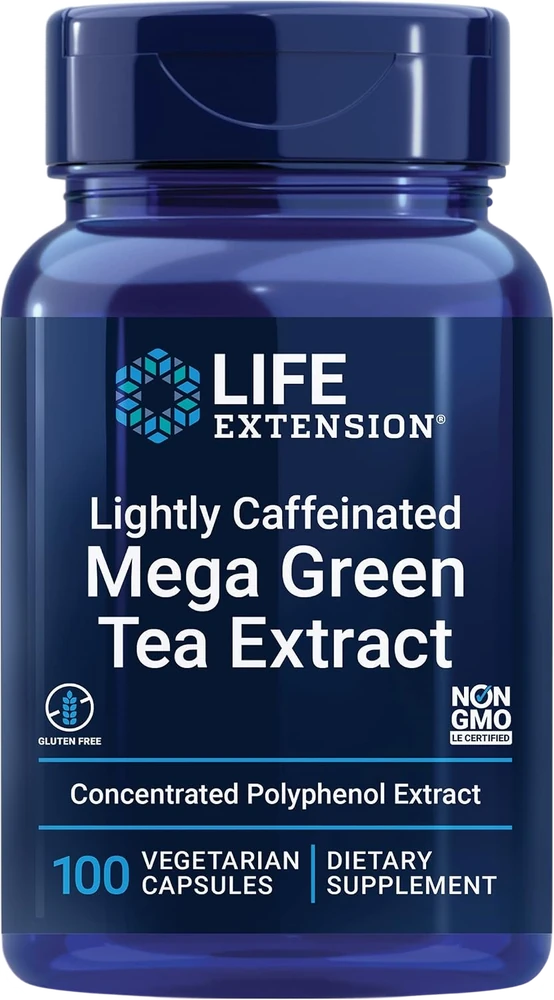 #2 of 8 · Best lightly caffeinated✓ Label verified · Supplement Facts read Aug 27, 2026
Real retailer photo, cut out. Label unedited.
Buy it. The caffeine-control pick — ~326 mg EGCG with caffeine stated, plus a full decaf option. A 98%/45%-standardized 725 mg extract delivering ~326 mg of EGCG with ~25 mg caffeine clearly stated, and a fully decaffeinated version sold separately, from a premium-QC brand.
Premium — premium QC, decaf optionHigher per active mg (100 ct, 1 cap/day)
Why It Scores 8.8 — And The Label Line Behind Each Number
EGCG standardization & dose
35% of scoreA 725 mg extract standardized to 98% polyphenols and 45% EGCG computes to ~326 mg of EGCG (725 mg x 45%; the milligram figure is derived, not printed as its own line) — a strong, well-labeled dose that sits above NOW's moderate ~200 mg while staying well under the EFSA ceiling. The standardization percentages themselves are clearly disclosed on the Supplement Facts panel.
- EGCG per serving
- ~326 mg EGCG, computed (1 cap; 725 mg extract @ 98% polyphenols / 45% EGCG; not printed as its own mg line)
Purity & third-party testing
30% of scoreLife Extension's QC reputation is among the most respected in supplements — made in the USA, non-GMO, with transparent standardization. Consistent, well-documented manufacturing that ranks near the top of the category on this axis.
Safety & caffeine clarity
20% of scoreThe standout: caffeine is explicitly stated (~25 mg) AND a fully decaffeinated version of the same extract exists, so users can precisely control intake. The label discloses the 45% EGCG standardization, so the ~326 mg EGCG content can be derived (it isn't printed as its own mg line). Life Extension's own directions say to take it without food; we recommend food anyway per the liver-safety literature — the exact caffeine transparency this category needs.
- Caffeine
- ~25 mg per capsule (a decaffeinated version is sold separately)
Value (cost per active mg)
15% of scoreThe weakest axis: a premium price in a smaller 100-count bottle makes the cost per active mg of EGCG higher than the value extracts. You pay for the QC and the caffeine options — worth it for the right buyer, but not the cheapest way to get EGCG.
- Size
- 100 vegetarian capsules (100 servings)
- Price
- Premium — higher cost per active mg, smaller 100-count bottle
- More Specs
- Form
- Vegetarian capsule (standardized extract)
- Quality
- Non-GMO, made in USA, established premium-brand QC
- Caffeine option
- Both lightly-caffeinated and fully decaffeinated SKUs available
Label verified. Every figure read from the Supplement Facts photo, Aug 27, 2026.
Marketing Claims Vs. Reality
725 mg green tea extract standardized to 98% polyphenols / 45% EGCG (~326 mg EGCG).
The listing states a 725 mg green tea extract standardized to 98% polyphenols with 45% EGCG. 725 mg x 45% computes to ~326 mg of EGCG per capsule — a derived figure, since no EGCG-mg line is printed on the Supplement Facts panel. The standardization percentages themselves are disclosed and hold up as stated.
Lightly caffeinated (~25 mg), with a decaffeinated version available.
The lightly-caffeinated SKU discloses ~25 mg of caffeine, and Life Extension sells a separate fully decaffeinated version of the same extract. Both are real, currently-listed products — the caffeine-control claim is accurate.
Non-GMO, made in USA, gluten-free.
The listing carries non-GMO, made-in-USA, and gluten-free/vegetarian labeling, consistent with Life Extension's established QC. Accurate as stated.
Supports cellular, heart and brain health; maintains already healthy cholesterol; promotes healthy metabolic function.
These are the benefit statements actually printed on the Life Extension listing (not a 'weight management' claim, which the label does not make). The heart/cholesterol angle is directionally supported by modest catechin evidence (Hursel 2009); the broader 'cellular' and 'brain health' language is wellness framing, not a proven product-specific outcome.
What Our Test Actually Found
Correction: the label shows a 45% EGCG standardization (not a printed 285 mg figure), and directs you to take it without food
An earlier version of this review said the product delivers ~285 mg of EGCG per capsule and repeatedly told buyers to take it with food. The Supplement Facts panel actually reads: 725 mg green tea extract (leaf), standardized to 98% polyphenols and 45% EGCG — there is no separate EGCG-mg line printed. 725 mg x 45% = ~326 mg, so we corrected every '~285 mg' reference in this review to '~326 mg.' The product's own directions card also states 'Take one (1) capsule daily without food,' which this review had silently contradicted; we've now disclosed that our with-food recommendation departs from the label, and why. We re-read the label on Sep 3, 2026 and revised text only — the EGCG standardization & dose score (9.0/10) already reflected a strong disclosed dose and does not change.
The caffeine options are the real differentiator
Most green tea extracts either stay silent on caffeine or offer only one version. Life Extension states ~25 mg on the lightly-caffeinated SKU AND sells a fully decaffeinated version marketed as the same 98%/45% extract (check its own label before assuming an identical EGCG mg). That lets you dial the caffeine to your tolerance and timing — the cleanest caffeine-control setup in the lineup, and the reason it earns the 'best lightly caffeinated' badge.
A strong dose that's still under the safety ceiling
At ~326 mg of EGCG per capsule (725 mg extract x 45%, derived from the label), this is a meaningful dose — higher than NOW's moderate ~200 mg but comfortably below EFSA's 800 mg EGCG/day flag. Life Extension's own directions say to take it without food; we still suggest food and skipping a second high-EGCG cap, based on liver-safety literature tying adverse signals to fasted high-dose extract (Hu 2018, Isomura 2016) — and it stays firmly in the sensible range while giving you more active compound than the entry-level extracts.
Premium QC you can actually trace
Life Extension is one of the few supplement brands whose quality reputation is genuinely earned across decades — made in the USA, non-GMO, with transparent standardization. In a category that ranges from clean to anonymous, that pedigree is worth real weight, and it's why this scores near the top on purity and testing.
You pay for it — that's the only catch
The one honest knock is value: a premium price in a smaller 100-count bottle means the cost per active mg of EGCG is higher than the big-count value extracts like Horbäach or Carlyle. For a buyer who wants caffeine control and premium QC, that's a fair trade; for a buyer optimizing purely on price per mg, one of the value picks is the better tool.
Full analysis: all pros & cons (6), buy if / skip if
- Strong standardization — 725 mg extract at 98% polyphenols / 45% EGCG (~326 mg EGCG)
- Caffeine clearly stated (~25 mg), with a fully decaffeinated SKU for sensitive users
- Life Extension's QC reputation is among the most respected in supplements
- Lightly-caffeinated dose pairs the catechin effect with a small caffeine synergy
- Premium price — among the higher cost-per-active-mg picks
- 100-count bottle is a smaller supply than the value extracts
- You want to control caffeine — ~25 mg stated, with a fully decaffeinated SKU available
- You want a strong, well-standardized ~326 mg EGCG dose (98% polyphenols / 45% EGCG)
- You value a premium QC brand's reputation
- You want the catechin-plus-caffeine synergy without coffee-level stimulation
- You want the lowest cost per active mg — a big-count value extract beats it on price
- You want the very lowest caffeine possible in a single SKU — NOW EGCg (#1) runs ~4 mg
- You want the highest standardized EGCG per capsule — Nature's Wellness 98% (#6) delivers ~450 mg
A 98%/45%-standardized 725 mg extract delivering ~326 mg of EGCG with ~25 mg caffeine clearly stated, and a fully decaffeinated version sold separately, from a premium-QC brand. It's the cleanest way to dose EGCG when caffeine control matters. The only knock is value — a premium price in a smaller 100-count bottle. Life Extension's own directions say to take it without food; we still suggest food, based on the liver-safety literature. Choose your caffeine level and hold honest expectations.
Life Extension's Mega Green Tea Extract is the pick for anyone who wants to control their caffeine without giving up a strong, well-standardized dose. The lightly-caffeinated version delivers about 326 mg of EGCG (725 mg extract at 98% polyphenols / 45% EGCG) with roughly 25 mg of caffeine clearly stated — enough for the catechin-plus-caffeine synergy without coffee-level stimulation. And crucially, a fully decaffeinated SKU of the same extract exists for sensitive users or late-day dosing. The standardization is excellent and the brand's QC pedigree is among the most respected in supplements. It sits at #2 only on value: this is a premium price in a smaller 100-count bottle, so its cost per active mg is higher than the big-count value extracts. Life Extension's own directions say to take it without food; we still suggest taking it with food, because the liver-safety literature ties adverse signals to fasted, high-dose extract. Pick caffeinated or decaf to match your tolerance, and it's an outstanding, honest choice — as always, a modest fat-loss adjunct on top of a deficit, not a fat burner.
The caffeine-control pick — buy it for the stated caffeine, the decaf option, and premium QC.

Life Extension's Mega Green Tea Extract is the choice for anyone who wants to control their caffeine without giving up a well-standardized dose. The lightly-caffeinated version delivers ~326 mg of EGCG (725 mg extract x 45%, derived from the label) with about 25 mg of caffeine — enough for the catechin-plus-caffeine synergy without coffee-level stimulation — and a fully decaffeinated SKU marketed as the same extract exists for sensitive users or late-day dosing. The standardization (98% polyphenols / 45% EGCG) and the brand's QC pedigree are excellent. It sits at #2 only on value: it's a premium price in a smaller 100-count bottle. Life Extension's own directions say to take it without food; we still suggest food, based on liver-safety literature tying adverse signals to fasted high-dose extract. Pick caffeinated or decaf to match your tolerance, and hold the honest framing — a modest fat-loss adjunct on top of a calorie deficit, not a fat burner. For caffeine control plus premium QC, it's an outstanding choice.
If This Doesn’t Fit — Try These
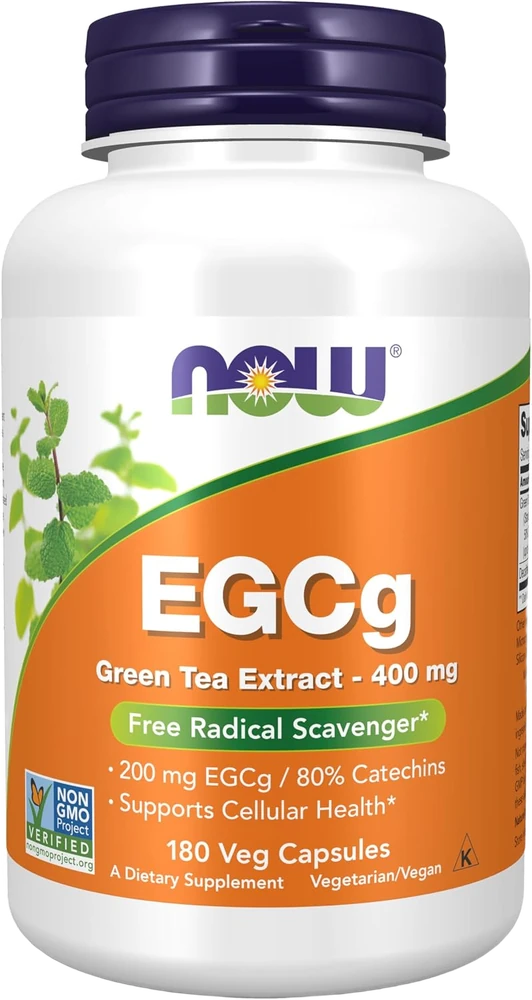 01
01NOW EGCg Green Tea Extract
If you want one green tea extract and you want it to be the safe, sensible choice, NOW's EGCg 400 mg is it.
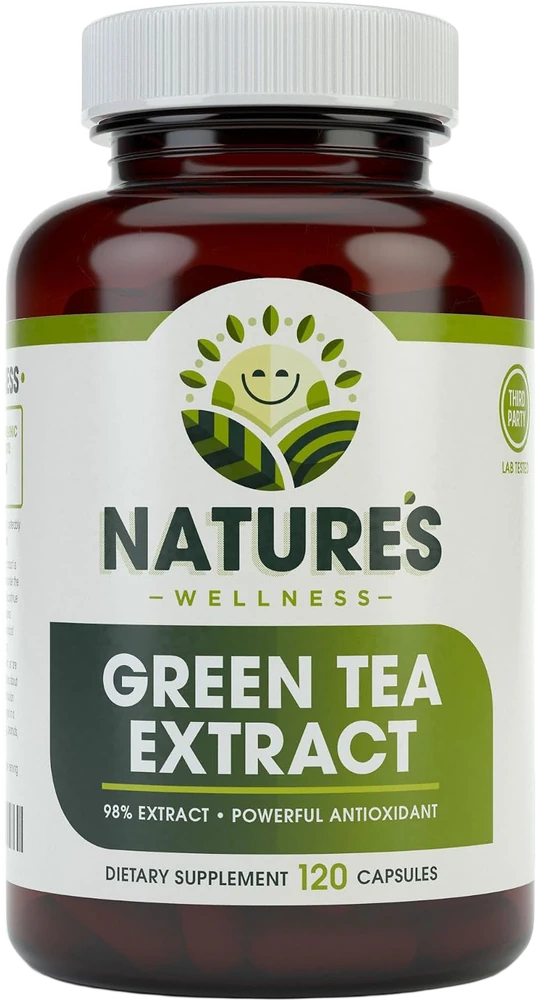 06
06Nature's Wellness Green Tea Extract
Nature's Wellness is the pick for someone who specifically wants the maximum standardized EGCG per capsule.
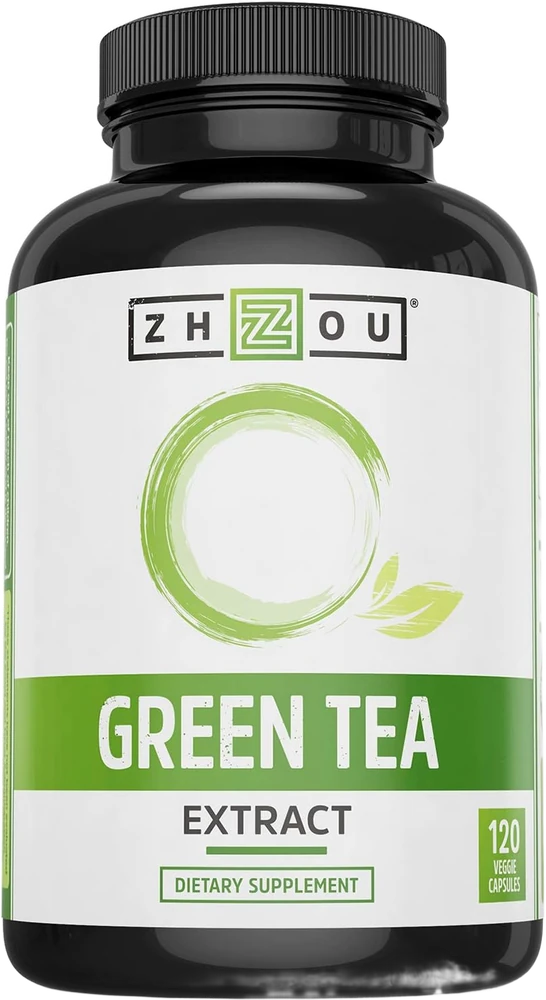 03
03Zhou Green Tea Extract
Zhou's Green Tea Extract is a clean, transparent, well-balanced mid-list pick.
Quick Answers
How much caffeine is in the lightly-caffeinated version?
About 25 mg per capsule — roughly two-thirds of a cup of brewed green tea. That's enough for the catechin-plus-caffeine fat-oxidation synergy without coffee-level stimulation. If even that is too much for you, Life Extension sells a fully decaffeinated version of the same extract, marketed at the same 98%/45% standardization — check its own Supplement Facts panel before assuming an identical EGCG mg, since we've only audited this lightly-caffeinated SKU's label.
What's the EGCG dose, and is it a lot?
Each capsule is 725 mg of green tea extract standardized to 98% polyphenols and 45% EGCG, which computes to about 326 mg of EGCG (725 mg x 45% — derived from the label, not printed as its own mg line). That's a solid, well-standardized dose — higher than NOW's ~200 mg but still comfortably below EFSA's 800 mg EGCG/day liver-safety flag. Life Extension's own directions say to take it without food; we still recommend taking it with food and not stacking a second high-EGCG capsule on top, because the liver-safety literature (Hu 2018, Isomura 2016) ties adverse signals to fasted, high-dose extract.
Caffeinated or decaf — which should I buy?
Buy the lightly-caffeinated version if you tolerate caffeine and want the small synergy: the catechin fat-oxidation effect is clearest with caffeine. Buy the decaffeinated version if you're caffeine-sensitive, dosing in the afternoon, or already drinking coffee and don't want to add to your daily total. Both are marketed as the same 98%/45%-standardized extract; we've verified the ~326 mg EGCG figure only for this lightly-caffeinated SKU's own label, so check the decaf bottle's panel before assuming it matches exactly.
Is Life Extension's quality worth the premium price?
For many buyers, yes. Life Extension has one of the most respected QC reputations in supplements — made in the USA, non-GMO, with strong standardization disclosure. The trade-off is a premium price in a smaller 100-count bottle, which is why it ranks #2 on value rather than #1. If caffeine control plus premium QC matter to you, it's worth it; if lowest cost per active mg is the goal, a bigger-count value extract wins.
Sources & Further Reading
3 peer-reviewed sources, each linked to PubMed
- [1] Hursel 2009 PMID 19597519 — The effects of green tea on weight loss and weight maintenance: a meta-analysis. Meta-analysis of 11 studies: green tea catechins (typically with caffeine) were associated with a modest ~1.3 kg mean weight change, and the effect was stronger with caffeine — the rationale for a lightly-caffeinated extract like this one.
- [2] Hu 2018 PMID 29580974 — The safety of green tea and green tea extract consumption in adults — Results of a systematic review. Systematic review: liver-related adverse effects were associated with high-dose extract taken fasted. The basis for recommending this ~326 mg EGCG dose be taken with food and not stacked with a second high-EGCG capsule — a departure from Life Extension's own 'without food' directions, made deliberately for safety.
- [3] Isomura 2016 PMID 27188915 — Liver-related safety assessment of green tea extracts in humans: a systematic review of randomized controlled trials. Systematic review of RCTs: liver-enzyme elevations clustered at higher EGCG doses, reinforcing a dose-dependent hepatic signal and the case for keeping daily EGCG in a sane range.
Affiliate disclosure: every Amazon link uses our Associates tag (superachieverclub-20). We earn a small commission at no cost to you; it funds independent reviews. We never accept payment to change a ranking.