
Ka'Chava Whole Body Meal Shake Review
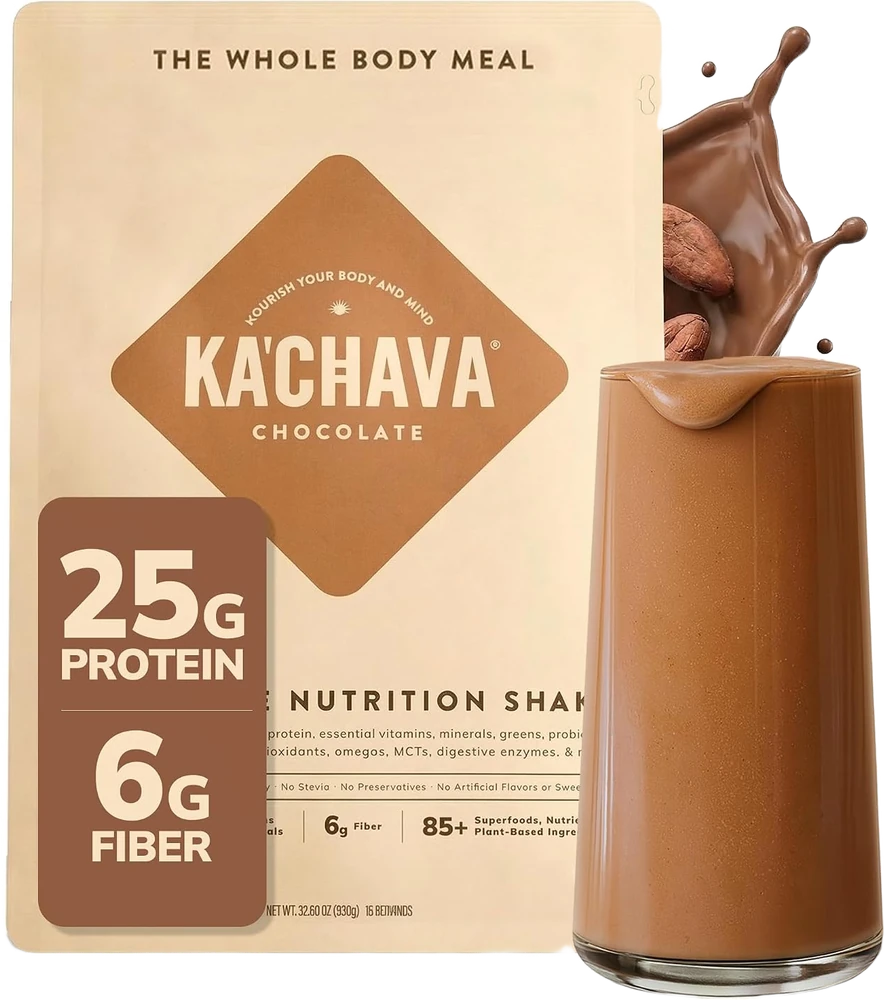 #6 of 8 · Best taste / superfood✓ Label verified · Supplement Facts read Sep 7, 2026
Real retailer photo, cut out. Label unedited.
Consider it. The best-tasting shake here — taste-driven adherence at a premium price, with a bit more sugar. Ka'Chava pairs 25 g plant protein and 6 g fiber with an 85+ superfood blend and the smoothest, most milkshake-like taste in our lineup — no artificial sweeteners.
Premium — the priciest per serving hereHigh per serving (15 servings/bag, premium price)
Why It Scores 7.9 — And The Label Line Behind Each Number
Nutrition (protein & whole-food quality, low junk)
35% of scoreA strong plant-based formula: 25 g of protein from a four-source blend (pea, sacha inchi, rice, quinoa) — above our 20 g bar — plus 6 g of fiber and genuine whole-food breadth from the 85+ ingredient superfood, probiotic and enzyme stack, with no artificial sweeteners. The deduction is the ~6 g of sugar, a deliberate taste trade that sits visibly above the ~0-1 g leaders.
- Protein
- 25 g plant protein (pea, sacha inchi, rice, quinoa)
Satiety / fullness per calorie
25% of score25 g of protein plus 6 g of fiber at ~240 kcal is a solid middle-weight profile — more filling than a thin protein drink, lighter than the ~400 kcal complete meals. It holds a breakfast slot well; for large-meal replacement most users blend it with fruit. The moderate sugar slightly softens the satiety math versus the strictest low-sugar leaders.
Value (cost per serving)
20% of scoreThe list's clear weak point: a 15-serving bag at a premium price makes Ka'Chava easily the most expensive pick per serving in our ranking — several times Orgain's cost for the same core deficit job. You're paying for the superfood blend and the taste engineering. If those earn their keep for you, fine; on pure economics, it loses this axis outright.
- Price
- Premium — the most expensive per serving in our ranking
Taste & mixability (rep)
20% of scoreThe best score we awarded on this axis, and the product's genuine moat: consistently rated the smoothest, most milkshake-like, most enjoyable shake in the lineup, blending clean with no grit. In a tool whose benefit is adherence, a shake you look forward to daily is a real functional asset — this is where the premium actually buys something.
- More Specs
- Sugar
- ~6 g per serving — no artificial sweeteners, colors or flavors
- Fiber
- 6 g per serving
- Superfoods
- 85+ ingredients: greens, maca, adaptogens, antioxidant fruits
- Extras
- Probiotics + digestive enzymes
- Calories
- ~240 kcal per 2-scoop serving — a middle-weight meal
- Diet
- Non-GMO; dairy-, gluten- and soy-free; plant-based
- Format
- Powder, 2 lb bag / 15 servings (Chocolate verified on Amazon)
Label verified. Every figure read from the Supplement Facts photo, Sep 7, 2026.
Marketing Claims Vs. Reality
Vegan protein powder with 85+ superfoods, greens, probiotics and digestive enzymes.
The live Amazon listing states this exact formula — whole-body meal shake with 85+ superfoods and greens, plant-based, with probiotics and digestive enzymes, gluten- and dairy-free, 15 servings per 2 lb bag. The ingredient breadth is real and is the product's defining feature.
25 g of plant protein per serving from a multi-source blend.
The stated 25 g of protein (pea, sacha inchi, rice, quinoa) clears our category bar with margin and is the third-highest protein count in our lineup after Huel (40 g) and tied with Ample (25 g). It's the number doing the actual satiety work behind the superfood marketing.
A 'whole body' shake that supports wellness and weight goals.
The nutrition breadth is genuine; the implied mechanism needs the honest frame. Superfoods, adaptogens and probiotics do not cause fat loss — a maintained calorie deficit does, and meal-replacement structure helps only by making that deficit easier to hold (Astbury 2019; Min 2021). Ka'Chava's real weight-loss lever is that people enjoy it enough to keep replacing meals with it.
What Our Test Actually Found
Taste is Ka'Chava's honest weight-loss argument — and it's a legitimate one
Strip the superfood marketing and the functional case is this: the meal-replacement evidence (Astbury 2019, 23 RCTs) is entirely about adherence to structured meals, and adherence tracks enjoyment. Ka'Chava is the shake our lineup's reviews describe as the one people don't quit — smooth, genuinely chocolatey, no chalk, no grit. If your last three diet tools died of boredom or disgust, paying a taste premium is not vanity; it's buying the variable that actually predicts whether the deficit survives month two.
The 85 superfoods: real breadth, zero fat-loss mechanism
We verify claims for a living, so let's be precise: maca, camu camu, chlorella and friends make this a more micronutrient- and phytonutrient-diverse meal than a basic isolate shake — a genuine upgrade for a meal you'd otherwise skip. None of them oxidize body fat. The entire weight-loss effect of any shake on this list runs through the calorie deficit it helps you hold, and Ka'Chava is no exception. Buy the superfoods as nutrition breadth you enjoy paying for, never as a mechanism — any brand that implies otherwise is selling you the wrong story.
The value axis is where the premium bites
Fifteen servings per bag at a premium price makes Ka'Chava the most expensive per-serving pick in our ranking — a multiple of Orgain's cost for the same core job of replacing a meal inside a deficit. Over a six-month weight-loss project that gap compounds into real money. The honest decision rule: if the taste is what keeps YOU specifically consistent, the premium is functional spend; if you'd drink a cheaper shake just as reliably, this is the most expensive way on the list to hold a deficit. Know which buyer you are before checkout.
~6 g of sugar is a conscious trade — grade it in context
Ka'Chava's sweetness comes from real ingredients (coconut nectar, fruit) rather than artificial sweeteners, and lands at ~6 g of sugar per serving. Context matters in both directions: it's several times the ~0-1 g of our top three — the strictest low-sugar buyers should shop there — but it's nowhere near the 15-30 g sugar-bombs this category hides, and inside a fixed ~240 kcal meal it does not break a deficit. It's the price of the milkshake experience, paid in grams instead of sucralose. Decide if that's your preferred currency.
Full analysis: all pros & cons (8), buy if / skip if
- Consistently the best-tasting, smoothest shake in our lineup — a genuine adherence asset
- 25 g plant protein plus 6 g fiber — above the category bar
- 85+ superfood blend with probiotics and enzymes; real nutrition breadth
- No artificial sweeteners, colors or flavors; non-GMO, dairy/gluten/soy-free
- Middle-weight ~240 kcal serving blends beautifully with fruit for a fuller meal
- Easily the most expensive per serving in our ranking — value is the clear weak point
- ~6 g sugar is moderate but well above the ~0-1 g leaders
- The superfood blend is nutrition breadth, not a weight-loss mechanism — don't pay for the wrong story
- Taste decides your adherence — this is consistently the best-tasting, smoothest shake in our ranking
- You want superfood breadth (greens, adaptogens, probiotics, enzymes) in a meal you'd otherwise skip
- You want no artificial sweeteners, colors or flavors — sweetness comes from real ingredients
- The premium price genuinely doesn't affect whether you'll keep buying it
- Value matters — it's easily the most expensive per serving here (Orgain #3 is the value pick)
- You want the strictest low-sugar profile — the top three sit at ~0-1 g vs Ka'Chava's ~6 g
- You expect the superfoods to drive weight loss — they won't; only the deficit does
Ka'Chava pairs 25 g plant protein and 6 g fiber with an 85+ superfood blend and the smoothest, most milkshake-like taste in our lineup — no artificial sweeteners. If enjoying the shake is what keeps you replacing meals, that's real functional value. It sits at #6 because it's by far the priciest per serving and carries ~6 g sugar versus the leaders' ~1 g. The superfoods are a nutrition bonus, not a fat-loss mechanism — the deficit still does the work.
Ka'Chava is the shake people describe as the one they actually look forward to — and in a category whose entire weight-loss benefit is adherence, that's a more serious argument than it sounds. Per ~240 kcal serving you get 25 g of plant protein (pea, sacha inchi, rice, quinoa), 6 g of fiber, and the famous 85+ ingredient blend: greens, maca, adaptogens, probiotics, digestive enzymes and antioxidant fruits, with no artificial sweeteners, colors or flavors. It's consistently rated the smoothest, most milkshake-like shake in our eight-pick lineup, and its 9.2 taste score is the highest we awarded. Two honest caveats set the rank at #6. Value: it's easily the most expensive per serving on our list — a 15-serving bag at a premium price — so it loses the value axis badly. And sugar: ~6 g per serving is moderate (the sugar-bombs we warn about carry 15-30 g) but clearly above the ~0-1 g leaders, a deliberate trade for taste. One more thing we insist on saying plainly: the 85 superfoods are nutrition breadth, not a weight-loss mechanism. Fat loss comes from the calorie deficit this fixed, known-calorie meal helps you hold — same as every pick here. If taste is what keeps you consistent and the price doesn't sting, it's a fine choice. Full breakdown below.
Buy it for the taste if taste is what keeps you consistent — and only then.

Ka'Chava is the best-tasting shake we ranked, and we mean that as a functional claim, not a compliment: in a category whose entire evidence base runs through adherence (Astbury 2019), the shake you genuinely enjoy replacing meals with has real weight-loss value. Add 25 g of plant protein, 6 g of fiber, and an 85+ ingredient superfood, probiotic and enzyme blend with no artificial sweeteners, and you have a legitimately good ~240 kcal meal that people demonstrably stick with. It's a 'consider' because both knocks are structural: the price is the highest per serving on our list by a distance, and ~6 g of sugar — while moderate — cedes the strict low-sugar ground to the top three. And we'll say the quiet part loudly one more time: the superfoods do not burn fat. If the milkshake experience is what makes YOUR deficit survive, pay the premium with a clear conscience and replace a meal a day with it. If you'd drink Huel, Garden of Life or Orgain just as consistently, they do the identical deficit job for far less — and the deficit, as always, is the thing doing the work.
If This Doesn’t Fit — Try These
 01
01Huel Black Edition
If you want one meal replacement and you want it to do the actual job — stand in for a full meal and make a calorie deficit easy — Huel Black Edition is the best-made option here, and that's why it's #1.
 03
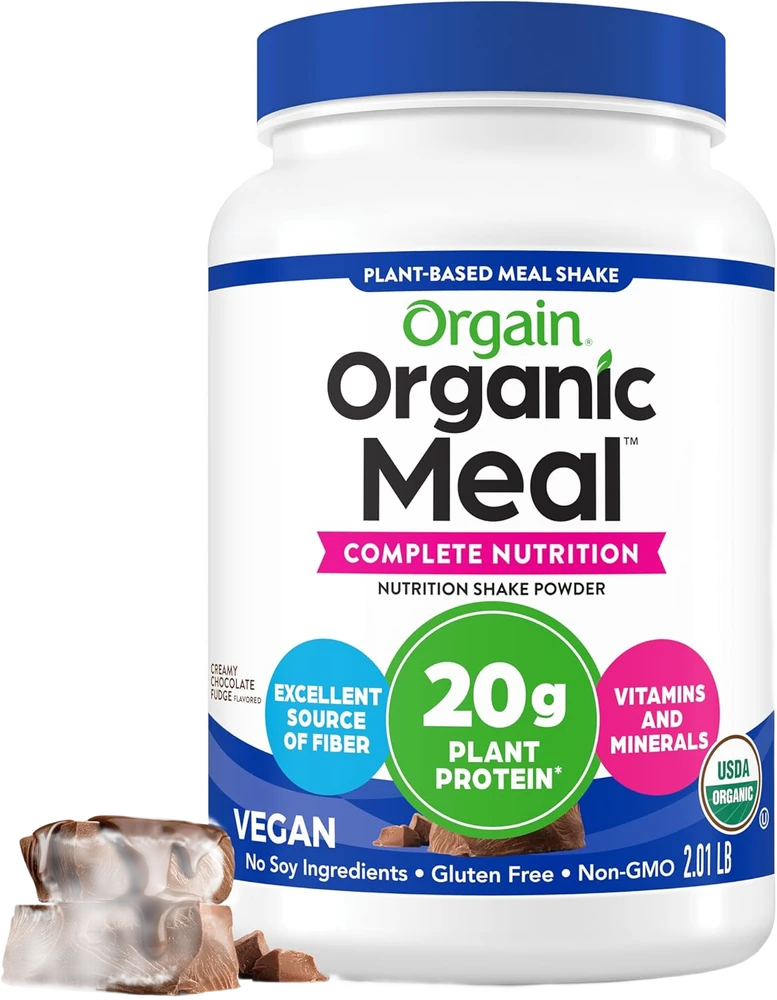
03Orgain Organic Vegan Meal
Orgain Organic Meal is the value champion and a genuinely smart default.
 02
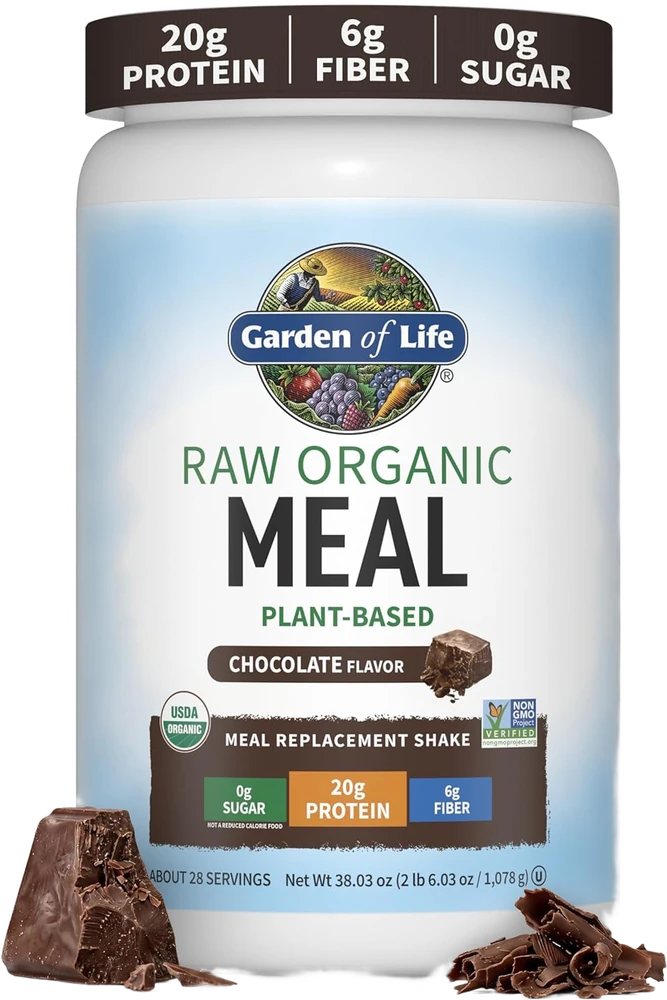
02Garden of Life Raw Organic Meal
Garden of Life Raw Organic Meal is the pick for anyone who wants the cleanest possible label, and it ranks #2 on nutrition alone.
Quick Answers
Is Ka'Chava worth the price for weight loss?
Only if taste is genuinely what decides whether you stick to a plan — and for many people it honestly is. Ka'Chava is consistently rated the best-tasting, smoothest shake in our lineup, and since a meal replacement's entire weight-loss value is adherence (the randomized evidence — Astbury 2019 — is about people sticking to structured, known-calorie meals), the shake you look forward to has real functional value. But be clear-eyed: it's by far the most expensive per serving here, and nothing in its 85+ superfoods burns fat. If you'd drink Orgain or Huel just as consistently, they do the same deficit job for much less money.
Do the 85+ superfoods actually do anything?
They make it a more nutritionally interesting shake — real greens, maca, adaptogens, probiotics, digestive enzymes and antioxidant-rich fruits — and that's a legitimate upgrade for a meal you'd otherwise skip or eat badly. What they don't do is cause weight loss, and we won't pretend otherwise. No adaptogen or berry blend changes the calorie arithmetic: fat loss comes from a sustained deficit, and Ka'Chava helps exactly the way every pick here does — by being a fixed ~240 kcal, 25 g-protein meal you can't accidentally turn into a 900-calorie order. Enjoy the superfoods as nutrition breadth, not as a mechanism.
How does ~6 g of sugar compare — is that a problem?
It's moderate — higher than our leaders, nowhere near the category's real offenders. Huel, Garden of Life and Orgain sit around 0-1 g of added sugar; Ka'Chava's ~6 g (partly from coconut nectar and fruit ingredients, with no artificial sweeteners) is a deliberate taste choice and part of why it drinks like a milkshake. For context, the sugar-bombs we warn about in this category carry 15-30 g. Verdict: 6 g inside a ~240 kcal meal you're using to hold a deficit is fine for most people — just know you're trading a few sugar grams for the best taste on the list, and that the strictest low-sugar buyers should pick from the top three.
Is Ka'Chava a full meal at ~240 calories?
It's a middle-weight: more substantial than the ~150 kcal light shakes (Garden of Life, Orgain), lighter than the ~400 kcal complete meals (Huel, Soylent, Ample). With 25 g of protein and 6 g of fiber, a single two-scoop serving holds a breakfast slot well; for a big lunch replacement, blend it with a banana or berries — the flavor genuinely rewards blending — and you'll still come in far below the meal you swapped out. As always, the serving must fit your daily calorie budget: it's a meal with a name, not a treat on top of your meals.
Sources & Further Reading
2 peer-reviewed sources, each linked to PubMed
- [1] Astbury 2019 PMID 30675990 — A systematic review and meta-analysis of the effectiveness of meal replacements for weight loss. 23 RCTs / 7,884 adults: meal-replacement programs produced ~1.44 kg more weight loss at one year than food-based diets — an adherence-driven effect. The scientific basis for taking Ka'Chava's taste advantage seriously: the structured meal people keep drinking is the one the data rewards.
- [2] Min 2021 PMID 34144920 — The effect of meal replacement on weight loss according to calorie-restriction type and proportion of energy intake: a systematic review and meta-analysis of randomized controlled trials. Meta-analysis of RCTs: meal-replacement calorie restriction outperforms food-based calorie restriction. Confirms the mechanism is the deficit, not any ingredient — the 85 superfoods included. Ka'Chava helps when its ~240 kcal serving replaces a larger meal, and not otherwise.
Affiliate disclosure: every Amazon link uses our Associates tag (superachieverclub-20). We earn a small commission at no cost to you; it funds independent reviews. We never accept payment to change a ranking.