
Horbäach EGCG Green Tea Extract Review
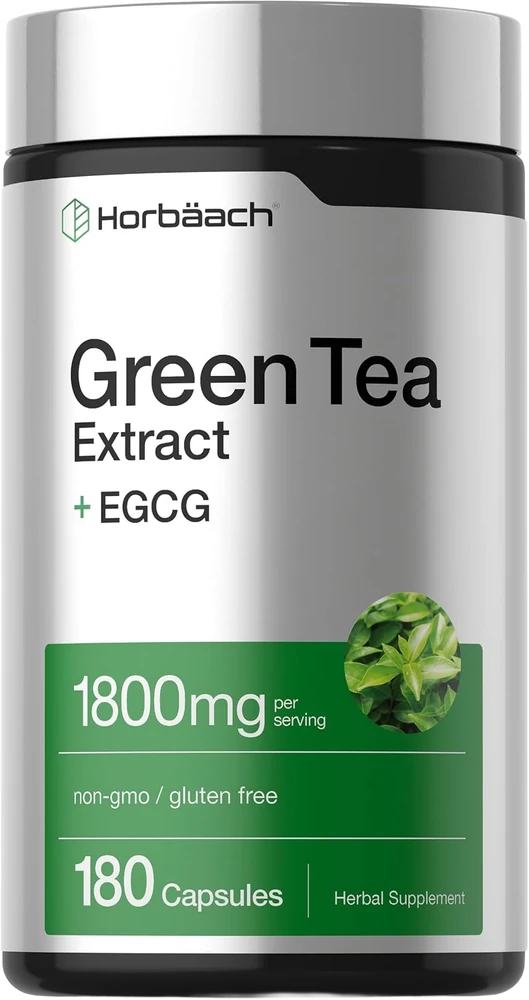 #7 of 8 · Highest-mg value✓ Label verified · Supplement Facts read Aug 27, 2026
Real retailer photo, cut out. Label unedited.
Buy it. Most EGCG per dollar — for a deliberate doser who reads the serving size. Horbäach is well standardized (85% polyphenols / 75% catechins / 45% EGCG) and its 180-count bottle makes the cost per active mg the lowest on the list.
Budget — high mg, 180-countLowest cost per active mg (180 ct)
Why It Scores 7.8 — And The Label Line Behind Each Number
EGCG standardization & dose
35% of scoreWell standardized (85% polyphenols / 75% catechins / 45% EGCG), but the headline 1800 mg/serving is a high EGCG bolus that pushes toward the sensible daily ceiling. Good standardization held back by a dose that demands careful reading and splitting rather than simple single-cap dosing.
- EGCG per serving
- High — 1800 mg extract/serving @ 45% EGCG (read serving size: multiple caps)
Purity & third-party testing
30% of scoreNon-GMO and free of common allergens with decent in-house QC, but the testing transparency is good rather than best-in-class — it doesn't reach the documented, trusted programs of NOW or Life Extension. Solid mid-pack on purity.
Safety & caffeine clarity
20% of scoreThe lowest axis here: the full 1800 mg/serving invites a high, potentially-fasted bolus, and the caffeine is naturally-occurring rather than stated low or offered as decaf. Perfectly safe if you split the serving and take it with food — but less foolproof than the moderate, stated-caffeine picks.
- Caffeine
- Naturally occurring — read the label
Value (cost per active mg)
15% of scoreThe best axis and the reason to buy it: a big 180-count bottle at a budget price delivers the lowest cost per active mg of EGCG on the entire list. Exceptional value — provided you dose it responsibly.
- Size
- 180 capsules — large supply
- Price
- Budget — high mg, 180-count, lowest cost per active mg
- More Specs
- Form
- Capsule (standardized extract)
- Quality
- Non-GMO, gluten-free; Horbäach in-house QC
- Dosing rule
- Read the serving size; take with food; consider splitting the serving
Label verified. Every figure read from the Supplement Facts photo, Aug 27, 2026.
Marketing Claims Vs. Reality
1800 mg green tea extract per serving at 95% polyphenols / 75% catechins / 45% EGCG.
Partially. The bottle's Supplement Facts panel says 'Standardized to contain 85% Polyphenols, 75% Catechins, and 45% EGCG' — the 95% polyphenol figure circulating in listing copy overshoots the label by 10 points (we originally repeated it; corrected 27 Aug 2026). The 1800 mg serving, 75% catechins and 45% EGCG all hold up; note the 1800 mg is the multi-capsule serving, not a single capsule.
Max potency / high EGCG.
Technically accurate — the per-serving EGCG is high — but 'max potency' framing understates that this is a multi-capsule serving delivering a high bolus. We mark it partial: true on the number, but it should be read as a serving to split, not a single potent cap.
Non-GMO and gluten-free.
The listing carries non-GMO and gluten-free labeling, consistent with Horbäach's clean-label positioning. Accurate as stated.
Supports metabolism and antioxidant health.
Directionally supported — catechins are antioxidants and nudge fat oxidation (Hursel 2009) — but the weight effect is modest and adjunctive, not a proven product-specific outcome. Reasonable as a category claim.
What Our Test Actually Found
Correction: the label reads 85% Polyphenols, not the 95% the listing claimed
An earlier version of this review marked the retailer listing's '95% polyphenols' claim as verified. The Supplement Facts panel actually reads 'Standardized to contain 85% Polyphenols, 75% Catechins, and 45% EGCG' — our own evidence text already said this, but the verdict field still said verified. We re-read the label on Sep 3, 2026 and corrected that claim's verdict to partial, and fixed the review image's alt text, which had credited the photo to 'the Amazon listing' when it is SAC's own studio render. Text only — no score changes; the 1800 mg, 75% catechins, 45% EGCG, and 180-count figures were already accurate and are unaffected.
Best cost per active mg — that's the pitch
A big 180-count bottle at a budget price, with a well-standardized 45% EGCG extract, gives Horbäach the lowest cost per active mg of EGCG on the entire list. For a buyer optimizing purely on mg-per-dollar who will dose responsibly, that's a genuinely strong value proposition — and it's the whole reason this pick exists.
The high serving is the caution, not a hidden flaw
The 1800 mg/serving figure is the extract per serving — often multiple capsules — and at 45% EGCG a full serving is a high EGCG bolus near the sensible daily ceiling. Read the serving size, take it with food, and split it if needed. Followed deliberately, it's fine; ignored, it drifts into the high-dose fasted pattern the liver-safety reviews specifically warn against.
Flexible dosing is actually an advantage here
Because the serving is large and comes in multiple capsules, you can split it to dial your EGCG intake to whatever you want — take one capsule for a moderate dose, more for a higher one. That flexibility, used sensibly, turns the high-mg serving from a liability into a feature for buyers who pay attention.
Testing is decent, not category-leading
Horbäach's in-house QC and non-GMO/allergen-friendly label are reassuring, but its testing transparency is good rather than best-in-class — it doesn't reach the documented, deeply-trusted programs of NOW or Life Extension. Combined with the high bolus, that's the honest reason it ranks #7 despite the excellent value.
Full analysis: all pros & cons (6), buy if / skip if
- Highly standardized (85% polyphenols / 75% catechins / 45% EGCG) at a budget price
- Big 180-count bottle delivers the lowest cost per active mg on the list
- Non-GMO and free of common allergens
- Flexible dosing — you can split the serving to control your EGCG intake
- The full 1800 mg/serving is a high EGCG bolus — read the serving size and don't take it fasted
- In-house testing transparency is decent but not best-in-class
- You want the most EGCG per dollar and will dose it deliberately
- You're comfortable reading the serving size and splitting a high-mg serving
- You want a well-standardized extract (45% EGCG) at a budget price
- You want a big 180-count supply
- You want a foolproof, moderate dose — NOW EGCg 400 mg (#1) at ~200 mg is safer to run
- You won't reliably take it with food or split the serving
- You want top-tier third-party testing — NOW (#1) or Life Extension (#2)
Horbäach is well standardized (85% polyphenols / 75% catechins / 45% EGCG) and its 180-count bottle makes the cost per active mg the lowest on the list. The catch is the high 1800 mg/serving bolus: read the serving size, take it with food, and ideally split it — never swallow the full serving fasted. In-house testing is decent, not best-in-class. Great value for a careful doser; not a foolproof default.
Horbäach is the high-mg value play, and an honest one as long as you dose it deliberately. The extract is well standardized (85% polyphenols / 75% catechins / 45% EGCG), the 180-count bottle makes the cost per active mg the lowest here, and the label is non-GMO and allergen-friendly. The reason it sits at #7 is precisely the thing that makes it cheap: a full 1800 mg/serving is a high EGCG bolus, so you must read the serving size, take it WITH FOOD, and ideally split it rather than swallowing the whole serving fasted — that high-dose fasted pattern is exactly what the liver-safety reviews caution against. Its in-house testing is good rather than great. For maximum EGCG per dollar from someone who'll dose it sensibly, it works; for a worry-free dose, the moderate picks above are better.
The high-mg value play — buy it if you'll dose it deliberately, with food.

Horbäach is the high-mg value play, and an honest one as long as you dose it deliberately. The extract is well standardized (85% polyphenols / 75% catechins / 45% EGCG), the 180-count bottle makes the cost per active mg the lowest here, and the label is non-GMO and allergen-friendly. The reason it sits at #7 is precisely the thing that makes it cheap: a full 1800 mg/serving is a high EGCG bolus, so you must read the serving size, take it WITH FOOD, and ideally split it rather than swallowing the whole serving fasted — that high-dose fasted pattern is exactly what the liver-safety reviews caution against. Its in-house testing is good rather than great. For maximum EGCG per dollar from someone who'll dose it sensibly, it works; for a worry-free dose, the moderate picks above are better.
If This Doesn’t Fit — Try These
 01
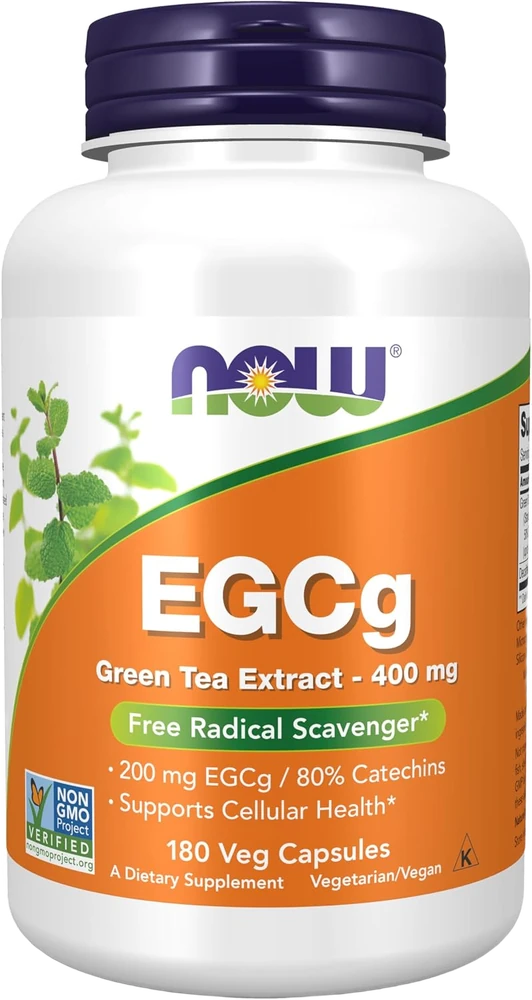
01NOW EGCg Green Tea Extract
If you want one green tea extract and you want it to be the safe, sensible choice, NOW's EGCg 400 mg is it.
 06
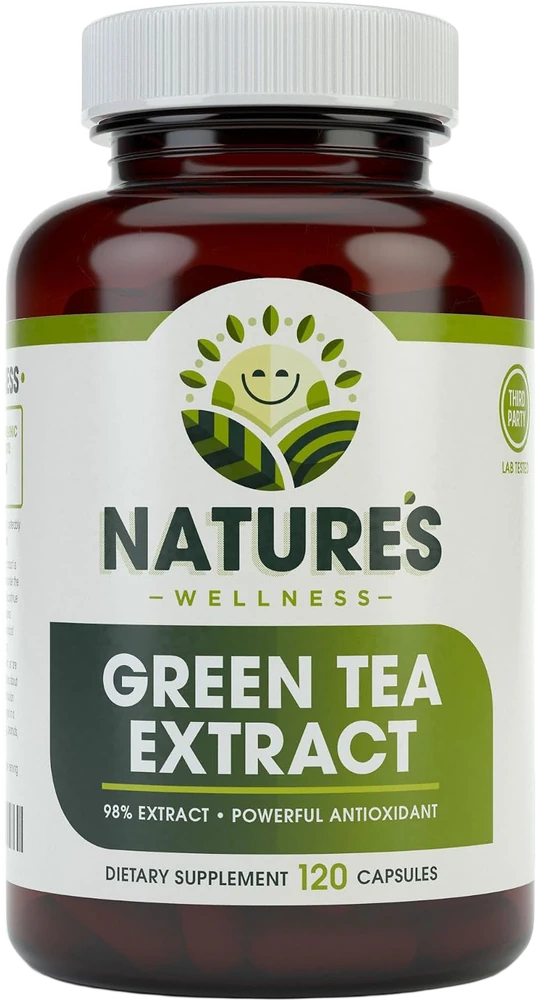
06Nature's Wellness Green Tea Extract
Nature's Wellness is the pick for someone who specifically wants the maximum standardized EGCG per capsule.
 08
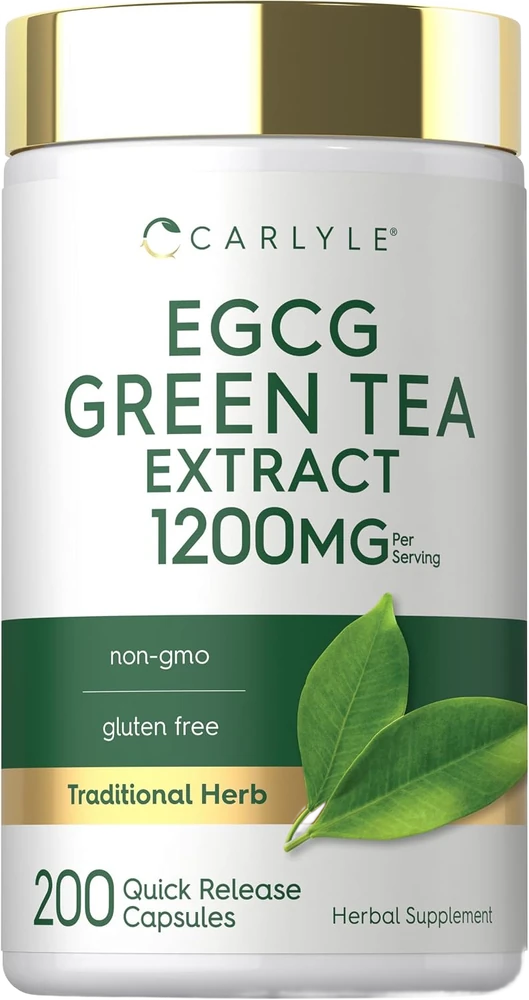
08Carlyle EGCG Green Tea Extract
Carlyle is a perfectly fine, inexpensive, no-frills EGCG extract — it just doesn't do anything better than the picks above it, which is why it rounds out the list at #8.
Quick Answers
Is 1800 mg per serving a lot of EGCG?
Yes — that's the whole caution. The 1800 mg figure is the extract per serving (often multiple capsules), and at 45% EGCG a full serving is a high EGCG bolus that sits near EFSA's 800 mg EGCG/day liver-safety flag. Read the serving size carefully: you can and often should split it. The mg-per-dollar value is excellent, but only if you dose it deliberately — with food, and ideally not the whole serving at once.
How do I take it safely?
Take it with food, never fasted, and consider splitting the serving rather than swallowing the full 1800 mg at once. The high-dose, empty-stomach pattern is exactly what the liver-safety reviews (Hu 2018, Isomura 2016) caution against. If you'd rather not manage that, a moderate pick like NOW EGCg 400 mg (~200 mg EGCG, #1) gives you a worry-free dose instead.
Why does it rank below the moderate picks despite the great value?
Because the thing that makes it cheap — a big, high-mg serving — is also the thing that demands careful dosing. The standardization is genuinely good and the cost per active mg is the lowest here, but the high bolus and in-house (rather than best-in-class) testing keep it at #7. It's a strong buy for a deliberate doser, not a foolproof default.
How much caffeine does it have?
The caffeine is naturally occurring and you should read the exact amount off the label — it's not stated low or offered as a decaf option. Because the serving is large, factor whatever caffeine it carries into your daily total, and if you split the serving you'll split the caffeine too.
Sources & Further Reading
3 peer-reviewed sources, each linked to PubMed
- [1] Hursel 2009 PMID 19597519 — The effects of green tea on weight loss and weight maintenance: a meta-analysis. Meta-analysis of 11 studies: green tea catechins were associated with a modest ~1.3 kg mean weight change, clearest with caffeine. A high per-serving EGCG dose does not multiply this modest effect — it raises the safety stakes without proportional benefit.
- [2] Hu 2018 PMID 29580974 — The safety of green tea and green tea extract consumption in adults — Results of a systematic review. Systematic review: liver-related adverse effects were associated with high-dose extract taken as a bolus on an empty stomach. Directly relevant to Horbäach's 1800 mg serving — the reason to split it and take it with food.
- [3] Isomura 2016 PMID 27188915 — Liver-related safety assessment of green tea extracts in humans: a systematic review of randomized controlled trials. Systematic review of RCTs: liver-enzyme elevations clustered at higher EGCG doses — the dose-dependent signal that keeps this high-mg value pick at #7 and sets its split-the-serving, take-with-food rule.
Affiliate disclosure: every Amazon link uses our Associates tag (superachieverclub-20). We earn a small commission at no cost to you; it funds independent reviews. We never accept payment to change a ranking.