
Ozeri Pronto Digital Kitchen and Food Scale Review
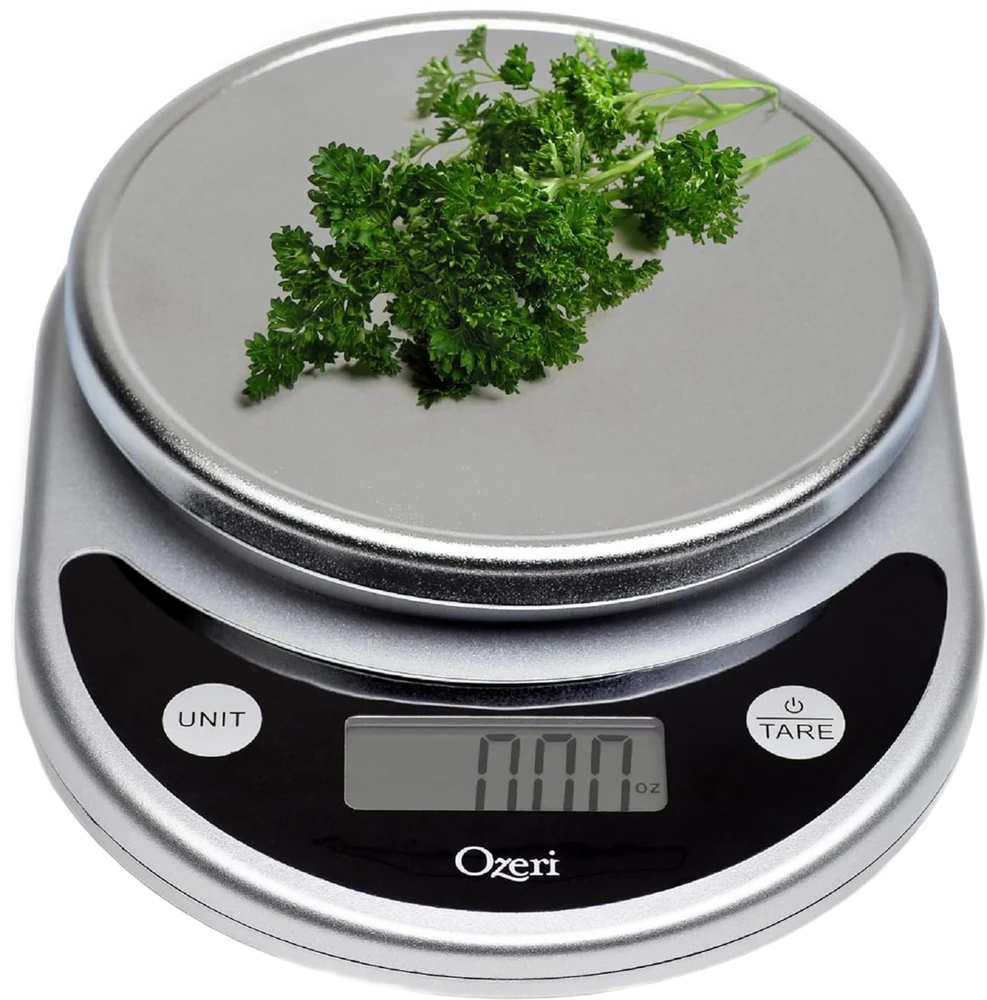 #4 of 8 · Best budget 0.1g precision✓ Product photos checked Sep 7, 2026
Real retailer photo, cut out. Label unedited.
Buy it. Fine resolution for the least money on the list — a proven $15 precision bargain in a plastic body. Variable Graduation gives ultra-fine readings on light loads (where oils and nut butters live) with ~6 kg capacity, six units, and smartly separated buttons — at ~$15, with an award list and Harvard-study selection (per the listing) no budget rival matches.
~$15
Why It Scores 8.4 — And The Label Line Behind Each Number
Accuracy & resolution
35% of scoreVariable Graduation Technology delivers ultra-fine readings at light loads — exactly where the calorie-dense small foods are weighed — while extending to roughly 6 kg (13.2 lb), slightly more than the standard 5 kg picks. Measurements start from as little as 0.5 g per the listing. Ties the class leaders on the precision that matters; only the Etekcity's cleaner dual-increment spec edges it.
- Resolution
- Variable Graduation: ultra-fine steps at light loads, coarser at heavy loads
Features (tare, units, extras)
25% of scoreSix units (g, oz, lb, lb:oz, ml, kg) — the most of any full-size pick — plus tare, with the standout detail being the physically separated Tare and Unit buttons with audible/tactile feedback that protect measurements from accidental presses. No backlight or bowl at this price, which is what separates it from the feature leaders.
- Units
- g, oz, lb, lb:oz, ml, kg (6) + tare
Build & material
25% of scoreThe honest weak axis: the body and platform are plastic, which our material principle deliberately deducts for on a surface that meets wet, oily food daily — it scratches and stains where stainless wipes clean. Construction quality within that material is good (this design has survived a decade-plus in production), but it trails every stainless and glass pick here.
Value (price)
15% of scoreAround $15 for fine-graduation precision, six units, and a genuine award pedigree is exceptional precision-per-dollar — the best on the list alongside the Etekcity. Value is only 15% of our score by design, so this can't buy the Pronto a podium spot over better materials; it does make it the clear recommendation at its price point.
- Price
- ~$15 — least money for fine resolution in our lineup
- More Specs
- Minimum / capacity
- Weighs from 0.5 g up to ~6,000 g (13.2 lb) per listing
- Body material
- Plastic (the honest trade-off at this price)
- Controls
- Dedicated Tare + Unit buttons, separated from platform, tactile/audible feedback
- Accolades (per listing)
- Food Network, The Strategist, Wirecutter, CNN Underscored; selected for a Harvard Medical School weight-loss study
Photos checked.This product has no Supplement Facts panel; the retailer's listing photos were reviewed Sep 7, 2026.
Marketing Claims Vs. Reality
Variable Graduation Technology provides ultra-fine measurement graduations.
Stated on the live listing as the Pronto's core precision feature — finer graduations at light loads, with weighing from 0.5 g up to 6,000 g across six units. A manufacturer spec (trademarked term included), and the same sensible precision-where-it-matters trade the category's other fine-resolution scales make.
Winner of awards from Food Network, The Strategist, Wirecutter, and CNN Underscored; selected for a Harvard Medical School weight-loss study.
This accolade list appears verbatim on the live listing, and the Pronto's long reputation with professional reviewers is consistent with it. We mark it PARTIAL because we're reporting the manufacturer's own claim as read on the listing — we haven't independently traced each award or the study citation. It signals dependability; it is not evidence the scale causes weight loss.
Dedicated Tare and Unit buttons with audible and tactile feedback, separated from the platform.
Described on the listing as an intentional frustration-free design — buttons separated from the weighing platform to avoid accidental presses. A small, real accuracy protection we credit under features.
A food scale meaningfully helps weight loss.
The category's research-backed claim: obese adults underreported their actual calorie intake by ~47% in Lichtman 1992 (NEJM, PMID 1454084) and misjudged solid foods roughly ten times more than liquids in Lasschuijt 2019 (PMID 31255647). The Pronto's fine graduations tighten exactly the small-food numbers the eye gets most wrong.
What Our Test Actually Found
Precision where it matters, capacity where it doesn't — the right engineering trade
A naive spec-sheet reading says a scale should be maximally precise everywhere. In a kitchen that's wasted engineering: nobody needs 0.1 g steps on a 4 kg bowl of chili, but everyone counting calories needs them on 12 g of olive oil. Variable Graduation spends the precision budget at light loads — where oils, nut butters, spices, and powders are weighed and where a few grams is real calories — and relaxes it as the load climbs toward ~6 kg. The result is small-food precision that embarrasses ordinary 1 g scales, with more total capacity than the standard 5 kg picks, at the lowest price here. That's the whole value proposition, and it's a good one.
The pedigree is unusual for the price — and we report it precisely
Budget scales are usually anonymous commodities; the Pronto arrives with a listing full of names — Food Network, The Strategist, Wirecutter, CNN Underscored, and selection for a Harvard Medical School weight-loss study. Two things are true at once. First, this accolade list is the manufacturer's own copy, which is why our claims table marks it partial rather than verified: we read it on the listing, we didn't independently trace each award. Second, it's consistent with the model's genuinely long reputation among professional testers, and researchers standardizing on a scale is a real signal of dependable readings. Take it as strong circumstantial evidence of quality, not as a health claim.
Plastic is the price of the price
Our material principle exists because a food scale's platform meets wet, oily, sometimes raw food every day, and materials age differently under that: 304 stainless wipes clean and shrugs for a decade; plastic scratches, stains, and holds odors. The Pronto's plastic body is why it scores 7.2 on build — the lowest axis score in its otherwise excellent card — and why it sits at #4 behind stainless picks it nearly matches on precision. We won't dress that up, and we won't punish it either: at $15 the material is an honest, disclosed trade, and the design's decade-plus production run says the plastic is at least well made. Wipe it promptly and it will serve for years.
Full analysis: all pros & cons (8), buy if / skip if
- Fine Variable Graduation precision at the lowest price on the list (~$15)
- Weighs from 0.5 g up to ~6 kg — more capacity than the standard 5 kg picks
- Six units (g, oz, lb, lb:oz, ml, kg), the most of any full-size pick here
- Separated Tare/Unit buttons with tactile feedback prevent accidental mid-weigh presses
- Real pedigree per the listing: Food Network, Wirecutter, The Strategist, CNN Underscored, Harvard-study selection
- Plastic body and platform — the honest material deduction that keeps it out of the podium
- No backlight, bowl, or premium extras at this price
- Lighter and less substantial in hand than the stainless Etekcity or OXO
- You want fine sub-gram-class precision on small, calorie-dense foods for the least money here
- You want six units (g, oz, lb, lb:oz, ml, kg) and a bit more capacity (~6 kg) than the standard 5 kg picks
- You value separated, tactile Tare/Unit buttons that can't be pressed by accident mid-weigh
- You want a budget scale with a real track record rather than an anonymous commodity unit
- You can spend ~$5 more — the Etekcity (#1) adds a food-safe 304 stainless platform and a bowl
- You want a premium, buy-it-for-life build — that's the OXO (#2), not any budget pick
- You want 22 lb of capacity for batch cooking — the Greater Goods (#5) and Nicewell (#6) have the headroom
Variable Graduation gives ultra-fine readings on light loads (where oils and nut butters live) with ~6 kg capacity, six units, and smartly separated buttons — at ~$15, with an award list and Harvard-study selection (per the listing) no budget rival matches. The plastic body is the honest trade-off our material principle prices in. Buy it if the budget stops here; spend $5 more on the stainless Etekcity (#1) if it doesn't.
The Ozeri Pronto exists to answer one question: what is the least money that buys genuinely fine resolution? The answer is about $15, and it comes with more pedigree than anything near its price. The Pronto's Variable Graduation Technology reads in ultra-fine steps at the light loads where precision actually matters — oil, nut butter, spices, protein powder — and coarser steps up to its ~6 kg (13.2 lb) maximum, where nobody needs tenths of a gram on a mixing bowl. Six units (g, oz, lb, lb:oz, ml, kg) switch on a dedicated button, and the Tare and Unit keys are physically separated from the platform with tactile and audible feedback, so a wet thumb or a bowl edge can't silently corrupt a measurement. The track record is unusually strong for a budget scale: per the listing, awards from the Food Network, The Strategist, Wirecutter, and CNN Underscored, plus selection for a Harvard Medical School weight-loss study — manufacturer-reported accolades, but ones that fit the scale's long-running reputation for dependable readings. What keeps it at #4 is a single word: plastic. The body is the material our principle honestly deducts for on a surface that meets wet food daily, and its 7.2 build score against the stainless picks is nearly the whole story of its rank. If your budget stops at $15, this is a superb buy; here's the full breakdown.
Buy it if the budget stops at $15 — the proven precision bargain, honestly one material short of the podium.

The Ozeri Pronto is the best answer in our lineup to a strict budget: for about $15 it delivers the fine light-load precision that actually matters for calorie tracking, six units, a bit more capacity than the standard picks, and buttons designed so you can't sabotage a measurement by accident. Its award list and Harvard-study selection — the manufacturer's claims, but ones matching a long public track record — make it the opposite of a bargain-bin gamble. On precision per dollar, nothing here touches it. Its ceiling is equally clear. The plastic body is the one material our principle scores lowest for a daily wet-food surface, and that 7.2 build score against the Etekcity's stainless 9.0 is essentially the entire gap between #4 and #1 — a gap that costs five dollars to close. So the buying logic is simple: if $15 is the number, buy the Pronto without hesitation, wipe it down promptly, and enjoy precision that outclasses its price. If you can stretch to $20, buy the Etekcity for the stainless platform and the bowl. Either way you end up with the thing that matters — a fine-grained, honest number for every calorie-dense food you log.
If This Doesn’t Fit — Try These
 01
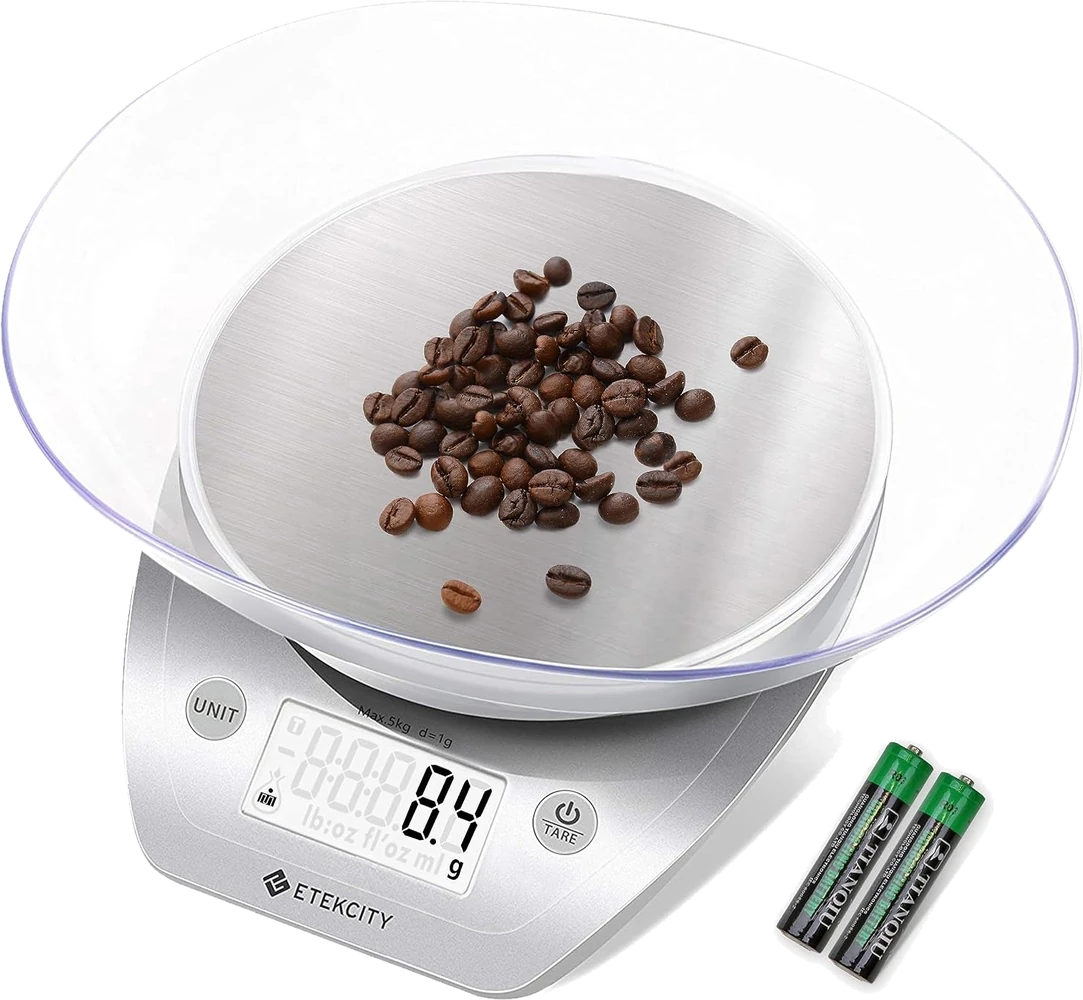
Etekcity 0.1 g Food Scale
This is the food scale to buy if you want one and want it right.
 07
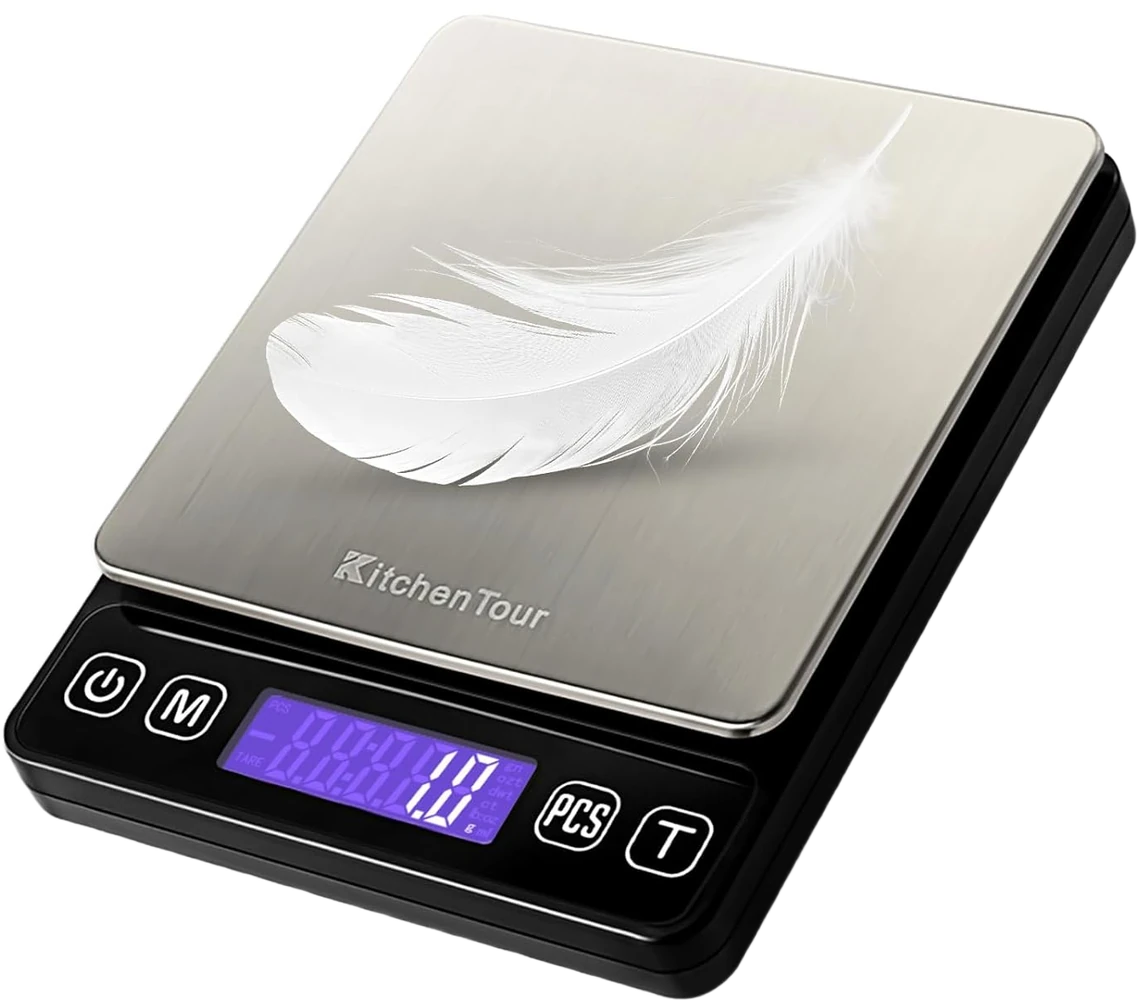
KitchenTour 3000 g / 0.1 g
The KitchenTour is a precision pocket scale that earns its spot for one job done very well: 0.1 g resolution on small, calorie-dense foods — oil, nut butter, cheese, spices, coffee — for around the price of a sandwich.
 08
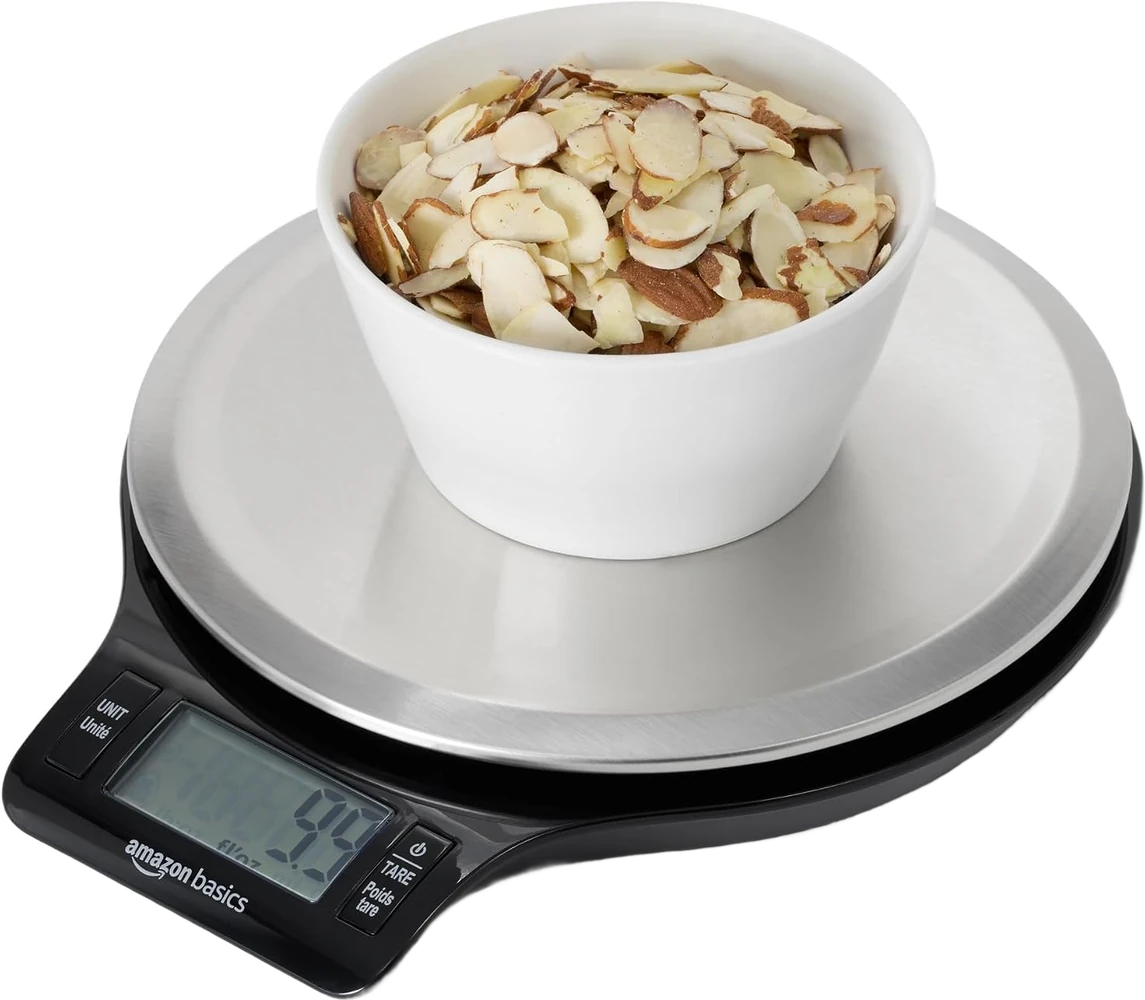
Amazon Basics Kitchen Scale
The Amazon Basics scale rounds out the list as the honest budget pick — and an honest budget pick is exactly what it is, not a flimsy one we're punishing.
Quick Answers
What is Variable Graduation Technology, plainly?
It's Ozeri's term for a scale that changes its reading step with the load: ultra-fine graduations for light weights — where you're weighing oil, spices, nut butter, or supplement powders and every 0.1 g-class step matters — and coarser steps as the load grows toward the ~6 kg (13.2 lb) maximum, where nobody needs sub-gram precision on a mixing bowl. Per the listing the range starts from as little as 0.5 g total load. It's the same engineering trade the Etekcity (#1) makes with its dual increments, and it's the right trade: put the precision where the calorie-dense small foods are, keep the capacity for real cooking.
Is the Harvard study claim real?
It's a claim made on the live listing — the Pronto states it was selected for use in a weight-loss study by Harvard Medical School, alongside awards from the Food Network, New York Magazine's The Strategist, The New York Times' Wirecutter, and CNN Underscored. We report that as what it is: the manufacturer's own accolade list, which we could read directly on the listing but haven't independently traced to a published citation. It signals that professional testers and researchers found the scale dependable enough to standardize on — a meaningful pedigree for a $15 device — but it is not evidence the scale causes weight loss. No scale does; the honest gram number it produces is the tool.
How does a $15 scale compare to the $20 Etekcity — why is it ranked lower?
One word: material. On precision the two are close — both give you fine sub-gram-class readings on small loads and full-kitchen capacity — and the Ozeri actually offers more units (six) and slightly more capacity (~6 kg vs 5 kg). The gap is the body: the Etekcity puts a food-safe 304 stainless-steel platform under your food, while the Pronto is plastic, and our build-and-material criterion (25%) weights that deliberately for a surface that meets wet, oily food daily. The Pronto's 7.2 on build versus the Etekcity's 9.0 is nearly the entire five-dollar difference. If the budget truly stops at $15, buy the Pronto happily; if it stretches to $20, the stainless Etekcity is the better long-term surface.
Why do the separated buttons matter?
Because accidental button presses are a real, recurring failure mode of cheap scales: touch-sensitive keys built into the platform edge get triggered by a bowl or a wet thumb, silently switching units or re-taring mid-measure, and now your log is wrong without your knowing. The Pronto's Tare and Unit buttons are physically separated from the weighing platform and give audible and tactile feedback per the listing — you know when you've pressed one, and you can't press one by accident with the bowl. It's a small design decision that directly protects the accuracy of every measurement you take, which is why we credit it under features.
Sources & Further Reading
2 peer-reviewed sources, each linked to PubMed
- [1] Lichtman 1992 PMID 1454084 — Discrepancy between self-reported and actual caloric intake and exercise in obese subjects. Doubly-labeled-water study: obese adults who reported diet resistance underreported their actual caloric intake by 47% on average and overreported activity by 51% — self-report fails exactly where weighing is exact. The case for weighing; the Pronto's specs and accolades are manufacturer claims, reported as such.
- [2] Lasschuijt 2019 PMID 31255647 — Unaware of the amount consumed: systematic error in estimating food- and drink intake. Estimation error was roughly ten times greater for solid foods than liquids. Fine graduations on light solid loads — the Pronto's specialty — target exactly the foods the eye misjudges most.
Affiliate disclosure: every Amazon link uses our Associates tag (superachieverclub-20). We earn a small commission at no cost to you; it funds independent reviews. We never accept payment to change a ranking.