
NoDoz Maximum Strength 200mg Review
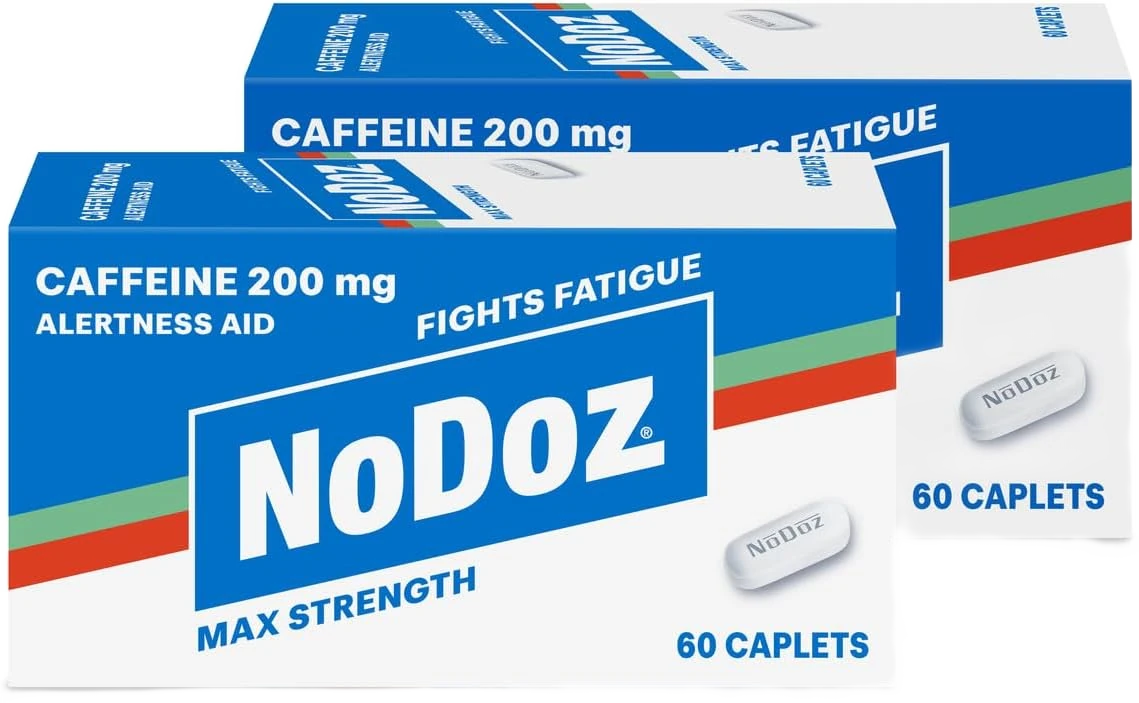 #7 of 8 · Drugstore staple✓ Label verified · Supplement Facts read Sep 7, 2026
Real retailer photo, cut out. Label unedited.
Consider it. A perfectly honest 200 mg caplet you can buy anywhere — just outcompeted at both ends of this list. An exact 200 mg caffeine caplet with zero extra ingredients from the most recognizable OTC alertness brand, in a 120-count bottle, splittable to ~100 mg.
Value — mainstream alertness brand (120 ct)Low-to-mid per dose (120 ct, splittable)
Why It Scores 7.7 — And The Label Line Behind Each Number
Dose accuracy & consistency
35% of scoreAn exact, clearly labeled 200 mg per caplet with nothing else in the formula — the standard studied dose, splittable to ~100 mg, delivered with the consistency you'd expect from a mass-market OTC product with decades of manufacturing history. Excellent at the category's core job; only the built 100 mg formats and bigger exact-dose counts edge it on this axis.
- Caffeine per caplet
- 200 mg caffeine
L-theanine pairing / smooth energy
25% of scoreNone — plain caffeine at the category baseline score. The jitters, anxiety edge and comedown that the pairing picks buffer are fully present here, especially at the whole-caplet 200 mg step. Splitting to 100 mg moderates exposure; adding your own 200-400 mg L-theanine replicates the paired experience for less than the premium softgels.
- Pairing
- None — caffeine only, zero added ingredients
Purity & third-party testing
25% of scoreA long-established OTC alertness brand with generations of continuous retail manufacturing — a meaningful real-world quality baseline — and a zero-extras label with no sugar, calories or hidden ingredients. It trails the supplement-side leaders because the brand publishes little QA specificity: no named certifier, no COA, no sourcing story. Trust rests on OTC heritage, which is solid but opaque.
Value (cost per dose)
15% of scoreThe 120-count bottle lands NoDoz at fine, unremarkable value — cheaper per dose than the premium pairings, clearly beaten by Nutricost's 250-count and ProLab's value pricing for the identical molecule. You pay a modest brand premium for the household name; whether that's worth it is exactly the familiarity question this product poses.
- Bottle
- 120 caplets
- Price
- Low-to-mid per dose (120 ct) — fine, not category-leading
- More Specs
- Splittability
- Caplet splits for ~100 mg dosing
- Brand
- NoDoz — long-established OTC alertness staple
- Sugar / calories
- Zero — no blend, no hidden ingredients
Label verified. Every figure read from the Supplement Facts photo, Sep 7, 2026.
Marketing Claims Vs. Reality
Maximum strength: 200 mg caffeine per caplet.
The live Amazon listing confirms the exact 200 mg per-caplet dose and the 120-caplet count. 'Maximum strength' is standard OTC framing for the 200 mg tier — the highest common single-pill caffeine dose — and the number itself is printed and precise.
Helps you stay awake and alert.
The core alertness effect of 200 mg caffeine is among the most replicated findings in the stimulant literature — adenosine-receptor blockade reduces perceived fatigue reliably at this dose. This is the claim NoDoz has built its brand on, and it holds.
No sugar, no calories, no hidden ingredients.
The single-active caplet formula carries no sugars, caloric ingredients or undisclosed actives per the listing — transparency that, to NoDoz's credit, predates the supplement industry's proprietary-blend problem entirely. Checks out as stated.
Weight-management relevance (category positioning — not claimed by NoDoz itself).
NoDoz markets alertness, not weight loss — honest of it. For buyers using it in a weight context anyway, the evidence is the category's: Tabrizi 2019 (PMID 30335479) found real but modest reductions in weight, BMI and fat mass across 13 RCTs, with tolerance eroding the metabolic effects within weeks. A nudge on a deficit, nothing more.
What Our Test Actually Found
Ubiquity is the genuine feature
NoDoz's real differentiator isn't on the label — it's on the shelf. This is the caffeine pill you can buy at nearly any drugstore, gas station or grocery in the country, today, without shipping or research. For a traveler, a one-off need, or a buyer who simply trusts a household OTC name over supplement brands, that availability plus an exact, zero-extras 200 mg dose is a legitimately good package. Our scoring can't weight convenience heavily, but it's the honest reason to pick NoDoz over ordering something 'better.'
The middle of the market is a hard place to live
Put NoDoz next to its competition and the squeeze is visible: Nutricost sells the same 200 mg for meaningfully less per dose, ProLab matches the splittable-tablet formula with a sports-nutrition pedigree, and the paired picks deliver an experience plain caffeine can't. NoDoz wins none of those matchups on our axes — dose accuracy aside, where it's excellent but not unique. The result is a well-made product whose rank reflects positioning, not quality: everything it does, something above it does better or cheaper.
OTC heritage cuts both ways on trust
Generations of continuous mass-market manufacturing is a real quality signal — formulation stability at that scale is its own kind of audit. But the OTC world publishes less than the modern supplement premium tier does: no COA, no named certifier, no sourcing narrative. For a commodity molecule like caffeine that's an acceptable gap, and NoDoz's zero-extras label predates the industry's blend games entirely. Buyers who want paperwork should look at Sports Research (#3); buyers who trust track record are well served here.
Use it like every plain 200 mg pick
The playbook is identical to the other pure picks: whole caplet for the standard dose, half for sensitive starts, timed 30-60 minutes pre-workout when chasing the studied 3-6 mg/kg performance range (Southward 2018), and always counted against the ~400 mg/day all-sources ceiling with the last dose ~8 hours clear of bed. Its weight-loss contribution is the category's honest minimum — small, fading, deficit-dependent (Tabrizi 2019) — and NoDoz deserves credit for never having pretended otherwise.
Full analysis: all pros & cons (9), buy if / skip if
- Exact 200 mg caplet with zero extra ingredients — clean, predictable, splittable
- The most widely available pick on our list — nearly any drugstore or gas station stocks it
- Generations of OTC manufacturing history behind a stable, transparent formula
- 120-count bottle fixes the small-pack economics of drugstore blister packs
- No sugar, no calories, no proprietary blend — and no overreaching claims
- No L-theanine — plain caffeine's jitters and crash, unbuffered
- Beaten on cost per dose by the bulk supplement picks for the identical molecule
- Minimal published QA detail — no COA, certifier or sourcing story
- Nothing above dose accuracy that the higher-ranked picks don't do better
- You want a trusted, familiar 200 mg caplet you can buy off almost any shelf, today
- Brand recognition and OTC heritage matter more to you than supplement-side extras
- You want zero extra ingredients — one active, no sugar, no calories, no blend
- You need a splittable caplet and the 120-count covers your usage
- You're jitter-prone — the L-theanine pairings (Zhou #1, Sports Research #3) are built to fix exactly that
- You're optimizing cost per dose — Nutricost's 250-count (#4) is decisively cheaper
- You want documented sourcing or third-party testing detail — the premium picks publish more
An exact 200 mg caffeine caplet with zero extra ingredients from the most recognizable OTC alertness brand, in a 120-count bottle, splittable to ~100 mg. Clean, predictable, ubiquitous. It ranks #7 because the paired picks are smoother, the bulk picks are cheaper per dose, and the premium picks are better documented — NoDoz's edge is the shelf you can reach today. Same honest limits as the category: small fading weight effect, ≤400 mg/day, nothing within ~8 hours of bed.
NoDoz has been synonymous with 'caffeine pill' in American drugstores for generations, and the product itself is refreshingly honest: an exact 200 mg of caffeine per caplet, zero extra ingredients, zero sugar, zero calories, no proprietary blend — now sold in a 120-count bottle that softens its historically small-pack economics. As a known-quantity alertness caplet you can buy on almost any shelf in the country, it does its one job predictably and has for decades. Its #7 ranking is a statement about the competition, not about defects. The supplement side of the category has simply out-evolved the drugstore staple: paired picks (#1, #2, #5) deliver a smoother, calmer version of the same energy; bulk picks (#3, #4) deliver the identical 200 mg for less per dose; and the premium picks publish more about sourcing and testing than an OTC heritage brand does. What's left for NoDoz is real but narrow — ubiquity, familiarity, and a trustworthy exact dose. The honest category frame applies as everywhere: caffeine's weight effect is real but modest and fades with tolerance (Tabrizi 2019), the durable value is alertness and a small pre-workout edge (Southward 2018) on top of a calorie deficit, ceiling ~400 mg/day, nothing within ~8 hours of bed. Here's the breakdown.
Consider it — the trustworthy shelf staple, ranked honestly against a stronger field.

NoDoz is a good product with an honest label: exactly 200 mg of caffeine, nothing else, from a brand that has been doing precisely this since before most of its competitors existed. If your buying criteria are 'trusted name, exact dose, available everywhere,' NoDoz meets them completely, and the 120-count bottle makes ongoing use economically sane. Nothing in this review should read as a warning against it. Its #7 rank is about opportunity cost. For the same or less money, Nutricost (#4) and ProLab (#5) deliver the identical molecule in better economics; for a little more, Zhou (#1) transforms the experience with the L-theanine pairing. NoDoz's unique advantage — the shelf you can reach today — is real but fades the moment you're ordering online next to everything else on this list. Buy it when availability or familiarity decides; otherwise look up the ranking. And the rules never change: ≤400 mg/day from all sources, nothing within ~8 hours of bed, and the calorie deficit — not the caplet — does the losing.
If This Doesn’t Fit — Try These
 01
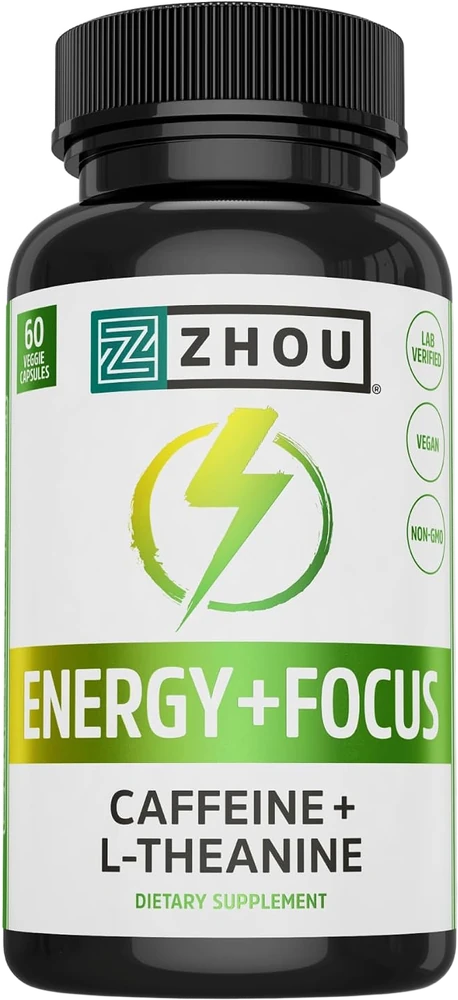
01Zhou Energy + Focus
If you want one caffeine pill and you want it to suit the most people, Zhou Energy + Focus is it.
 03
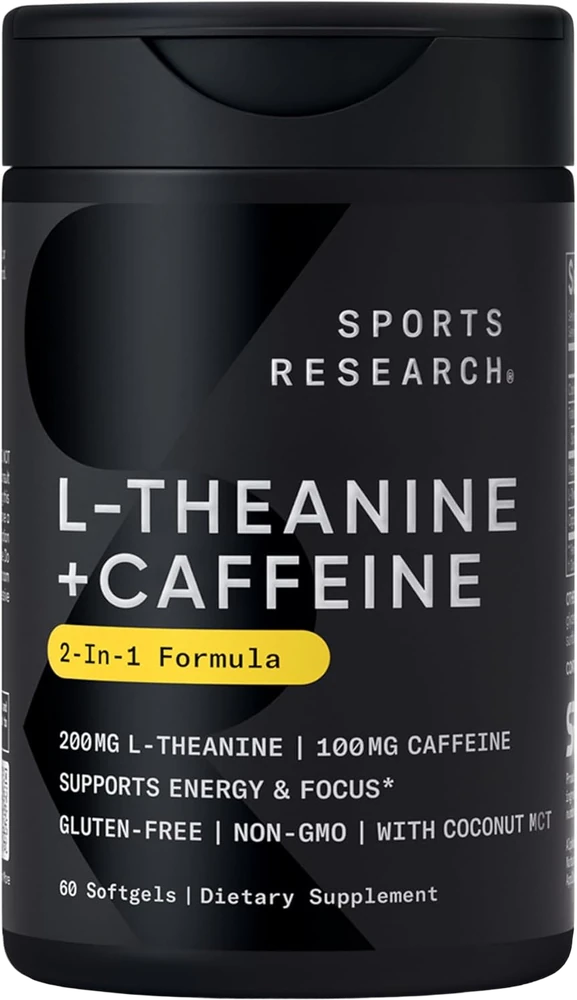
03Sports Research L-Theanine + Caffeine
Sports Research is the pick for someone who wants the cleanest, most transparent caffeine + L-theanine pairing and is willing to pay for it.
 04
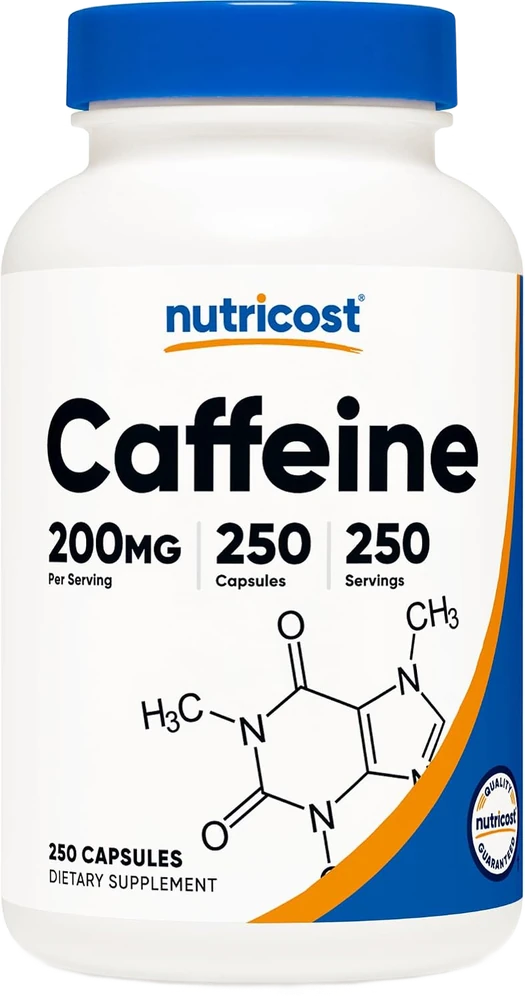
04Nutricost Caffeine Pills
Nutricost is the value play and a genuinely smart default for anyone who tolerates plain caffeine.
Quick Answers
Is NoDoz the same caffeine as supplement-brand pills?
Yes — caffeine is caffeine, and NoDoz's 200 mg caplet delivers the same molecule at the same standard dose as the supplement picks on our list. The differences are around the edges: NoDoz is marketed as an OTC alertness aid with a long retail history and wide availability, while the supplement brands compete on extras (L-theanine pairings, organic sourcing, bulk counts, published testing detail). If you just need a trustworthy 200 mg from a shelf you can reach today, NoDoz does exactly that.
Why does it rank below the cheaper bulk picks?
Because it's caught in the middle. Nutricost (#4) undercuts it decisively on cost per dose with a 250-count bottle, and ProLab (#5) matches the splittable-200 mg formula from a sports-nutrition heritage brand for less. Meanwhile the paired picks (#1, #2, #5) offer a genuinely smoother experience NoDoz can't. What NoDoz uniquely offers is ubiquity and brand familiarity — real conveniences that just don't move our scoring axes much. Nothing is wrong with it; it's simply outcompeted at both ends.
Can I use NoDoz for weight loss?
Only with honest expectations. The evidence for caffeine and weight — a meta-analysis of 13 RCTs (Tabrizi 2019) — shows real but modest reductions in weight, BMI and fat mass, plus a few percent of acute thermogenesis and mild appetite blunting that fade with tolerance within weeks. What lasts is alertness and a small training benefit at 3-6 mg/kg pre-workout (Southward 2018). A 200 mg NoDoz caplet is a precise, calorie-free way to capture those — on top of the calorie deficit that does the actual losing. It is not a fat-burner and doesn't market itself as one, to its credit.
How do I take it safely?
Treat it like the concentrated stimulant it is. One caplet (200 mg) is the standard adult dose; split it for ~100 mg if you're sensitive or new to caffeine pills. Keep total caffeine from all sources — including coffee, tea, soda and pre-workout — at or under ~400 mg/day, and take nothing within ~8 hours of bed given caffeine's ~5-hour half-life. Watch for jitters, anxiety or a racing heart, and check with a doctor first if you're pregnant, nursing, or have heart, blood-pressure or anxiety conditions.
Sources & Further Reading
2 peer-reviewed sources, each linked to PubMed
- [1] Tabrizi 2019 PMID 30335479 — The effects of caffeine intake on weight loss: a systematic review and dose-response meta-analysis of randomized controlled trials. Meta-analysis of 13 RCTs (606 participants): caffeine produced statistically significant but modest reductions in body weight, BMI and fat mass. The honest ceiling for any weight expectation from a 200 mg caplet — small, real, tolerance-limited.
- [2] Southward 2018 PMID 29876876 — The Effect of Acute Caffeine Ingestion on Endurance Performance: A Systematic Review and Meta-Analysis. Meta-analysis of 46 studies: 3-6 mg/kg caffeine ~30-60 minutes pre-exercise gave a small but evident endurance benefit (~3% mean power, ~2% faster time trials). One to two caplets reach the studied range for most adults — the best-evidenced active use for NoDoz.
Affiliate disclosure: every Amazon link uses our Associates tag (superachieverclub-20). We earn a small commission at no cost to you; it funds independent reviews. We never accept payment to change a ranking.