

Ashwagandha Side Effects: Real vs. Myth
Is ashwagandha safe? The bottom line
The honest summary: in controlled trials ashwagandha is well tolerated, with side effects that are mild and comparable to placebo[13,1]. The reasons to be careful are specific rather than general — and they're below.
Should you be cautious with ashwagandha?
Tick anything that applies to you:
The ashwagandha we actually recommend
If you do take it, start with a standardised, clinically-dosed extract — plus the full ranking.
See all ranked ashwagandha picks →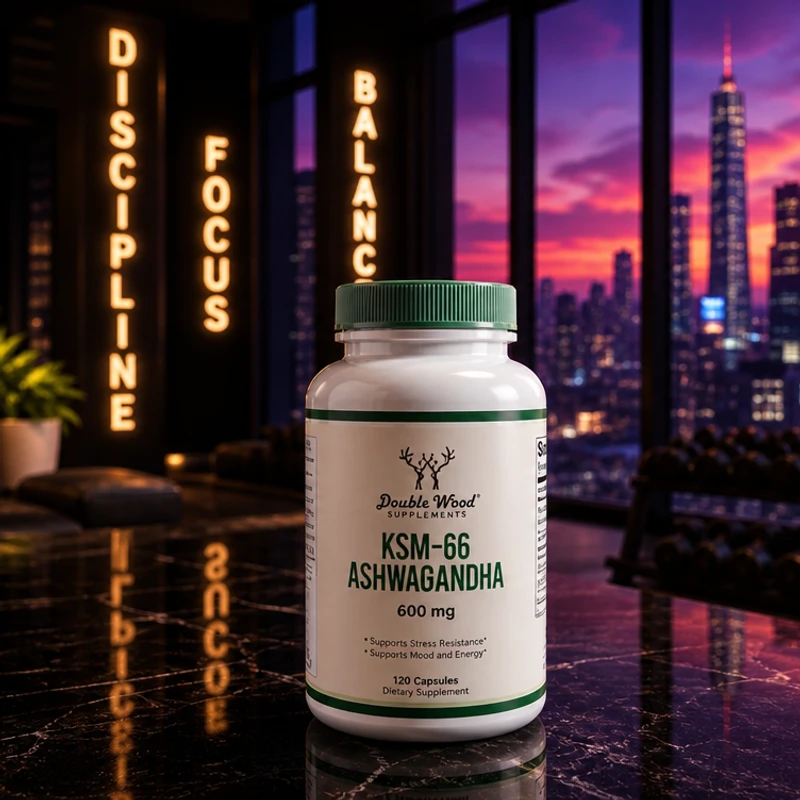
These picks are chosen by our independent editorial ranking; we may earn a commission if you buy through them — it never changes the scores.
Common side effects
The most frequently reported effects in trials are mild GI upset (nausea, stomach discomfort) and drowsiness, with occasional headache — all self-resolving and no more common than on placebo[13,14]. Taking ashwagandha with food reduces the stomach upset, which is why the long-term safety trial dosed it after meals. Because it can be mildly sedating, many people take it in the evening.
Adverse events: ashwagandha vs. placebo
share of participants reporting any adverse event over 8 weeks — mild throughout, and no more common than placebo
Liver injury — the real, rare caveat
This is the caution worth taking seriously — and keeping in proportion. Clinically apparent ashwagandha-associated liver injury is rare and idiosyncratic: the US LiverTox database rates it a “likely but uncommon” cause of liver injury[21]. When it happens, it typically appears 2–12 weeks after starting, shows up as a cholestatic or mixed pattern with jaundice and itching, and usually resolves within 1–5 months of stopping[16]. In the largest case series, the severe and fatal outcomes occurred almost entirely in patients who already had chronic liver disease[17].
For context on the other side of the ledger: a 12-month observational study in 191 adults taking 600 mg/day kept average ALT and AST stable and inside the normal range[15]. So the honest framing is: most people's livers are unaffected, but a small number react idiosyncratically — so don't take ashwagandha if you have liver disease, and stop immediately and see a doctor if you develop jaundice, dark urine, pale stools, or itching. In the main Iceland/US case series, four of the five patients' liver tests normalised within 1–5 months of stopping[16].
Liver enzymes over 12 months on KSM-66
mean ALT and AST in 191 adults taking 600 mg/day for a year — both stayed inside the normal range (ALT/AST normal ≈ up to ~40 IU/L)
When liver injury does happen, it usually reverses
outcomes of the 5 cases in the main Iceland/US case series — liver tests normalised after stopping ashwagandha
Thyroid — a real interaction
Ashwagandha nudges thyroid hormones upward: in subclinical hypothyroid patients, 8 weeks significantly raised T3 and T4 and lowered TSH[18]. That can be beneficial there — but it is a genuine reason for caution if you take thyroid medication (levothyroxine and similar) or have an overactive thyroid, because the effect is additive and can push you toward over-replacement. In people with normal thyroid function, controlled trials show no meaningful change[14]. If you take thyroid medication, coordinate with your doctor before starting.
Pregnancy — avoid, as a precaution
Here the honest answer differs from the usual scare. The traditional claim that ashwagandha is an abortifacientisn't actually backed by solid primary evidence — a 2025 systematic review found the claim rests on citation distortion, and animal developmental studies were reassuring at high doses[19,20]. But there are no adequate human pregnancy safety studies, so the correct call is still to avoid ashwagandha in pregnancy and while breastfeeding — as a precaution because the safety data are absent, not because a strong harmful signal is proven.
Sedation & interactions
Ashwagandha acts partly through a GABA-ergic mechanism, which explains both its calming effect and its interaction profile[22]. Don't combine it with sedatives, benzodiazepines, sleep medication, or alcohol without medical supervision — the CNS-depressant effects are additive. Because it is mildly immunostimulating(it up-regulates a Th1 immune response in lab models), people with an autoimmune condition such as Hashimoto's, rheumatoid arthritis, lupus or MS should be cautious[23]. As a precaution, stop ashwagandha about two weeks before any scheduled surgery.
Beyond sedatives, national health authorities flag several medication interactions: because ashwagandha can lower blood sugar and blood pressure and can nudge up the immune response, it may add to the effect of anti-diabetic and blood-pressure medication and may oppose immunosuppressants (e.g. after a transplant)[30,29] — coordinate with your clinician if you take any of these. And because it modestly raises testosterone, NIH advises anyone with a hormone-sensitive cancer such as prostate cancer to avoid it — a precaution based on the hormone effect, not on any human outcome data[30,25].
Who should be cautious
Skip ashwagandha, or clear it with a clinician first, if you: are pregnant or breastfeeding; take thyroid medication or have hyperthyroidism; have chronic liver disease; have an autoimmune condition or a hormone-sensitive cancer; take sedatives, diabetes, blood-pressure or immunosuppressant medication; or have surgery scheduled. For everyone else, the trial record is reassuring — see what it actually does, and the full data report for every figure and source.
Myths vs. facts
| The myth | What the evidence shows | Source |
|---|---|---|
| Ashwagandha boosts testosterone like a steroid | The rise is real but indirect and modest (+14.7% in aging men; +96 vs +18 ng/dL with training) — it is downstream of the cortisol drop, not direct hormone stimulation, and it won't close a clinical deficiency. | [3,4] |
| It destroys your liver | Clinically apparent liver injury is rare and idiosyncratic; a 12-month observational study kept ALT/AST stable, and the severe cases clustered in people with pre-existing chronic liver disease. | [15,16,17] |
| It's an abortifacient — definitely unsafe in pregnancy | The abortifacient claim is a traditional one that primary evidence doesn't support (animal developmental data are reassuring). Still avoid it in pregnancy — as a precaution, because human safety data are absent. | [19,20] |
| It's just Ayurvedic placebo | 12+ placebo-controlled RCTs and multiple meta-analyses show real, reproducible effects on cortisol, sleep, and testosterone. | [6,8] |
| You feel it instantly, like a sedative | It is not benzodiazepine sedation. Sleep shifts first (2–3 weeks); stress, cortisol and testosterone changes build over 4–12 weeks. | [9,1] |
| It works the same for everyone | The biochemical cortisol drop is robust, but the pooled effect on subjective stress isn't always significant — the biggest responders are chronically stressed people with high baseline cortisol. | [7,1] |
| More withanolides is always better | Higher-concentration leaf-inclusive extracts carry more of the cytotoxic withanolides (withaferin A); the most-studied strength/testosterone extract (KSM-66) is deliberately standardised to negligible withaferin A. | [15] |
Frequently asked questions
Is ashwagandha safe?
For most healthy adults, yes. A safety review of 30 human trials and a 12-month observational study in 191 people found adverse events mild and comparable to placebo, with no serious signal. The real cautions are specific: rare idiosyncratic liver injury, thyroid medication or hyperthyroidism, pregnancy, autoimmune disease, and combining it with sedatives.
Can ashwagandha damage your liver?
Rarely. There are documented cases of ashwagandha-associated liver injury in the literature — typically appearing 2–12 weeks after starting, usually reversible within 1–5 months of stopping. A 12-month observational study kept liver enzymes stable, and the severe or fatal cases occurred mostly in people with pre-existing chronic liver disease. Stop and see a doctor if you develop jaundice, dark urine, or itching, and avoid ashwagandha if you have liver disease.
Does ashwagandha affect the thyroid?
Yes — it can raise T3 and T4 and lower TSH. That is beneficial in subclinical hypothyroidism but a real reason for caution if you take thyroid medication or have an overactive thyroid, because the effect is additive. In people with normal thyroid function, trials show no meaningful change.
Is ashwagandha safe during pregnancy?
The honest answer: avoid it, as a precaution. The traditional claim that it is an abortifacient isn't actually backed by solid primary evidence (and animal developmental data are reassuring), but there are no adequate human pregnancy safety studies — so the standard recommendation is to avoid it while pregnant or breastfeeding.
Does ashwagandha make you sleepy?
It can cause mild drowsiness, especially at higher doses, because it acts partly through a GABA-ergic mechanism. That is why it is often taken in the evening — and why you should not combine it with sedatives, benzodiazepines, sleep medication, or alcohol without medical supervision, as the effects are additive.
Sources
- Chandrasekhar K, Kapoor J, Anishetty S. A prospective, randomized double-blind, placebo-controlled study of safety and efficacy of a high-concentration full-spectrum extract of ashwagandha root in reducing stress and anxiety in adults. Indian J Psychol Med. 2012;34(3):255–262. PMID 23439798
- Lopresti AL, Smith SJ, Malvi H, Kodgule R. An investigation into the stress-relieving and pharmacological actions of an ashwagandha (Withania somnifera) extract: a randomized, double-blind, placebo-controlled study. Medicine (Baltimore). 2019;98(37):e17186. PMID 31517876
- Lopresti AL, Drummond PD, Smith SJ. A randomized, double-blind, placebo-controlled, crossover study examining the hormonal and vitality effects of ashwagandha (Withania somnifera) in aging, overweight males. Am J Mens Health. 2019;13(2):1557988319835985. PMID 30854916
- Wankhede S, Langade D, Joshi K, Sinha SR, Bhattacharyya S. Examining the effect of Withania somnifera supplementation on muscle strength and recovery: a randomized controlled trial. J Int Soc Sports Nutr. 2015;12:43. PMID 26609282
- Salve J, Pate S, Debnath K, Langade D. Adaptogenic and anxiolytic effects of ashwagandha root extract in healthy adults: a double-blind, randomized, placebo-controlled clinical study. Cureus. 2019;11(12):e6466. PMID 32021735
- Arumugam V, et al. Effects of Ashwagandha (Withania somnifera) on stress and anxiety: a systematic review and meta-analysis. Explore (NY). 2024;20(6):103062. PMID 39348746
- Albalawi AA, et al. Dual impact of Ashwagandha: significant cortisol reduction but no effects on perceived stress — a systematic review and meta-analysis. Nutr Health. 2025. PMID 40746175
- Cheah KL, Norhayati MN, Husniati Yaacob L, Abdul Rahman R. Effect of Ashwagandha (Withania somnifera) extract on sleep: a systematic review and meta-analysis. PLoS One. 2021;16(9):e0257843. PMID 34559859
- Langade D, Kanchi S, Salve J, Debnath K, Ambegaokar D. Efficacy and safety of ashwagandha (Withania somnifera) root extract in insomnia and anxiety: a double-blind, randomized, placebo-controlled study. Cureus. 2019;11(9):e5797. PMID 31728244
- Choudhary B, Shetty A, Langade DG. Efficacy of ashwagandha (Withania somnifera [L.] Dunal) in improving cardiorespiratory endurance in healthy athletic adults. Ayu. 2015;36(1):63–68. PMID 26730141
- Choudhary D, Bhattacharyya S, Bose S. Efficacy and safety of ashwagandha (Withania somnifera (L.) Dunal) root extract in improving memory and cognitive functions. J Diet Suppl. 2017;14(6):599–612. PMID 28471731
- Akhgarjand C, et al. Does Ashwagandha supplementation have a beneficial effect on the management of anxiety and stress? A systematic review and meta-analysis of randomized controlled trials. Phytother Res. 2022;36(11):4115–4124. PMID 36017529
- Tandon N, Yadav SS. Safety and clinical effectiveness of Withania somnifera (Linn.) Dunal root in human ailments. J Ethnopharmacol. 2020;255:112768. PMID 32201301
- Verma N, et al. Safety of ashwagandha root extract: a randomized, placebo-controlled, study in healthy volunteers. Complement Ther Med. 2021;57:102642. PMID 33338583
- Salve J, Langade D, et al. Safety of 12-months administration of ashwagandha (Withania somnifera) root extract: an observational study. Phytother Res. 2025. PMID 41063394
- Björnsson HK, Björnsson ES, Avula B, et al. Ashwagandha-induced liver injury: a case series from Iceland and the US Drug-Induced Liver Injury Network. Liver Int. 2020;40(4):825–829. PMID 31991029
- Philips CA, et al. Ashwagandha-induced liver injury — a case series from India and literature review. Hepatol Commun. 2023;7(10):e0270. PMID 37756041
- Sharma AK, Basu I, Singh S. Efficacy and safety of ashwagandha root extract in subclinical hypothyroid patients: a double-blind, randomized placebo-controlled trial. J Altern Complement Med. 2018;24(3):243–248. PMID 28829155
- Tallon MJ, et al. A systematic and ethnobotanical review of ashwagandha's (Withania somnifera) reproductive and pregnancy safety. Phytother Res. 2025. PMID 40887707
- Prabu PC, Panchapakesan S. Prenatal developmental toxicity evaluation of Withania somnifera root extract in Wistar rats. Drug Chem Toxicol. 2015;38(1):50–56. PMID 24649920
- Ashwagandha. LiverTox: Clinical and Research Information on Drug-Induced Liver Injury. National Institute of Diabetes and Digestive and Kidney Diseases; 2023. Reference
- Mehta AK, Binkley P, Gandhi SS, Ticku MK. Pharmacological effects of Withania somnifera root extract on GABAA receptor complex. Indian J Med Res. 1991;94:312–315. PMID 1660034
- Bani S, et al. Selective Th1 up-regulating activity of Withania somnifera aqueous extract in an experimental system using flow cytometry. J Ethnopharmacol. 2006;107(1):107–115. PMID 16603328
- Durg S, Shivaram SB, Bavage S. Withania somnifera (Indian ginseng) in male infertility: an evidence-based systematic review and meta-analysis. Phytomedicine. 2018;50:247–256. PMID 30466985
- Ambiye VR, et al. Clinical evaluation of the spermatogenic activity of the root extract of ashwagandha (Withania somnifera) in oligospermic males: a pilot study. Evid Based Complement Alternat Med. 2013;2013:571420. PMID 24371462
- Mahdi AA, et al. Withania somnifera improves semen quality in stress-related male fertility. Evid Based Complement Alternat Med. 2011;2011:576962. PMID 19789214
- Durg S, et al. Withania somnifera (Indian ginseng) in diabetes mellitus: a systematic review and meta-analysis of scientific evidence from experimental research to clinical application. Phytother Res. 2020;34(5):1041–1059. PMID 31975514
- Ballesteros-Torres JM, et al. Impact of ashwagandha (Withania somnifera L.) supplementation on serum lipids and glucose: a randomized, double-blind, placebo-controlled pilot study. Nutr Metab (Lond). 2025. PMID 41204297
- Tharakan A, et al. Immunomodulatory effect of Withania somnifera (ashwagandha) extract — a randomized, double-blind, placebo-controlled trial. J Clin Med. 2021;10(16):3644. PMID 34441940
- Ashwagandha. National Center for Complementary and Integrative Health (NCCIH), National Institutes of Health. Reference